
Two Weeks in Japan: Tokyo, Mt. Fuji, Kyoto, and Nara with the Family
Japan had been on the list for years. Two weeks, four destinations, the kids old enough to summit a volcano and stay up through a mountain hut night. This was the trip.
We flew into Tokyo, drove out to Fuji, crossed to Kyoto, day-tripped to Nara, and came home changed. What follows is the honest version — the 4am alarm for the tuna auction, the nine-hour slog to Fuji's summit, the moment I arrived at Fushimi Inari before the crowds and stood alone in that tunnel of red.
Tokyo: Loud, Dense, and Impossible to Photograph Badly
Tokyo rewards the early riser and the late-night wanderer in equal measure. We split our time between Shinjuku and the older, darker alleys closer to the fish market — and the contrast was everything.
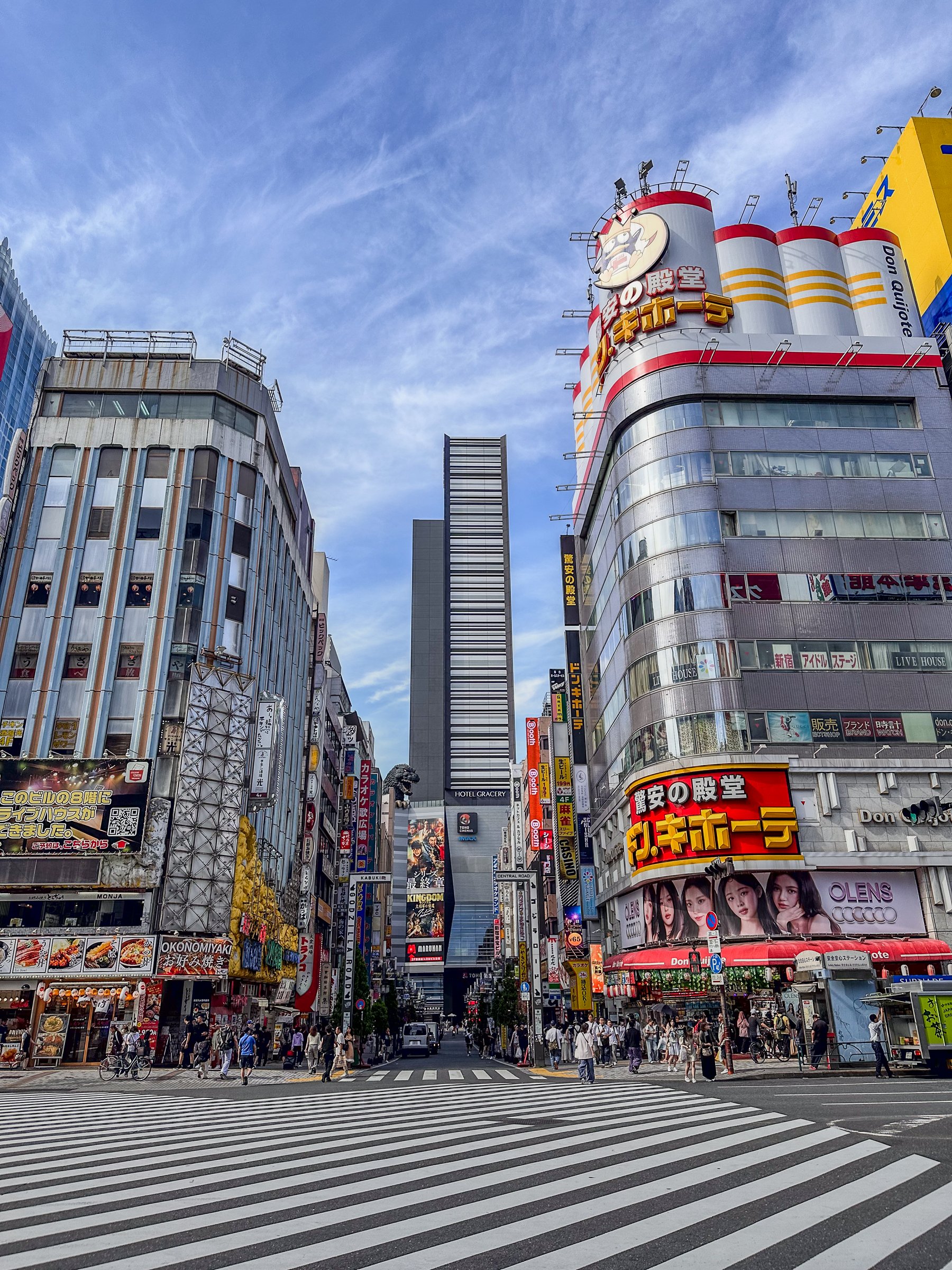
The Kabukicho intersection in Shinjuku. This is the Tokyo of the imagination — neon, scale, controlled chaos — and it genuinely looks like this.
Tsukiji Outer Market: The 5am Tuna Auction
Getting into the Toyosu tuna auction requires advance registration through the Tokyo Metropolitan Central Wholesale Market — spots fill months out. We were lucky. The alarm went off at 4am, we took the first train out, and by 5:15 we were standing in a viewing gallery watching hundreds of frozen bluefin tuna laid out across a cold concrete floor while auctioneers moved through the rows ringing a bell.
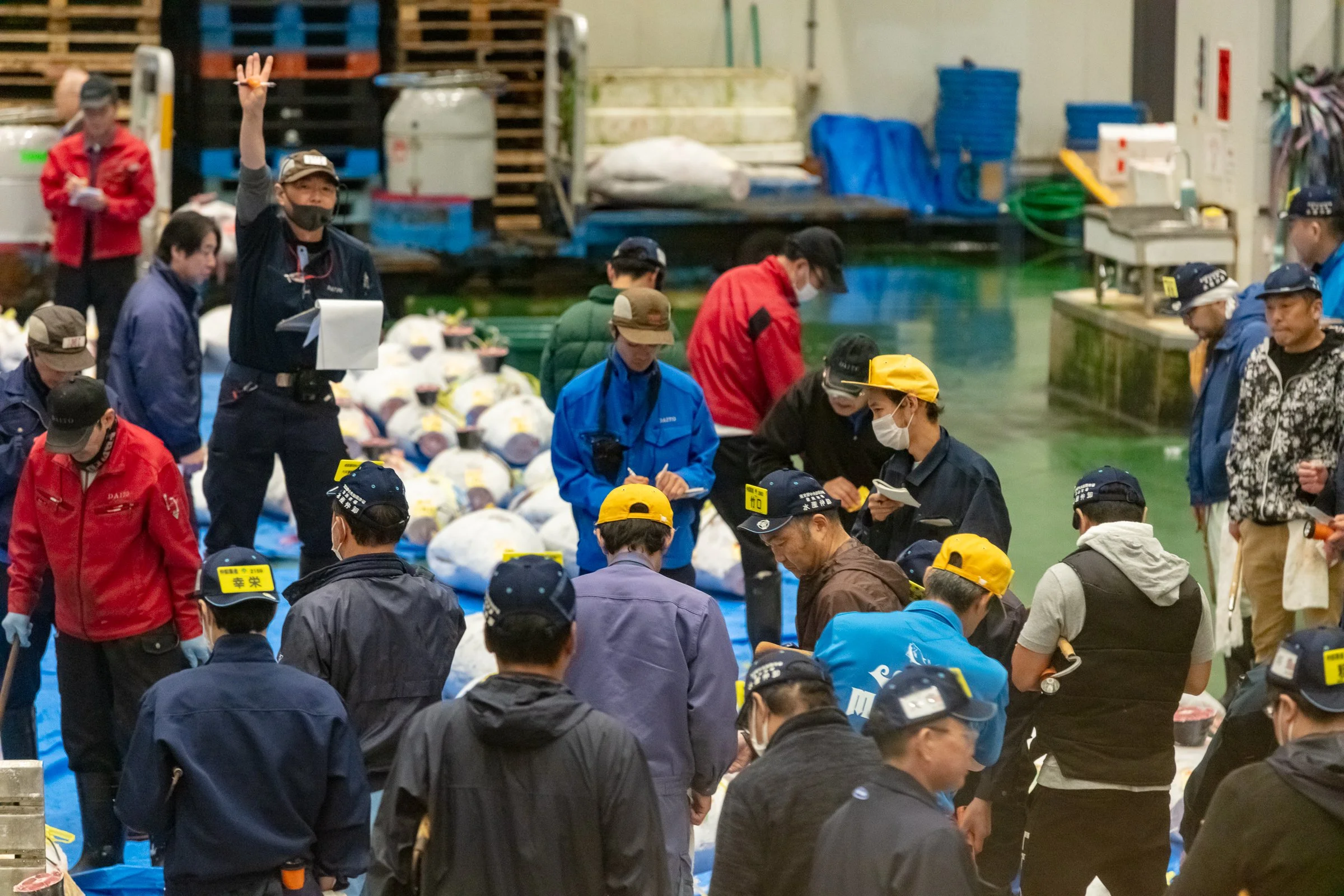
The tuna auction floor at Toyosu before sunrise — hundreds of bluefin laid out and ready to be sold in minutes.
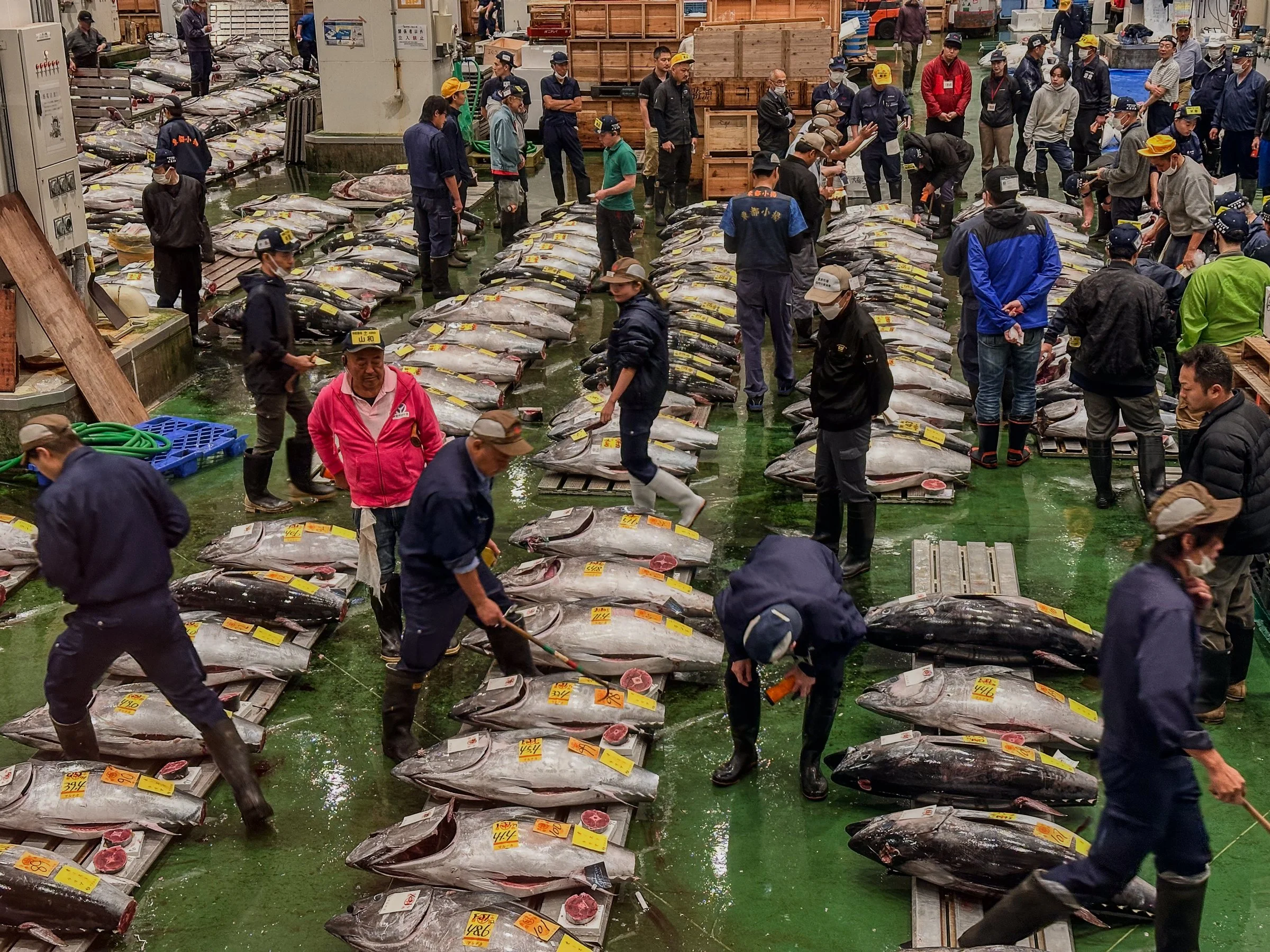
An auctioneer moves through the rows, bell in hand. Each fish is sold in under a minute.
Nothing prepares you for the scale of it. Each fish is tagged, inspected, and sold in under a minute. The speed is extraordinary. This is where Tokyo's sushi restaurants source their fish, and watching it happen — before sunrise, before the city wakes up — is one of those experiences you don't find in guidebooks.
After the auction we walked to the Tsukiji Outer Market for breakfast. Tiny octopus on skewers, the freshest tuna we've ever eaten moving slowly on a conveyor belt past our seats.
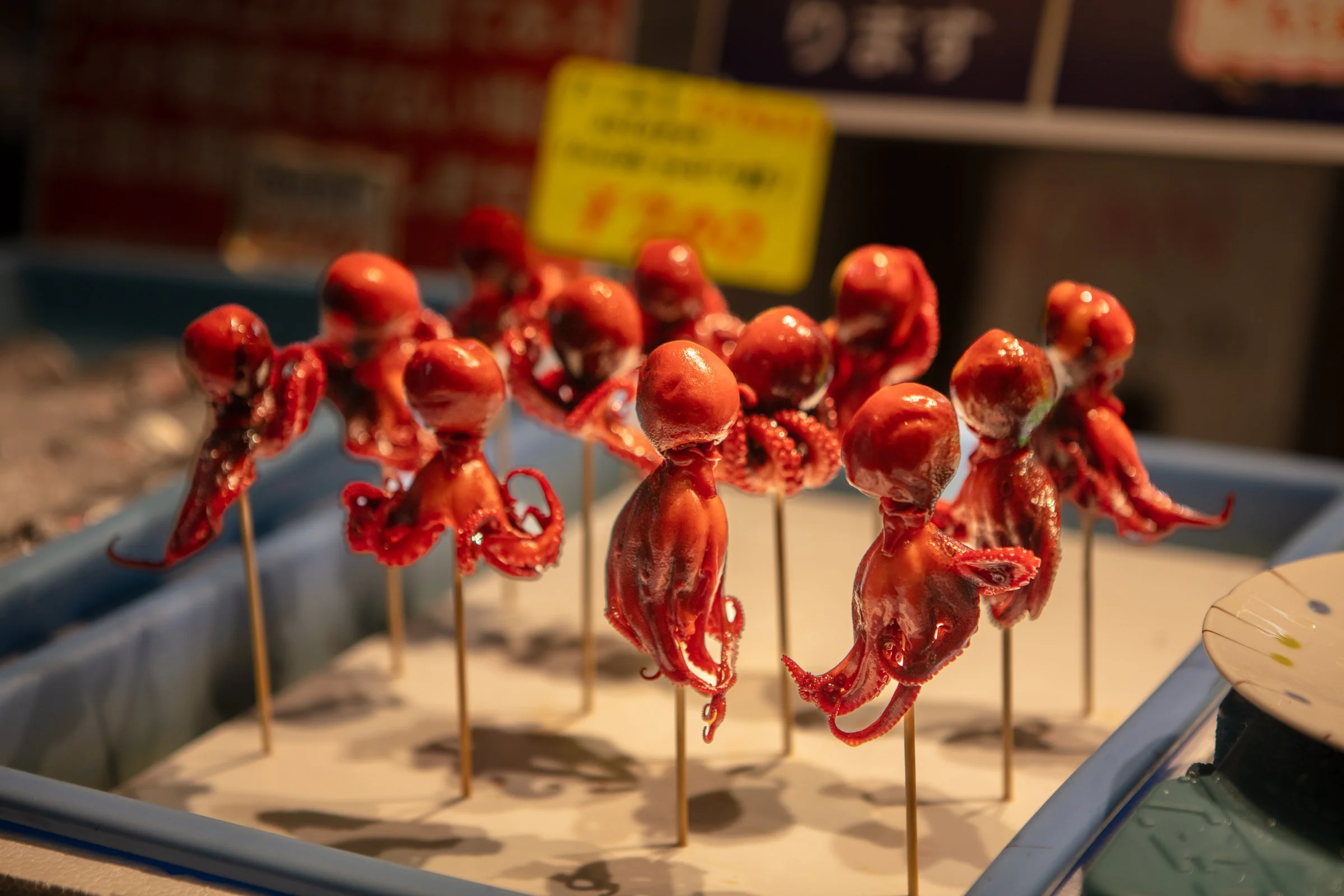
Baby octopus on skewers at the Tsukiji Outer Market — one of the first things we ate after the auction.
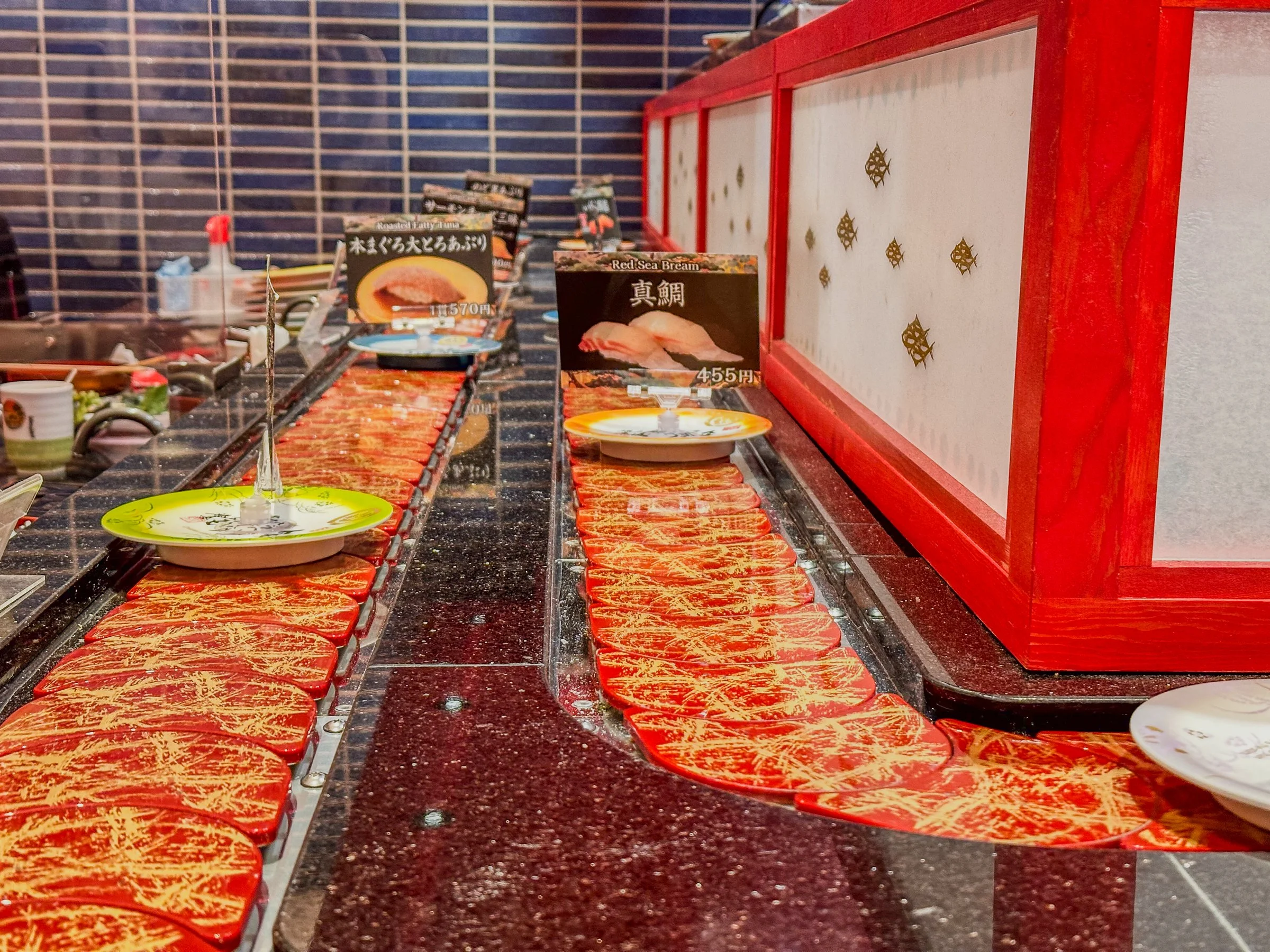
Revolving sushi in Tokyo — otoro and sea bream on the belt.
Shinjuku at Night: Memory Lane
The narrow alley known as Omoide Yokocho (Memory Lane) runs alongside Shinjuku Station's west exit and is everything a night food alley should be. Smoke, yakitori grills, paper lanterns, barely enough room to turn around. We squeezed into a counter seat and ate chicken skewers charred directly over flame while the cook moved between us with the efficiency of someone who has done this ten thousand times.
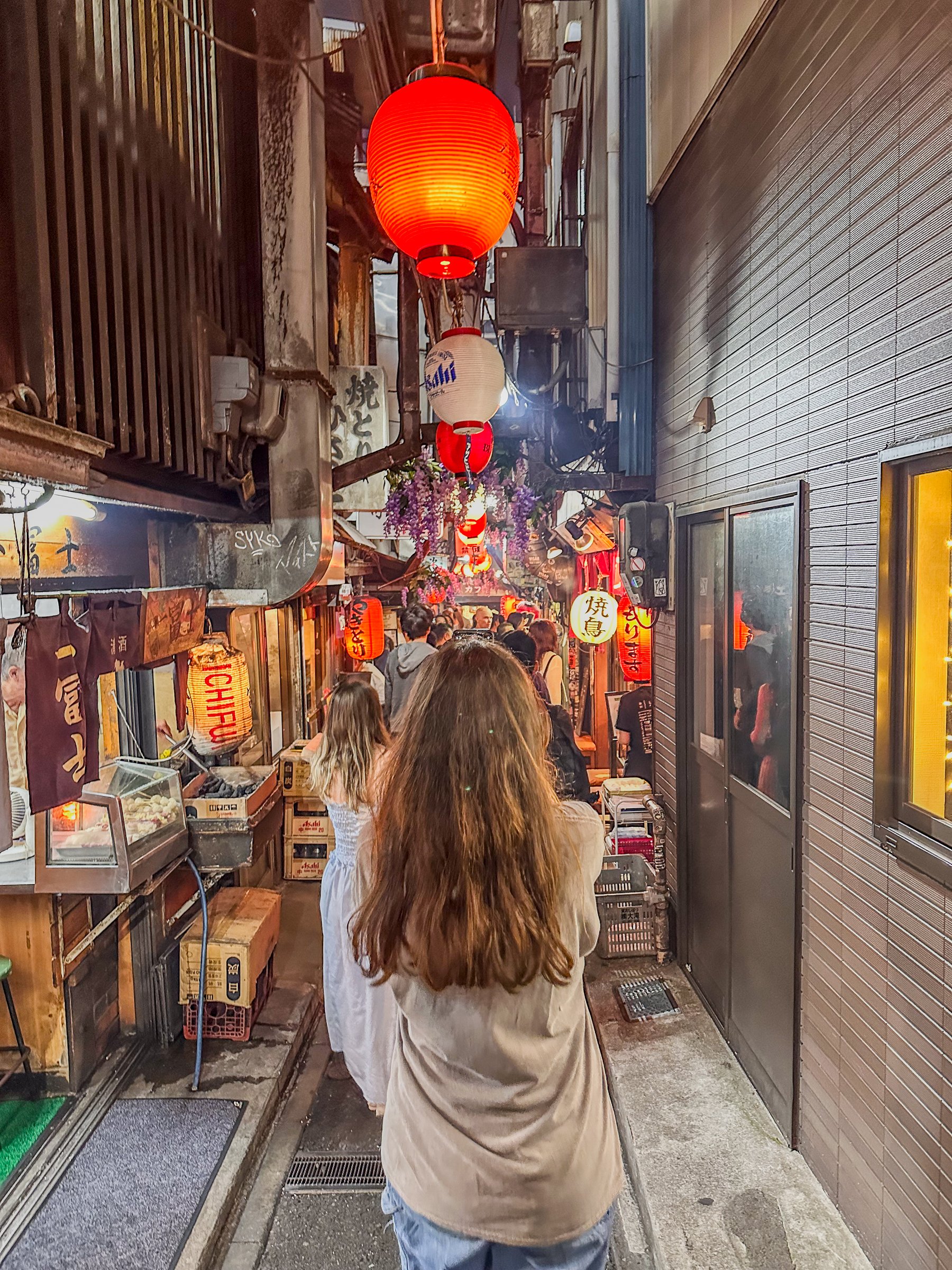
Omoide Yokocho (Memory Lane), Shinjuku — red lanterns, smoke, and barely enough room to turn around.
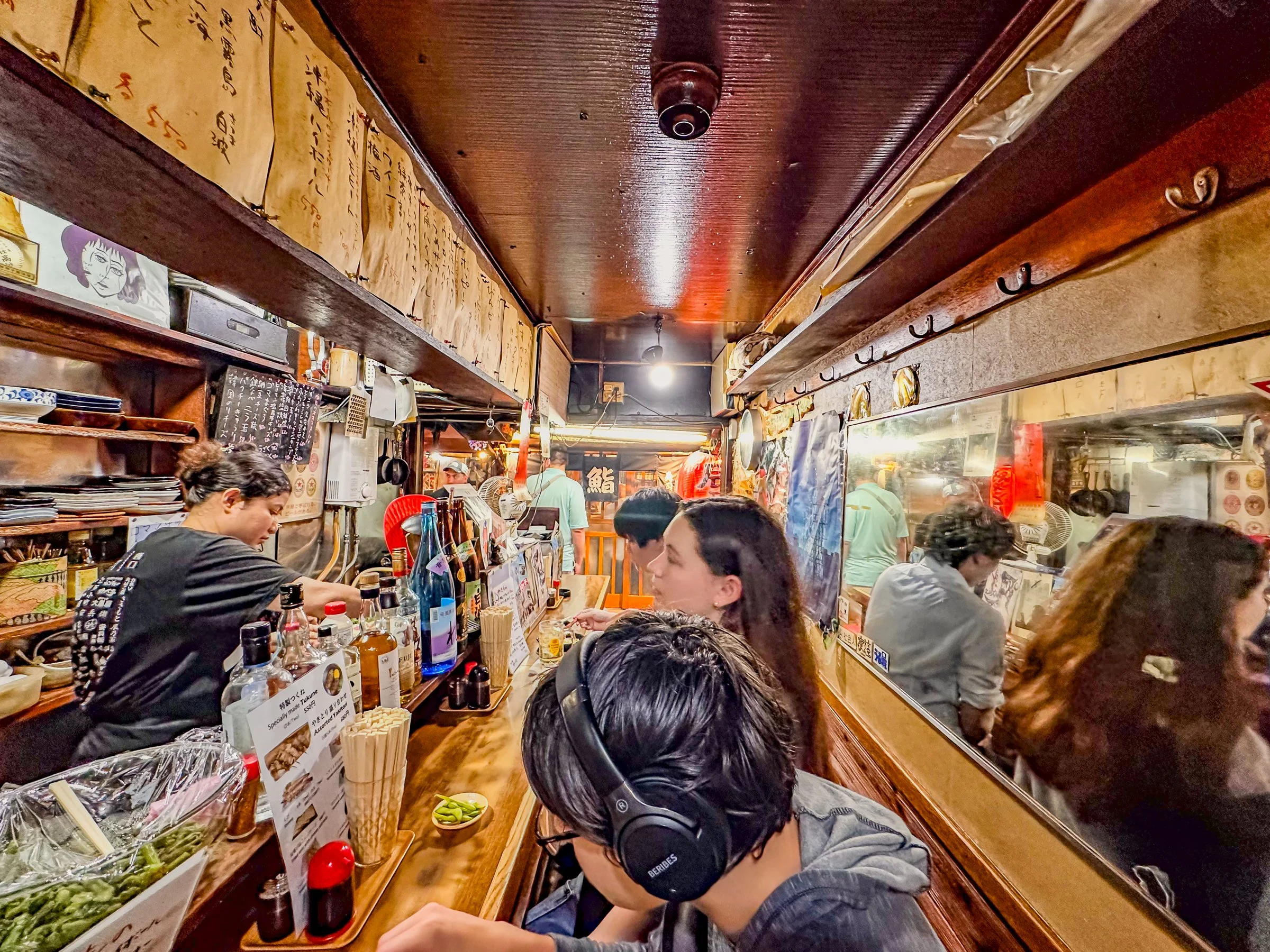
Squeezed into a counter seat at one of the tiny yakitori bars in Memory Lane, Shinjuku.
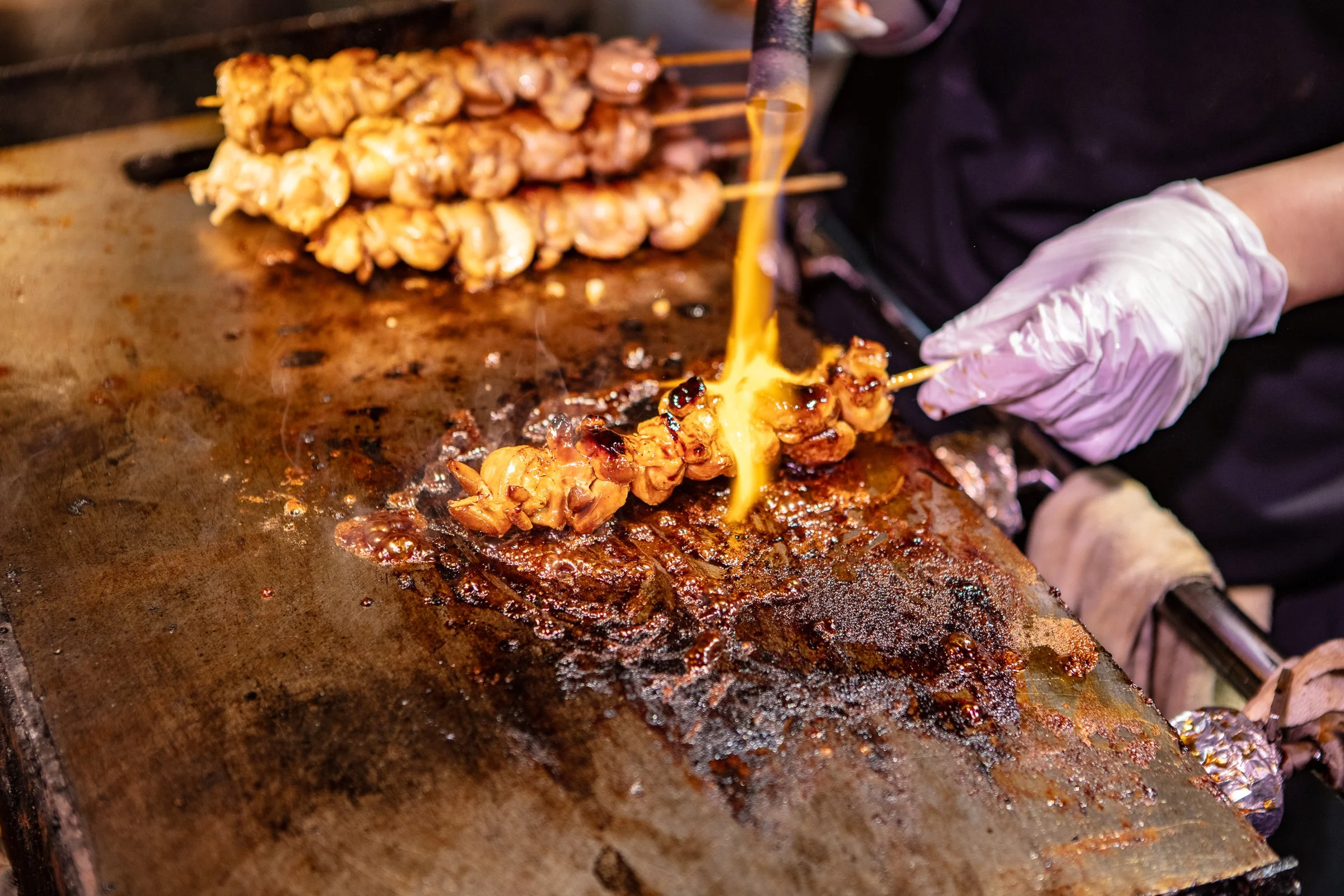
Yakitori skewers over a live flame in Shinjuku — the cook barely paused between batches.
Gacha Machines and Cat Cafes
No trip to Tokyo with teenagers is complete without an afternoon lost in a gacha machine floor. Several floors of capsule toy vending machines, each one a different anime, each one requiring exactly one more coin. We lost track of time.
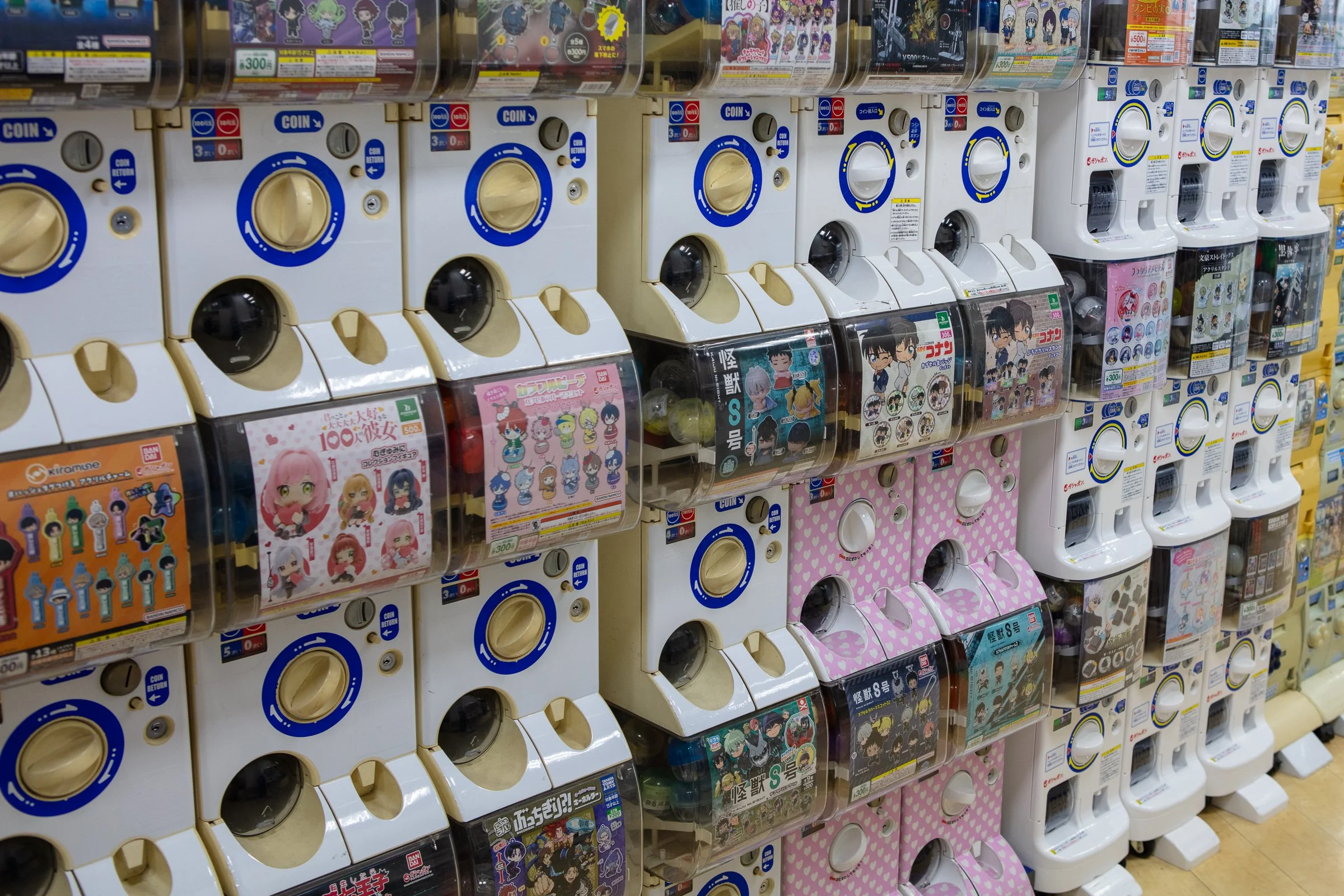
Several floors of gacha machines in Tokyo — each one a different anime, each one requiring exactly one more coin.
The cat cafe was quieter. One of those places where you buy 100-yen treats from a dispenser and let cats decide whether they're interested in you. A tabby Bengal decided my son was acceptable.
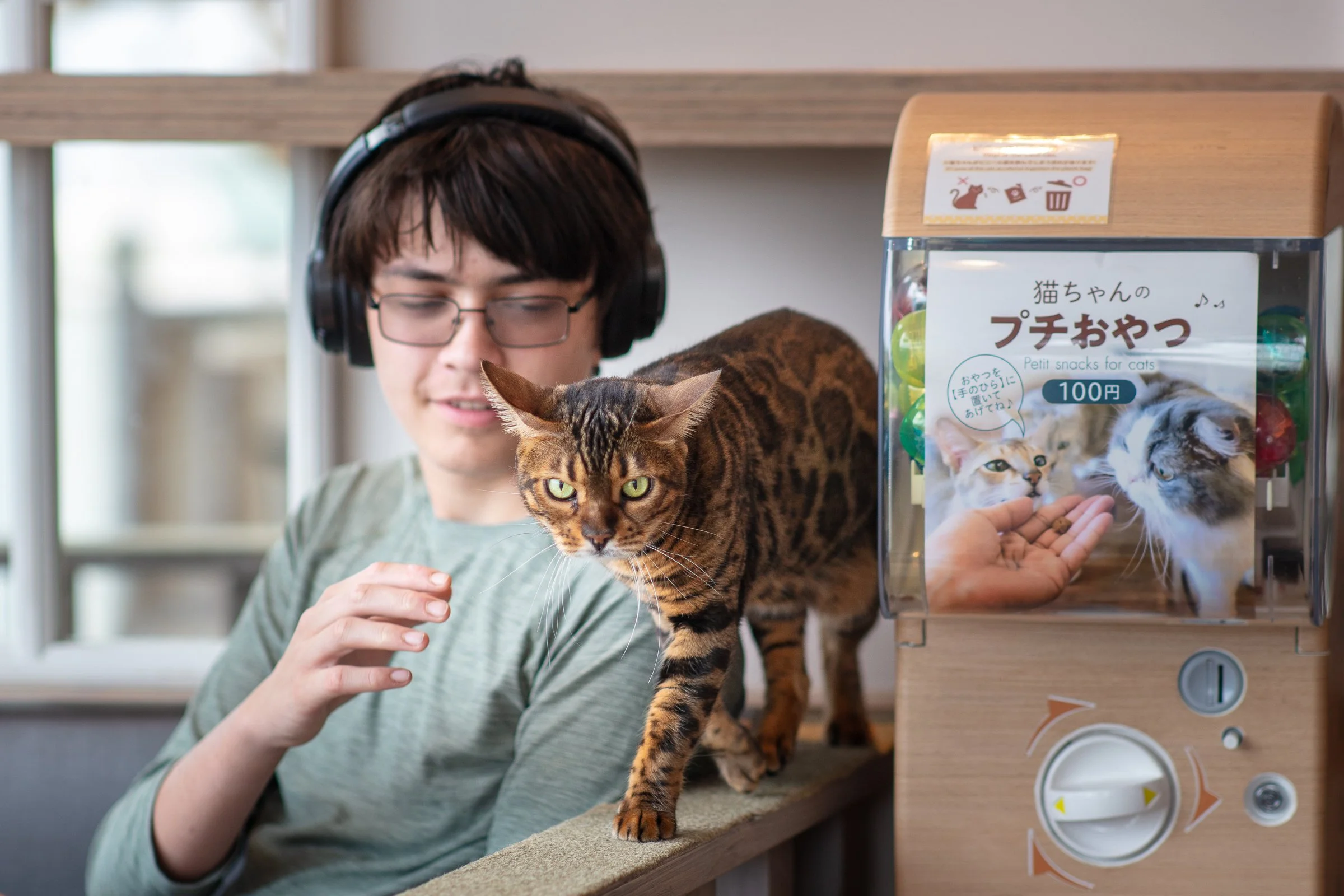
A Tokyo cat cafe — 100 yen gets you a handful of treats and the cat decides if you're worth its time.
Mt. Fuji: The Overnight Summit
The sign at the 5th Station says it clearly: Mt. Fuji, 2000m, July 4, 2024. We were three of us, hired guides from Mt. Fuji Mountain Guides, hiking poles in hand, trying to look more prepared than we felt.
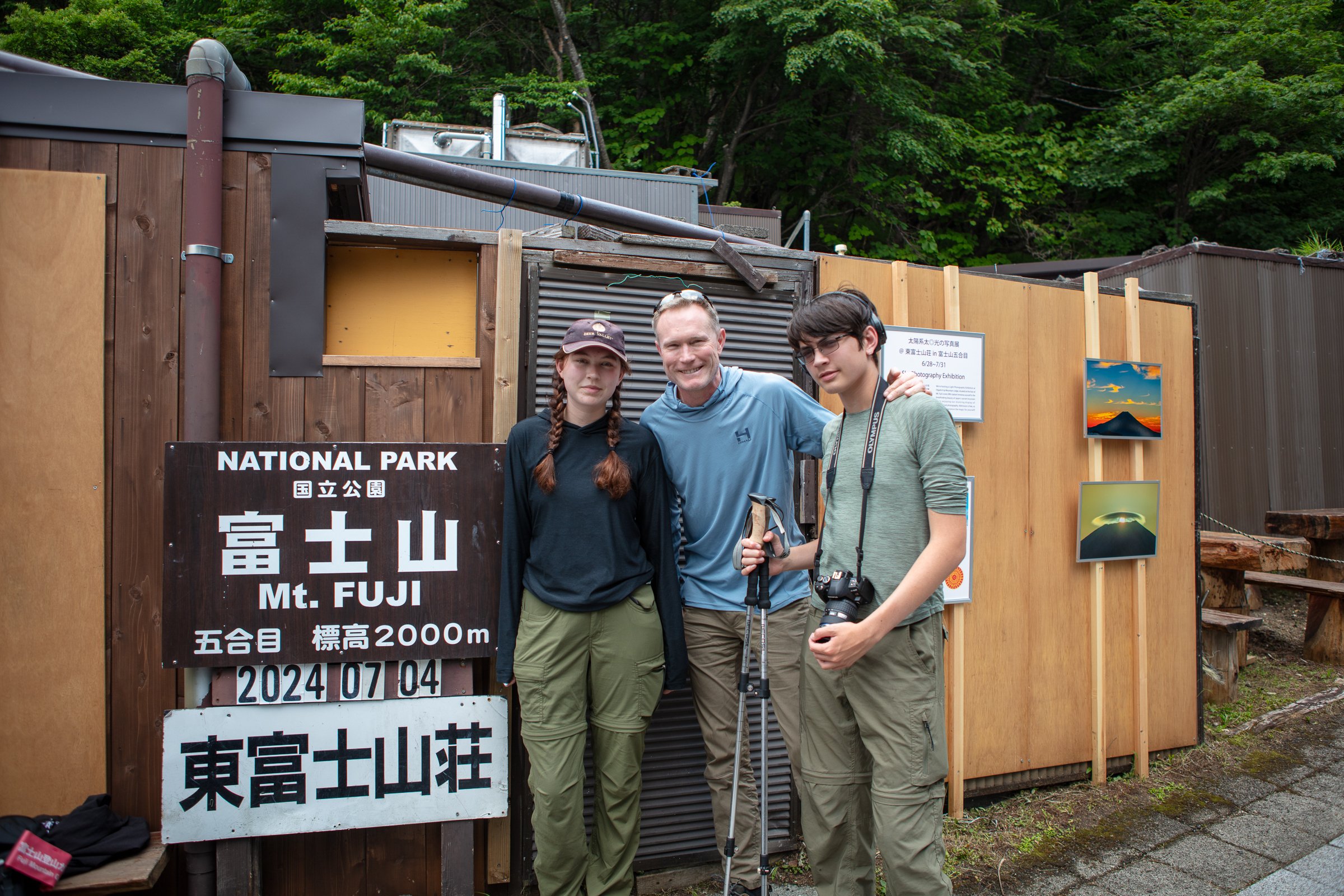
The three of us at the Mt. Fuji 5th Station, 2000m. The summit is still 1,776 metres above our heads.
We started in late afternoon, reached the mountain hut as darkness fell, slept in a narrow wooden bunk room in a row of strangers, and were up again at 1am. The trail above the hut is a line of headlamps stretching up into the dark — hundreds of people moving silently toward the same goal.
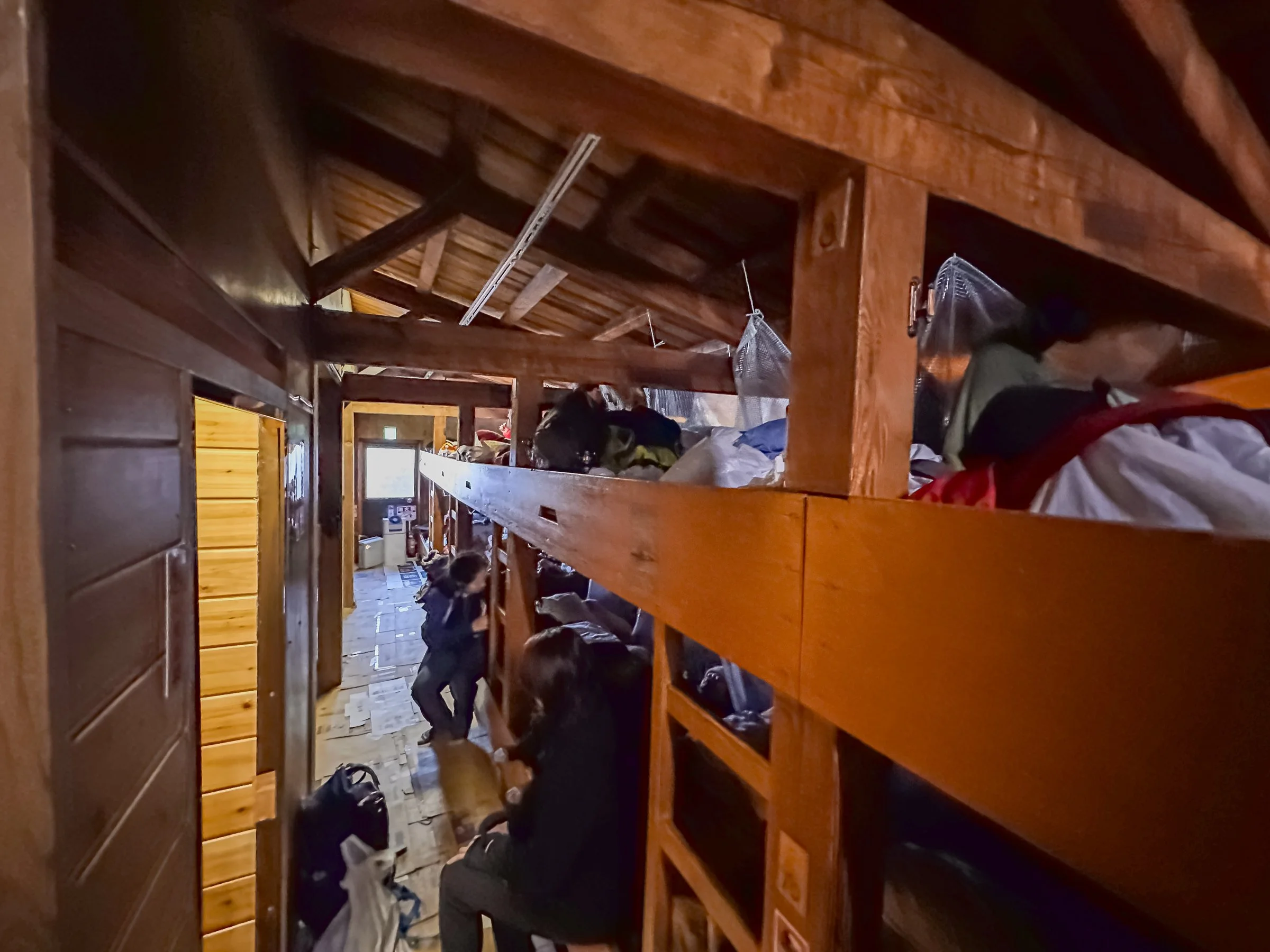
The mountain hut dormitory on Fuji — narrow bunks, shared with strangers, alarm set for 1am.
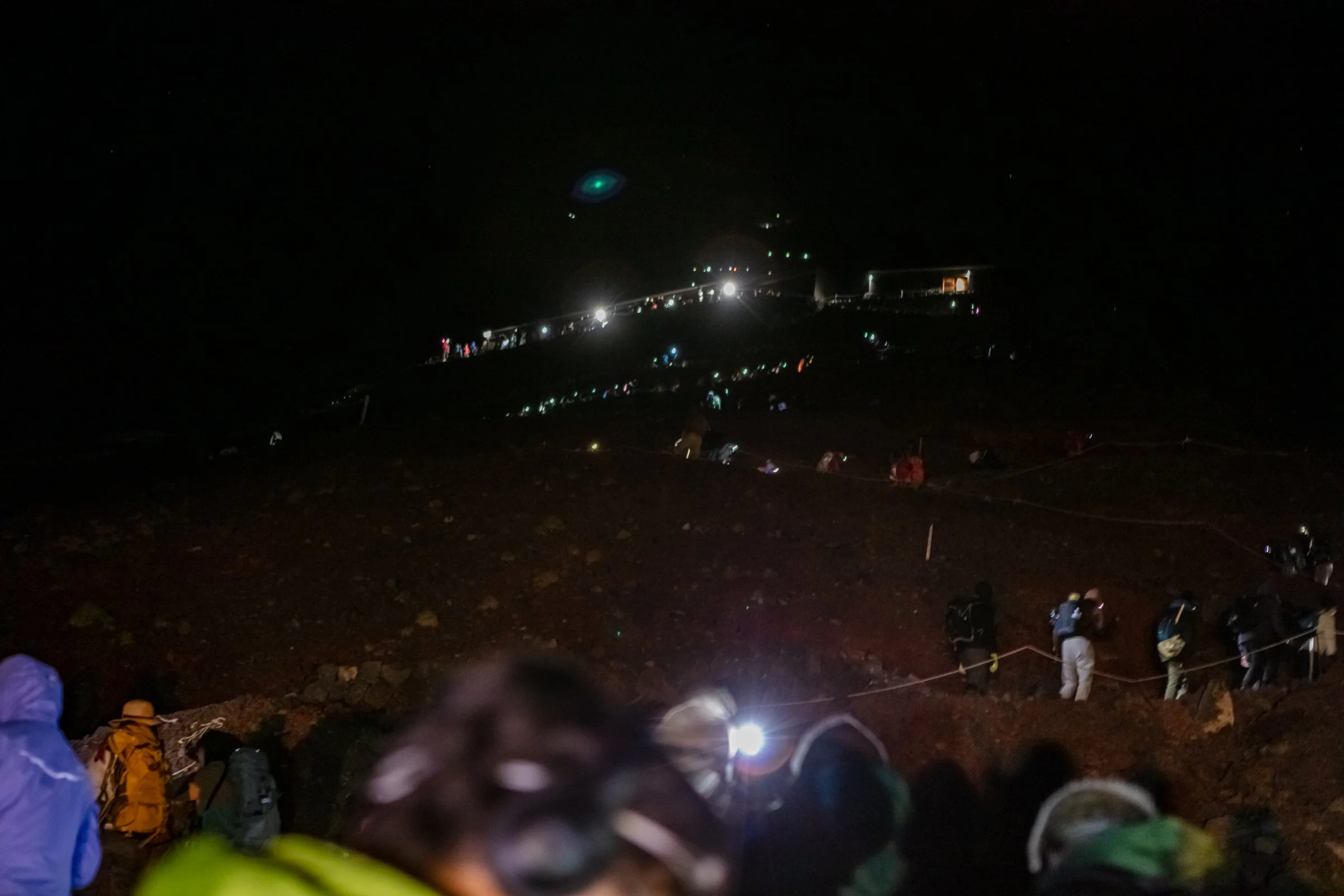
The trail above the hut at 2am — a line of headlamps moving silently toward the summit.
Above 3000 meters the cold becomes serious. Our guide — a quietly excellent mountain professional who has made this ascent more times than he can count — kept the pace honest and the rest stops short. The volcanic slope looks nothing like the Fuji of photographs. Up close it's rust-red and black scree, a lunar landscape that seems to go on longer than is reasonable.
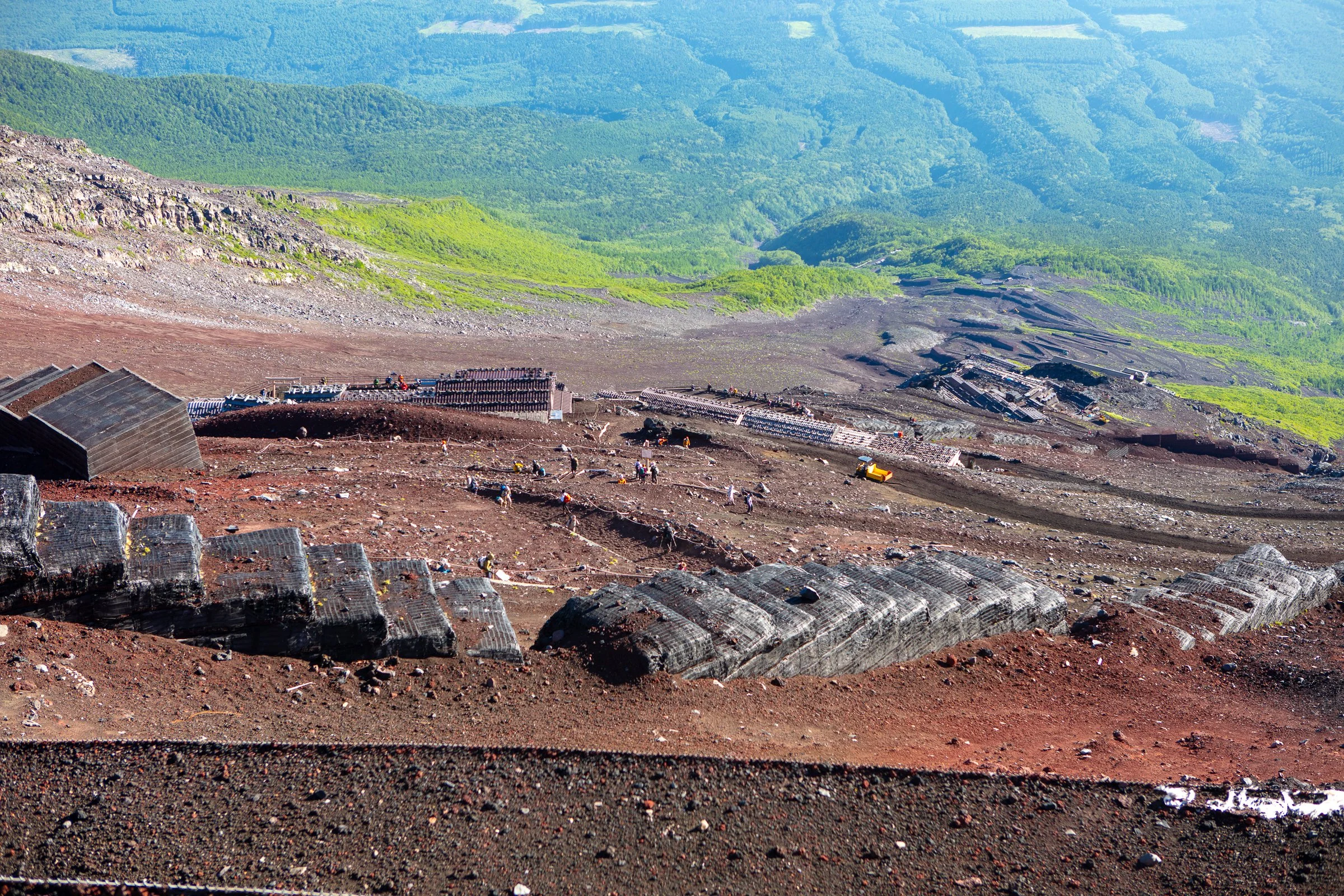
Looking back down the volcanic scree above Station 8. The green forest below felt impossibly far away.
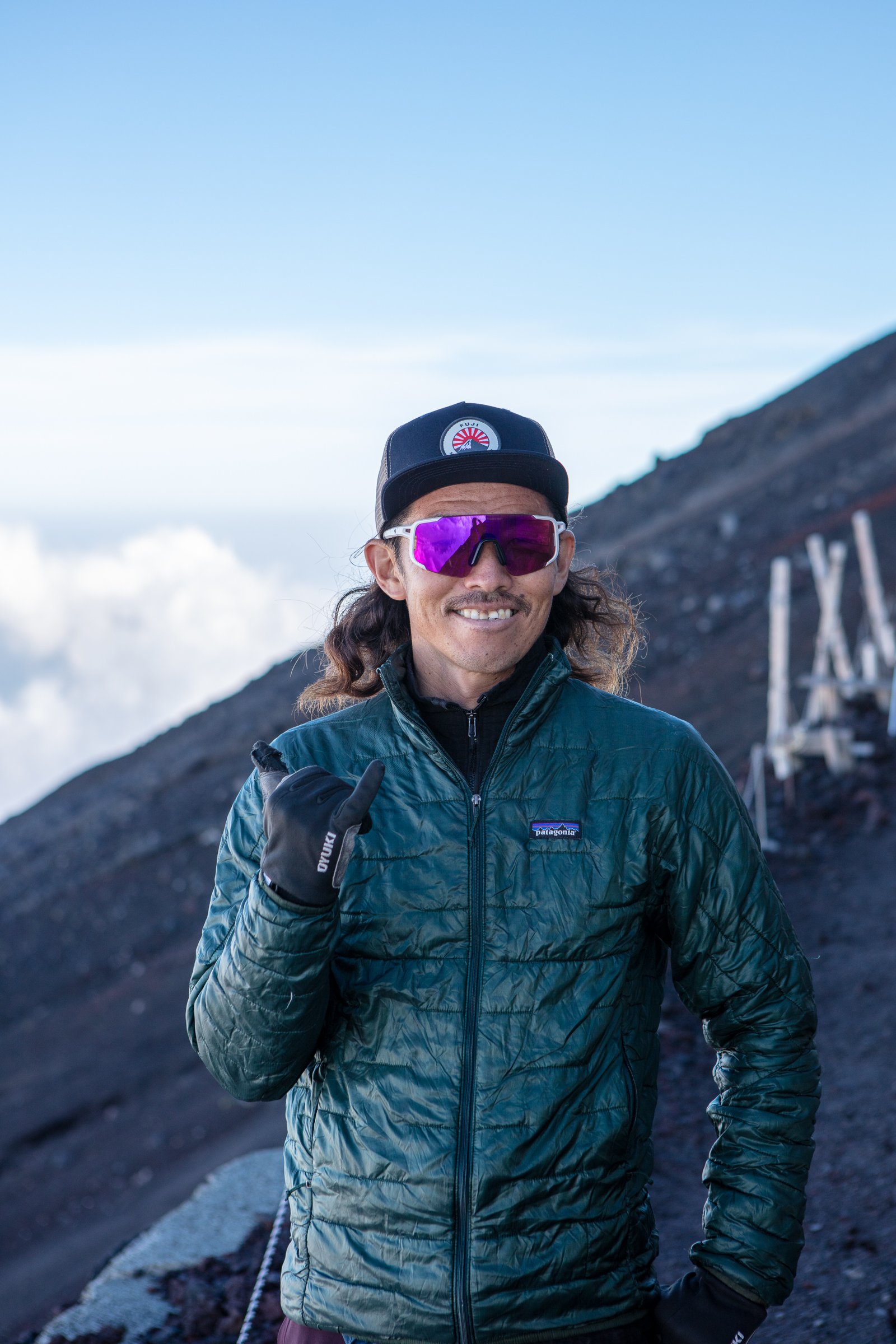
Our guide from Mt. Fuji Mountain Guides, above the clouds near the summit crater.
We reached the summit crater as the sky turned. A lone torii gate stands at the top, silhouetted against a band of orange and deep blue that stretched to the horizon. Below us, a lake caught the first light. This is the moment people climb for.
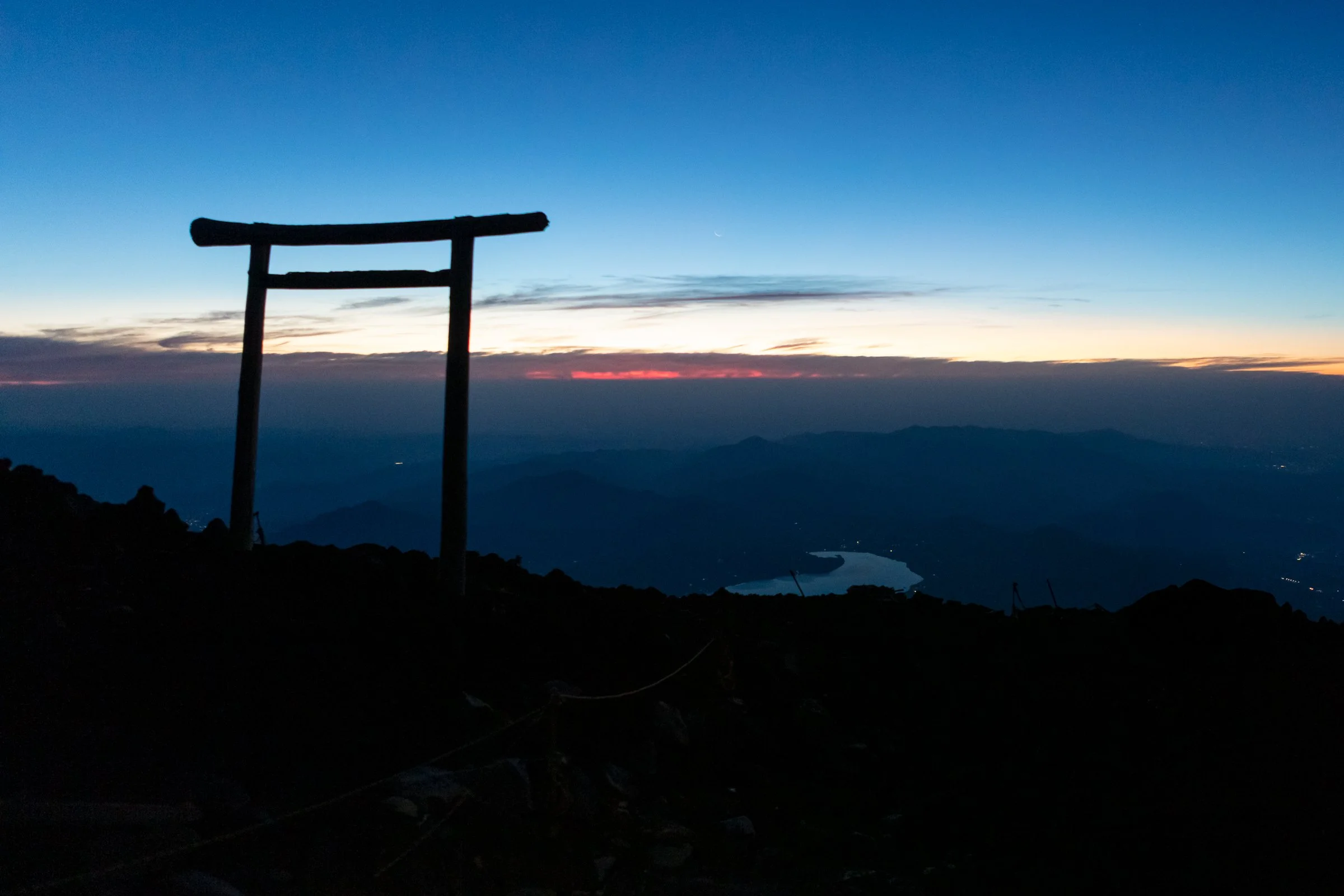
The torii gate at the summit of Mt. Fuji at dawn — a lake catching the first light 3,776 metres below.
The couple we'd climbed alongside most of the night made it up just behind us. Summit smiles at 3776 meters.
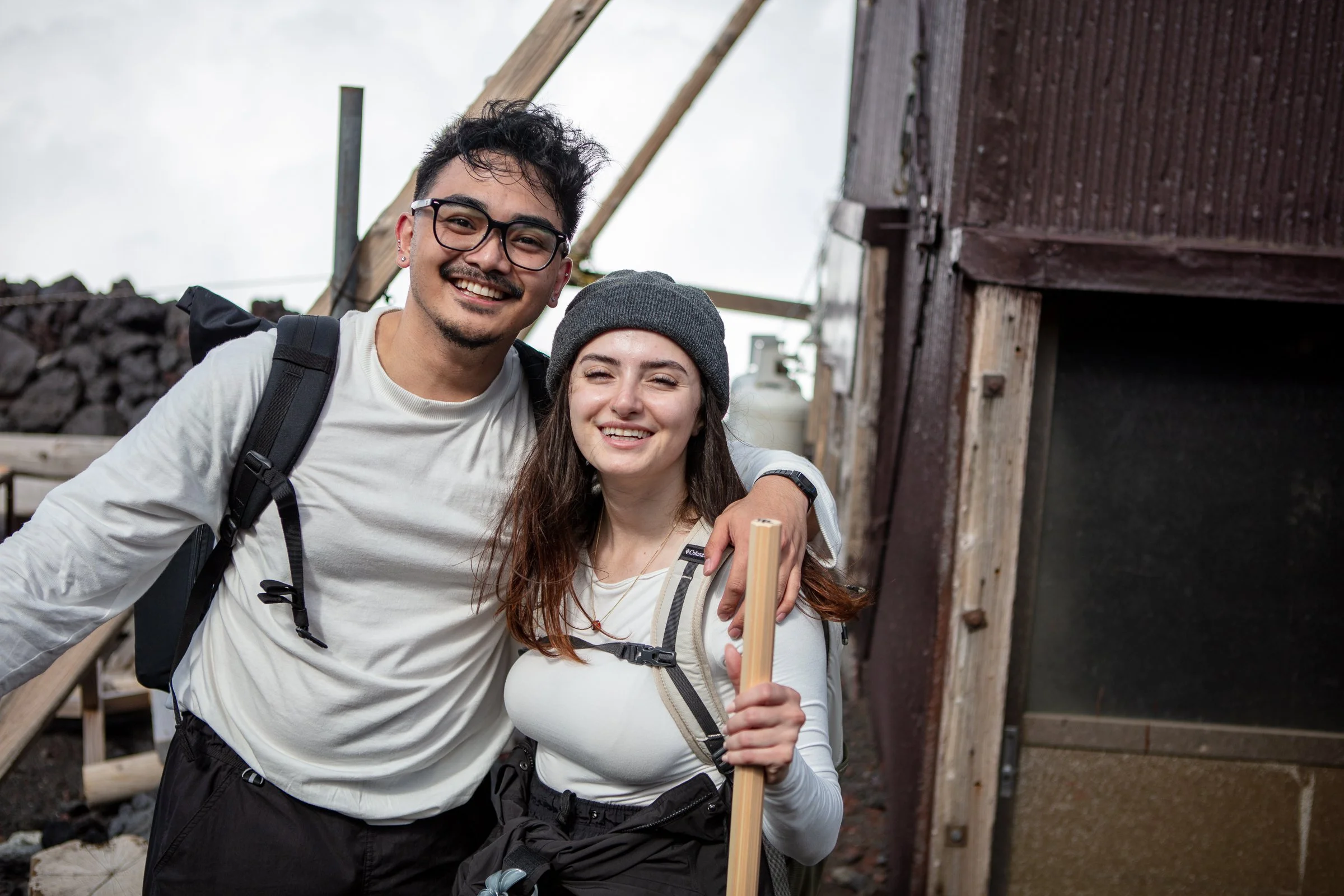
A couple from our guided group at the summit. Nine hours of climbing, one very good smile.
Kyoto: Temples, Torii, and a Ryokan Garden
The Shinkansen from Tokyo to Kyoto takes about two and a quarter hours. We arrived in the afternoon and checked into accommodation in the middle of the city — simple, central, with a small zen garden courtyard where someone had left a pair of orange slippers on a stepping stone.
Fushimi Inari: Before the Crowds
Fushimi Inari Taisha is the most photographed shrine in Japan, which is exactly why I set an alarm for 4:45am. I walked to the shrine alone, arriving as the forecourt was empty and the first morning light was catching the lacquered orange of the main gate.
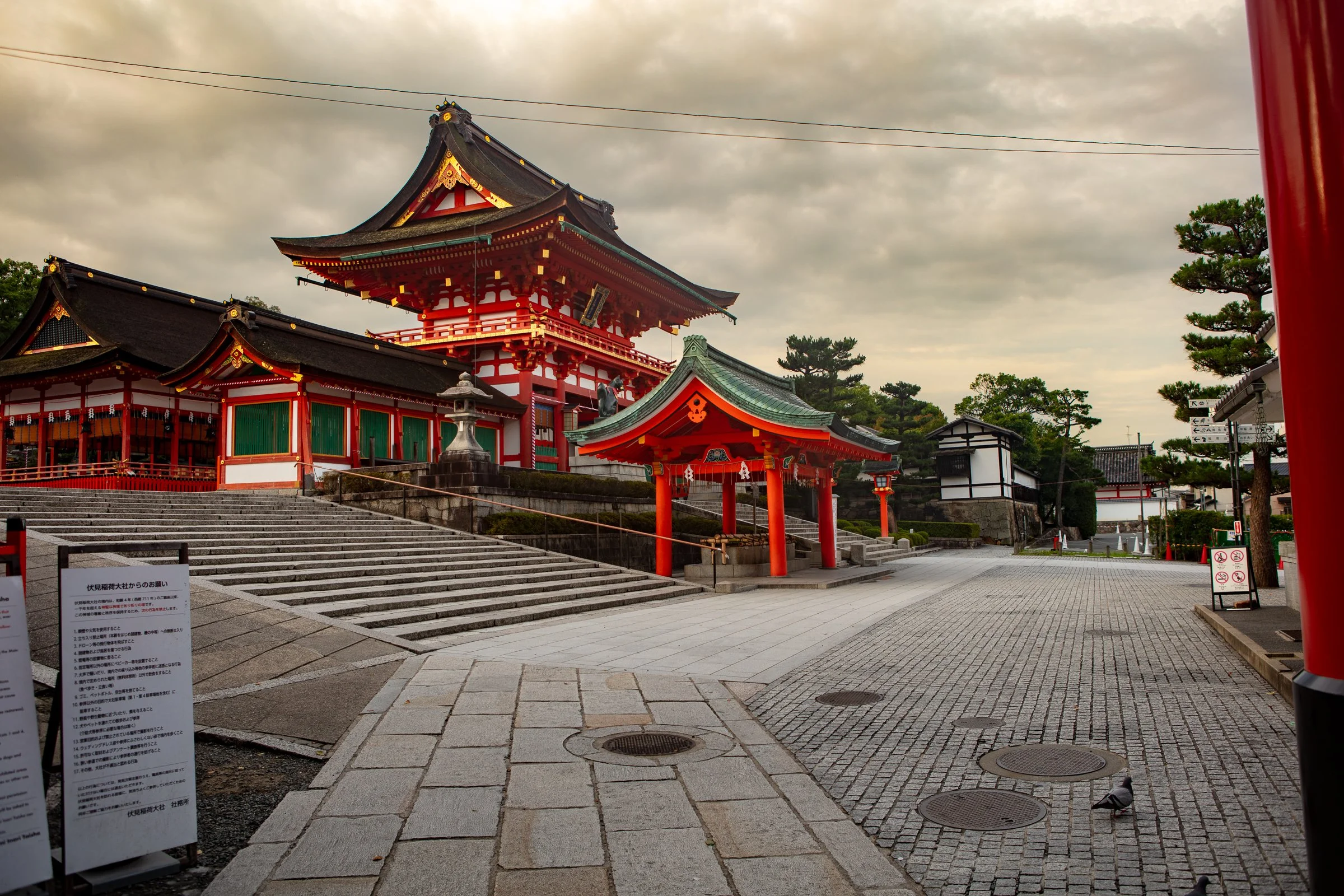
Fushimi Inari Taisha at 5am — the forecourt completely empty, warm light on the main gate.
The famous torii tunnel begins immediately behind the main buildings and continues up the mountain for four kilometers. At 5am, the lower sections are yours. The sound of the city disappears. All you can hear is birds.
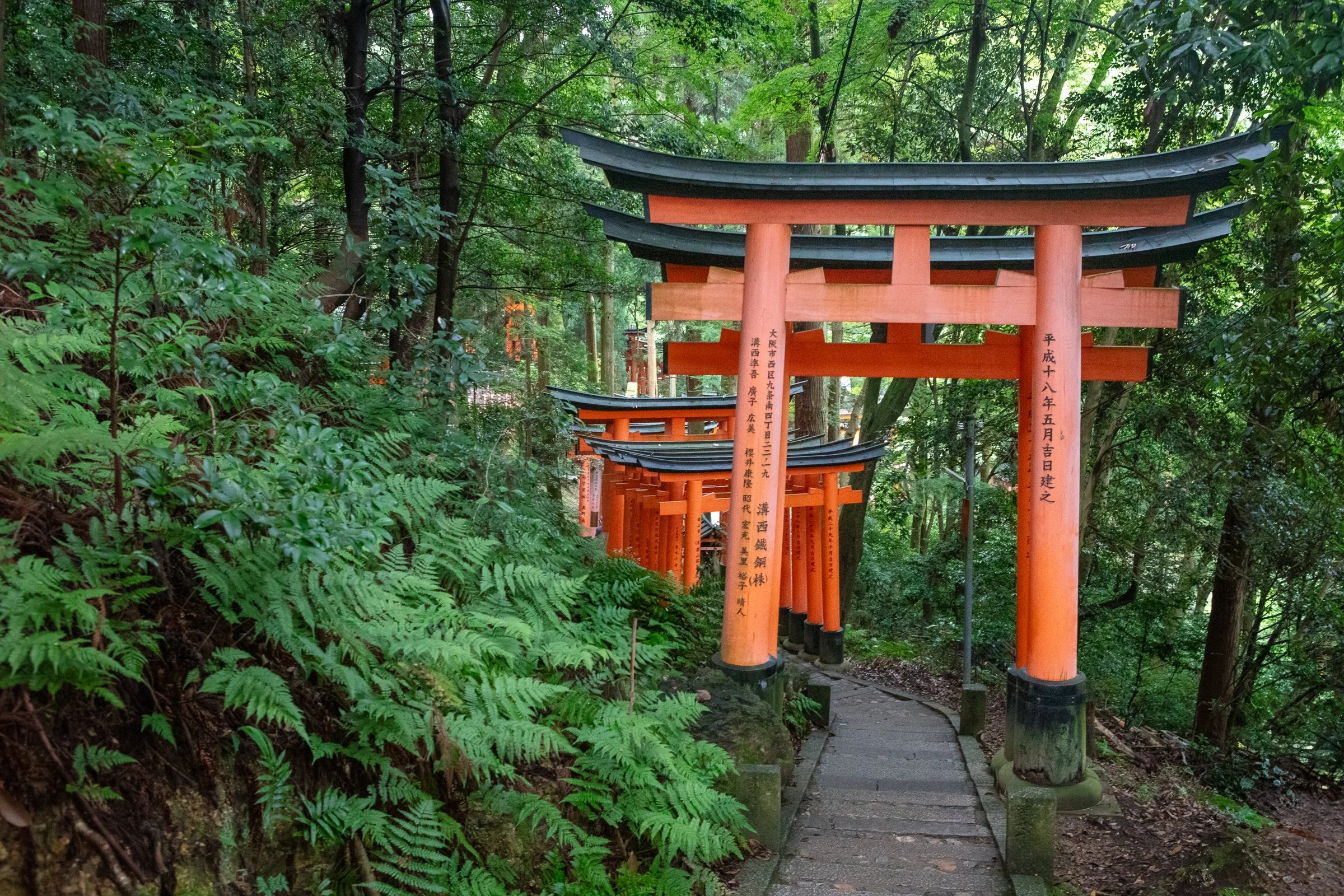
The famous torii tunnel at Fushimi Inari — stairs ascending into the forest, gates receding into orange.
Each gate is inscribed with the name of the individual or business that donated it. There are over 10,000 of them. I hiked for two hours before the first tour groups arrived. By then I was well above the crowds and the light had shifted into the soft green of summer forest canopy.
Kiyomizudera: Storm Light
We visited Kiyomizudera in the late afternoon as weather was building to the north. The storm clouds gave the shot everything — the pagoda glowing orange-red against a dark steel sky, the city of Kyoto spread out below in that improbable combination of ancient roofline and modern sprawl.
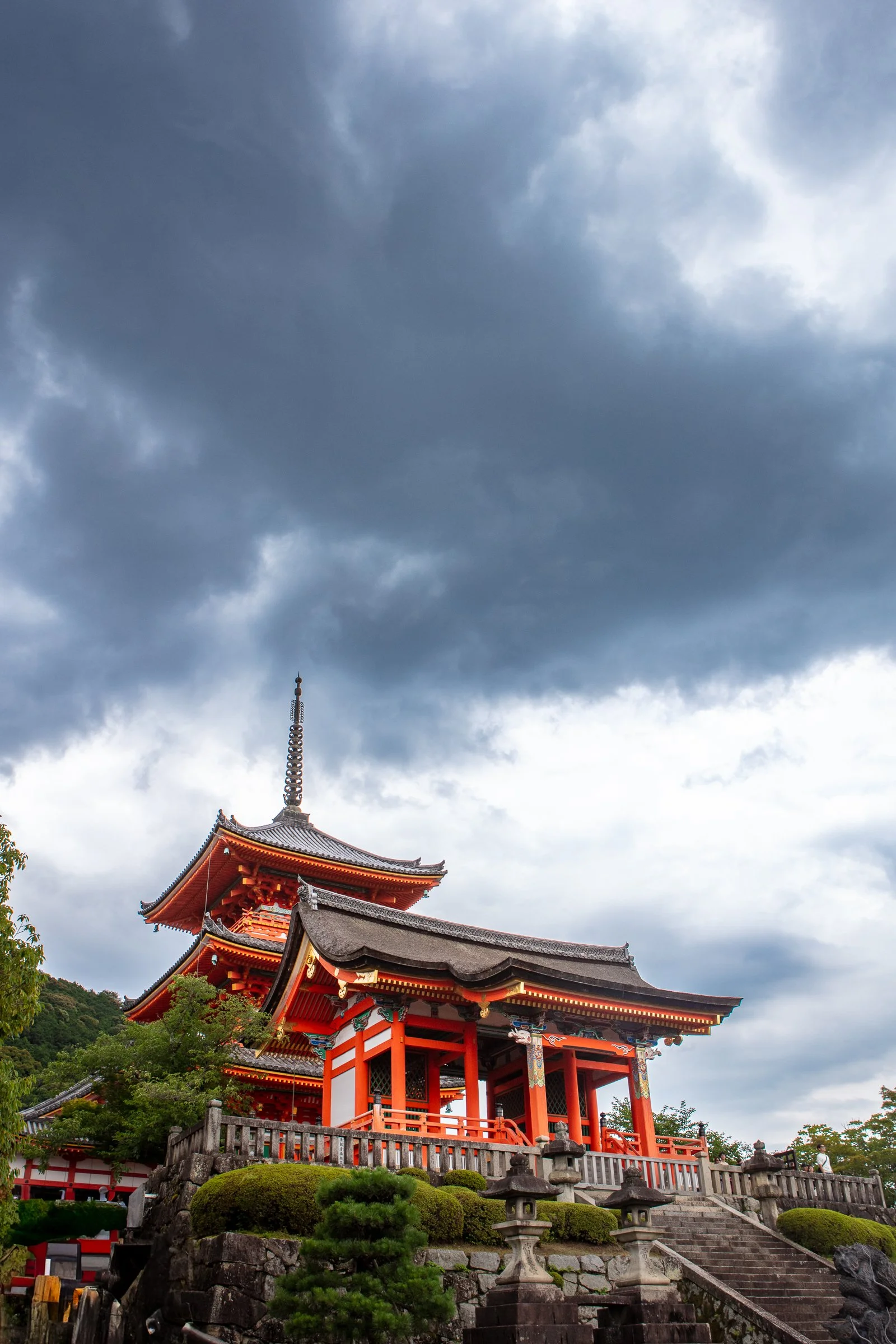
Kiyomizudera's west gate and pagoda as a storm built over Kyoto. The light lasted about ten minutes.
My son touched one of the ancient painted pillars at the top of the temple stairs with a kind of quiet curiosity — the same expression he had at the tuna auction, at the summit of Fuji. Japan does that. It makes you want to understand things.
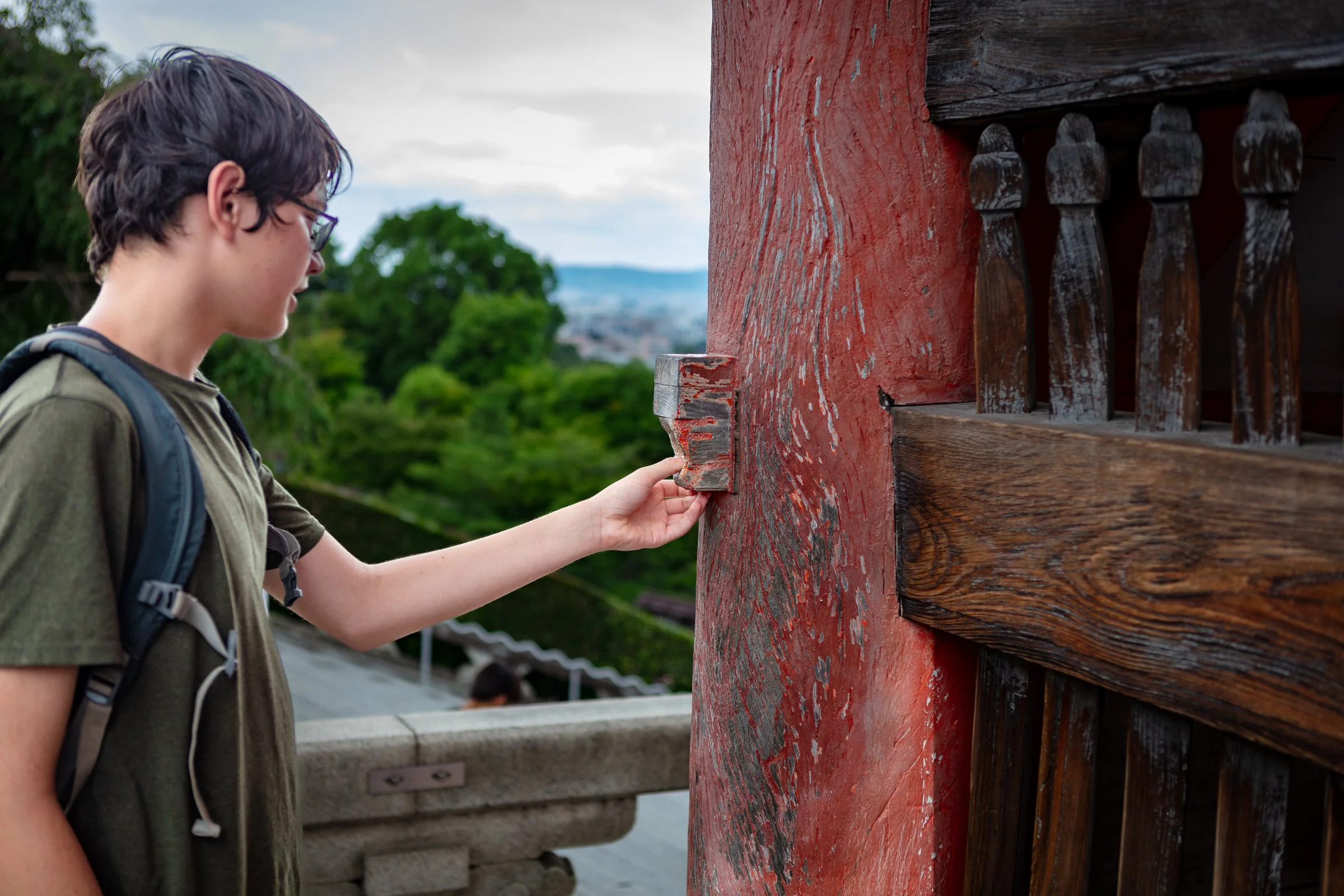
Touching the ancient painted timber of Kiyomizudera — centuries of lacquer worn back to bare wood.
Kinkaku-ji: The Golden Pavilion
We arrived at Kinkaku-ji (the Golden Pavilion) on an overcast day, which turned out to be better than clear skies. The flat grey light let the gold speak without competition, and the surface of Kyoko-chi pond held a soft reflection of the three-story structure above it.
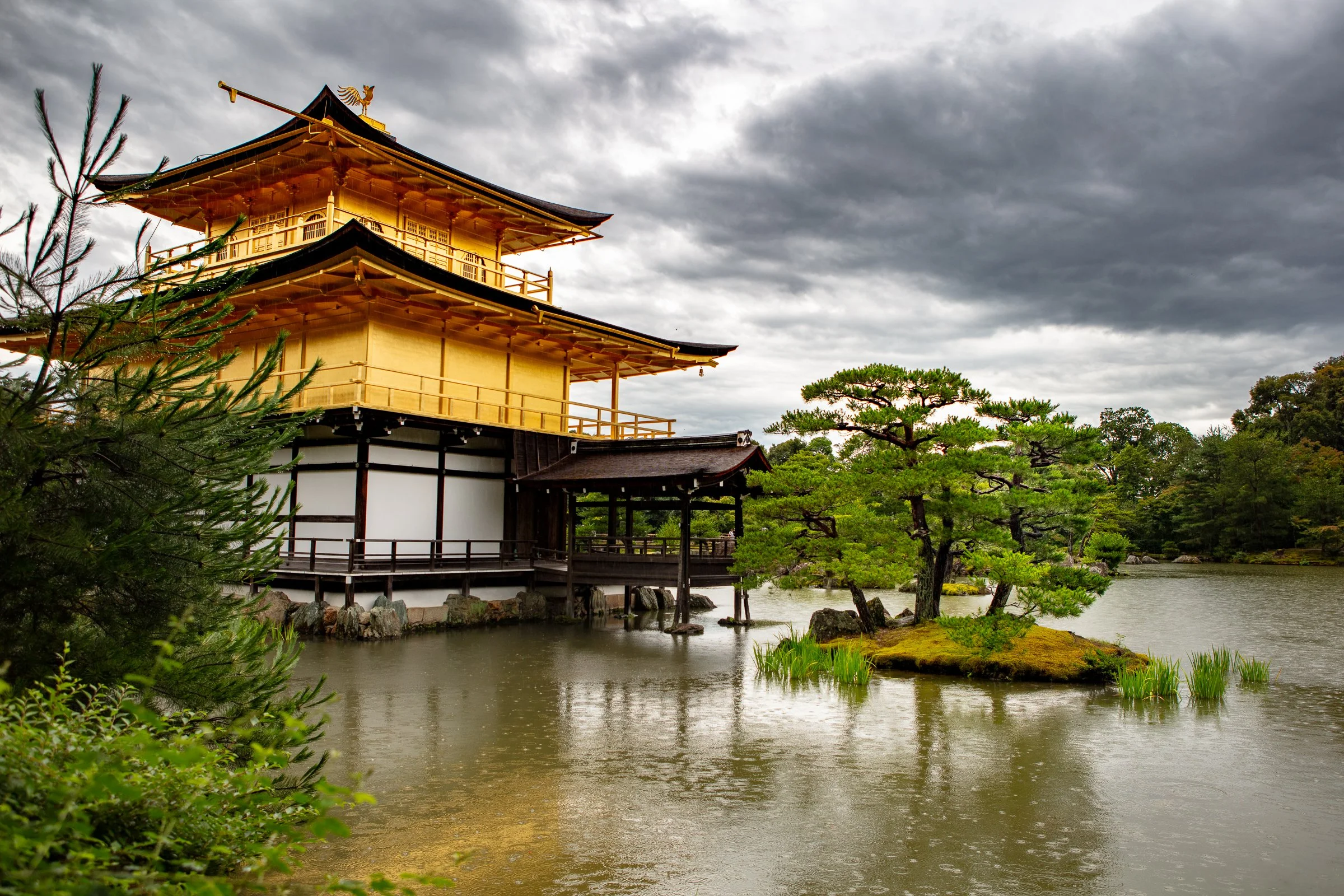
Kinkaku-ji (the Golden Pavilion), Kyoto — gold leaf on three floors, reflected in Kyoko-chi pond. Even under storm clouds, it glows.
Nishiki Market
Kyoto's covered market runs for several blocks through the center of the old city and sells everything: fresh tofu, pickled plums, matcha everything, and a stall selling whole small fish deep-fried and presented on a plate by a chef in a white coat who clearly took the presentation seriously.
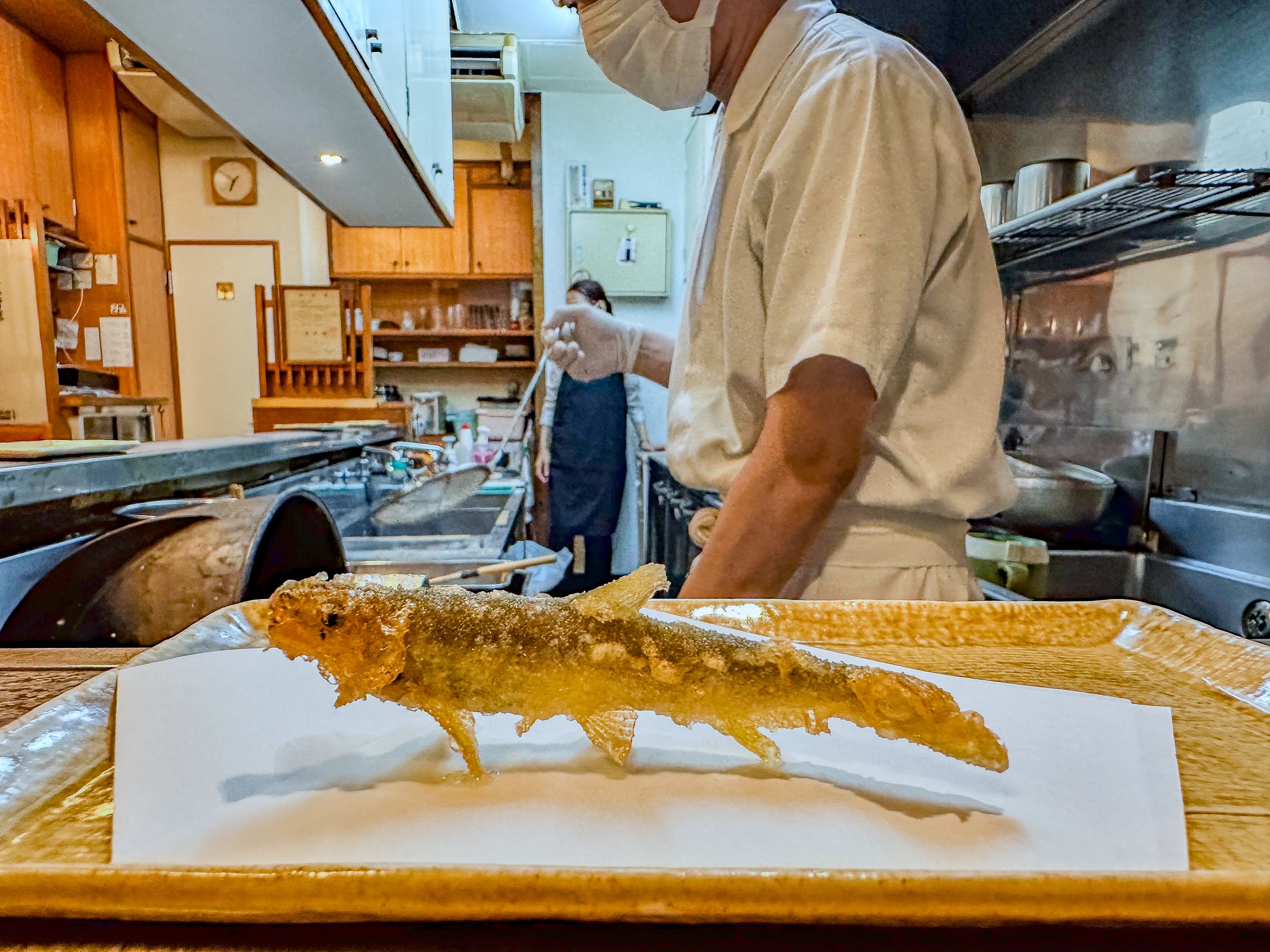
The tempura chef at work — batter bowl, draining tray, everything moving at once.
Nara: The Deer Will Find You
Nara is a 45-minute train ride from Kyoto and home to approximately 1,200 sika deer who have been designated as national treasures and know it. They roam freely through Nara Park, and they have learned that humans carry shika senbei — small round crackers sold at every corner — and they will take them from you without ceremony.
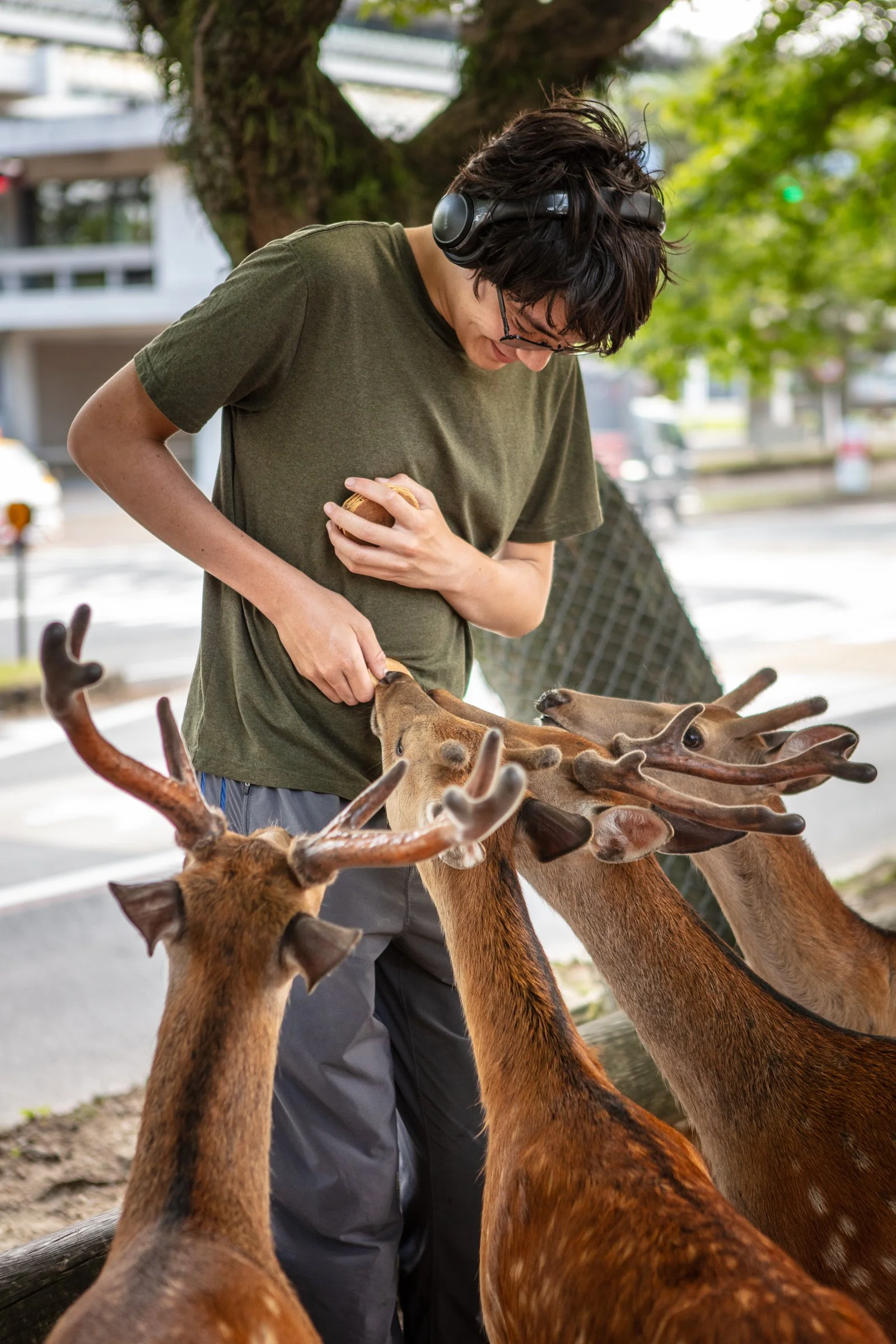
Feeding shika senbei to the Nara deer — they're polite right up until the crackers run out.
The deer are genuinely bold. They will bow if you bow to them (they've learned this gets crackers faster), and they will absolutely eat your map if you're not paying attention. The kids were delighted. Even the teenagers who claimed to be too old for this kind of thing were laughing.
Nara also has Todai-ji, one of the world's largest wooden buildings, and the beautiful glowing lanterns of Kasuga Grand Shrine. We walked through both, but honestly — the deer got most of our time and all of our crackers.
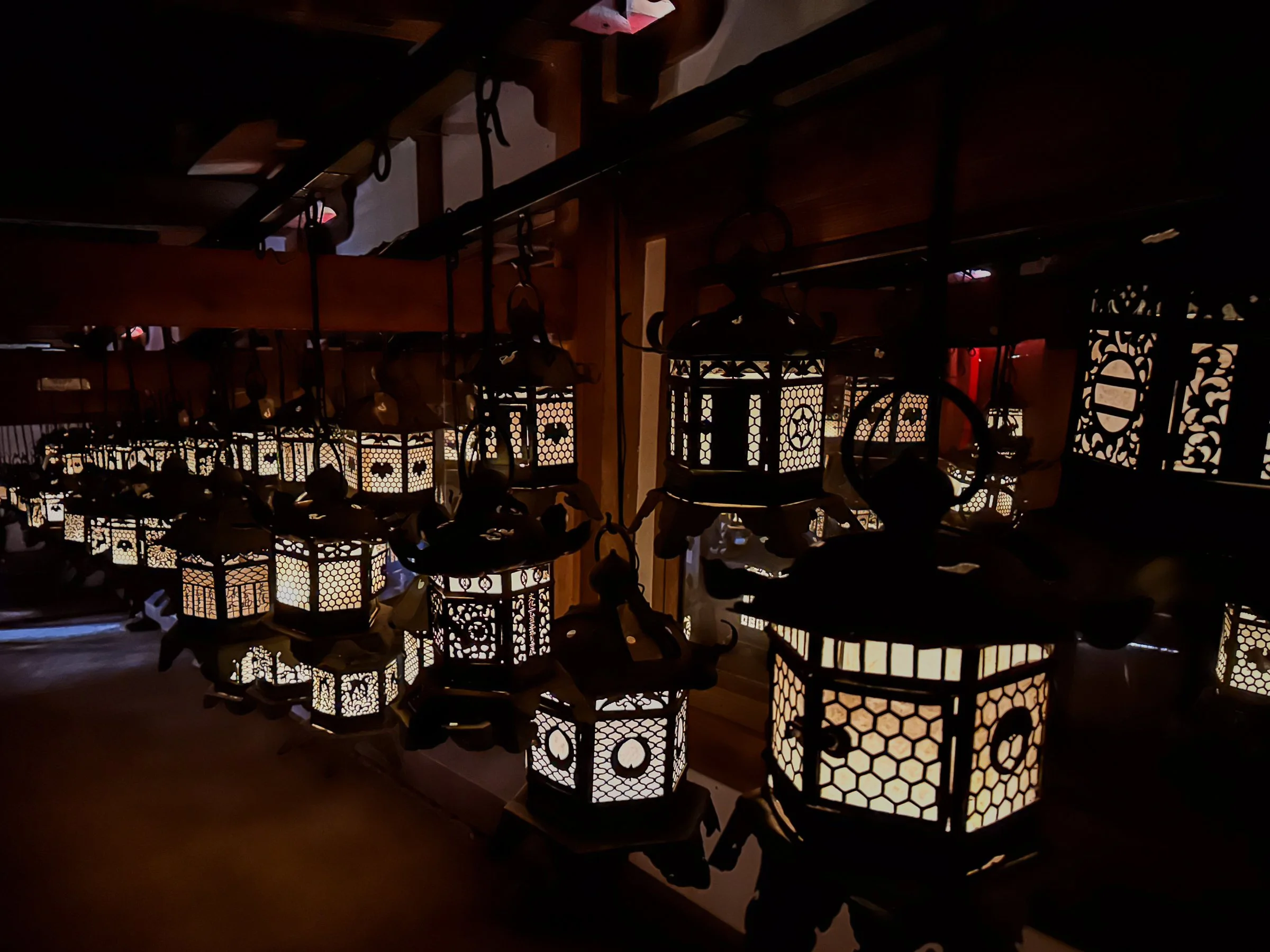
The hanging bronze lanterns inside Kasuga Grand Shrine, Nara — each one donated by a worshipper.
Arashiyama: The Bamboo Path
On our last morning in Kyoto we walked the Arashiyama Bamboo Grove at Tenryu-ji temple. The famous path runs for about 500 meters through towering moso bamboo. In summer the stalks are a vivid green, the air inside the grove noticeably cooler and quieter than the street outside.
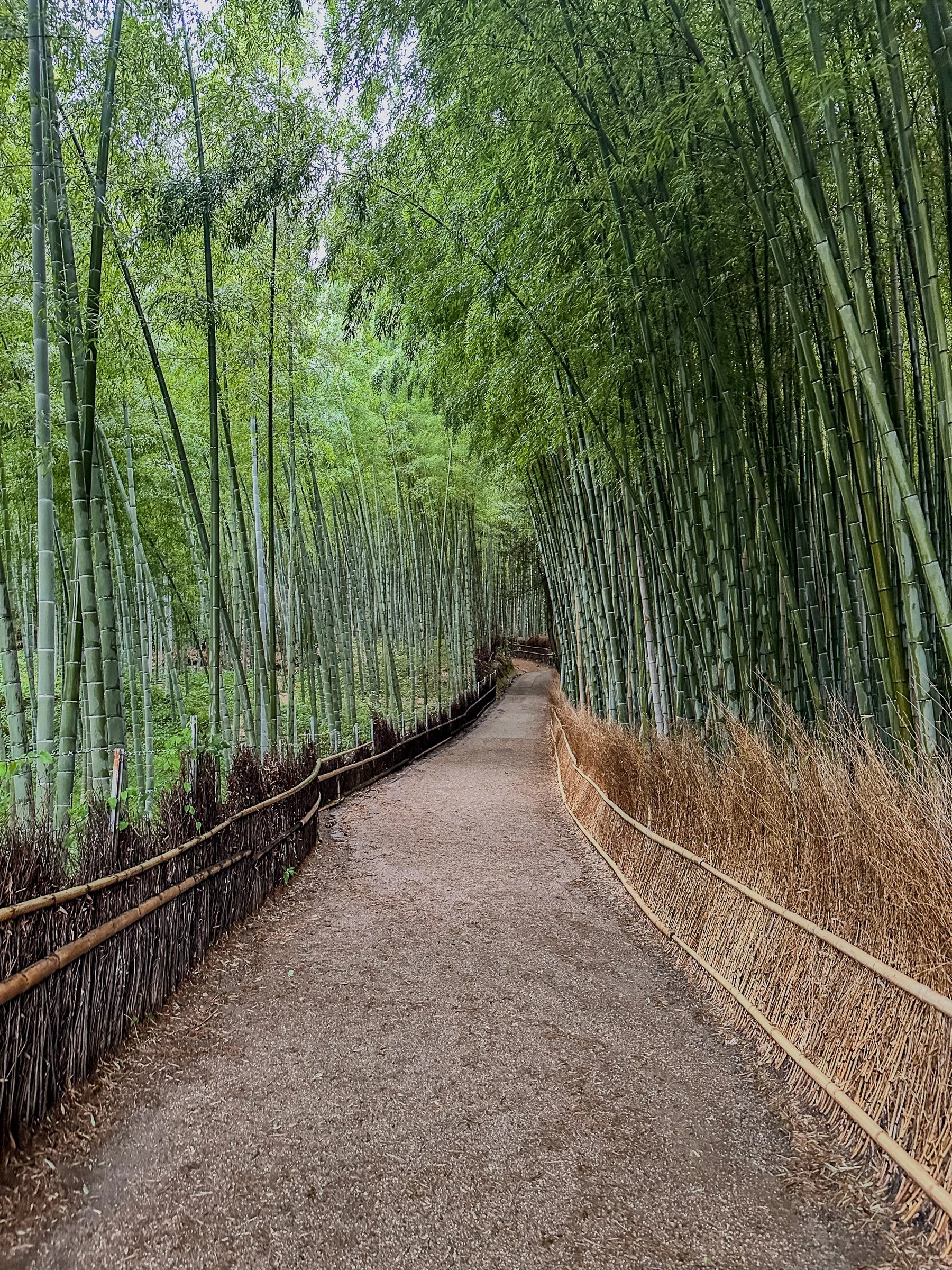
The Arashiyama Bamboo Grove path — cooler and quieter than anywhere else in Kyoto in summer.
Go early. By 9am the crowds are significant. By 7am you might have a few minutes to hear the bamboo creak in the wind.
A Few Honest Notes for Anyone Planning This Trip
Mt. Fuji: Book your guided climb early — July and August fill quickly. Mt. Fuji Mountain Guides handled everything for us and made the overnight summit manageable for a mixed-fitness group. Bring more layers than you think you need. It is genuinely cold at the top regardless of what the summer weather is doing in Tokyo.
Tsukiji Tuna Auction: Register through the official Tokyo Metropolitan Central Wholesale Market lottery system months in advance. Spots are limited and genuinely competitive. The outer market around Tsukiji is always open and worth the early morning visit on its own.
Fushimi Inari: The 5am alarm is worth it. The main torii tunnels are manageable even by 7am, but the real solitude is in the first hour of light. Wear shoes you can hike in — the full trail to the summit of Inari-san is a proper hike, not a stroll.
Nara deer: Buy several packets of crackers. Don't hold them above your head — the deer will climb you. Keep them in front of you and feed slowly.
Kyoto accommodation: We stayed centrally which gave us easy access to everything. The key decision in Kyoto is always how early you're willing to wake up. Most of the iconic spots are genuinely different before 7am.
Matthew Duncan is a Bay Area adventure and outdoor photographer based in Mountain View, California. He shoots families, individuals, couples, and action sports in locations that matter — from coastal trails to national parks to, occasionally, the summit of Mt. Fuji. If Japan has you thinking about documenting your own family adventures, take a look at what I do or browse the family adventure photography sessions. And if you're planning something epic — a national park trip, a climb, a destination session — let's talk.