
Most people know the Dumbarton Bridge as the crossing they take to avoid traffic somewhere else. Something to get over and forget about.
I know it as one of the most cinematic portrait locations in the Bay Area, and almost nobody shoots there.
The Dumbarton Shoreline Trail sits at the Newark end of the bridge. It isn't manicured. There's no permit desk, no seasonal bloom to time your visit around. What it has instead is texture: a wooden boardwalk over tidal marsh, an old farm building with heavy timber doors, graffiti-covered concrete, rusted razor wire, a debris field of driftwood and concrete pipe at the waterline, and the bridge hanging in the background of almost every frame.
It filters for a particular kind of shoot. Not every look belongs here. When the match is right, nothing else in the Bay Area comes close. I've photographed two sessions here that show that range: one in a black silk slip dress that ran from overcast afternoon into sunset, and one in a deep red gown and opera gloves on a windy morning.
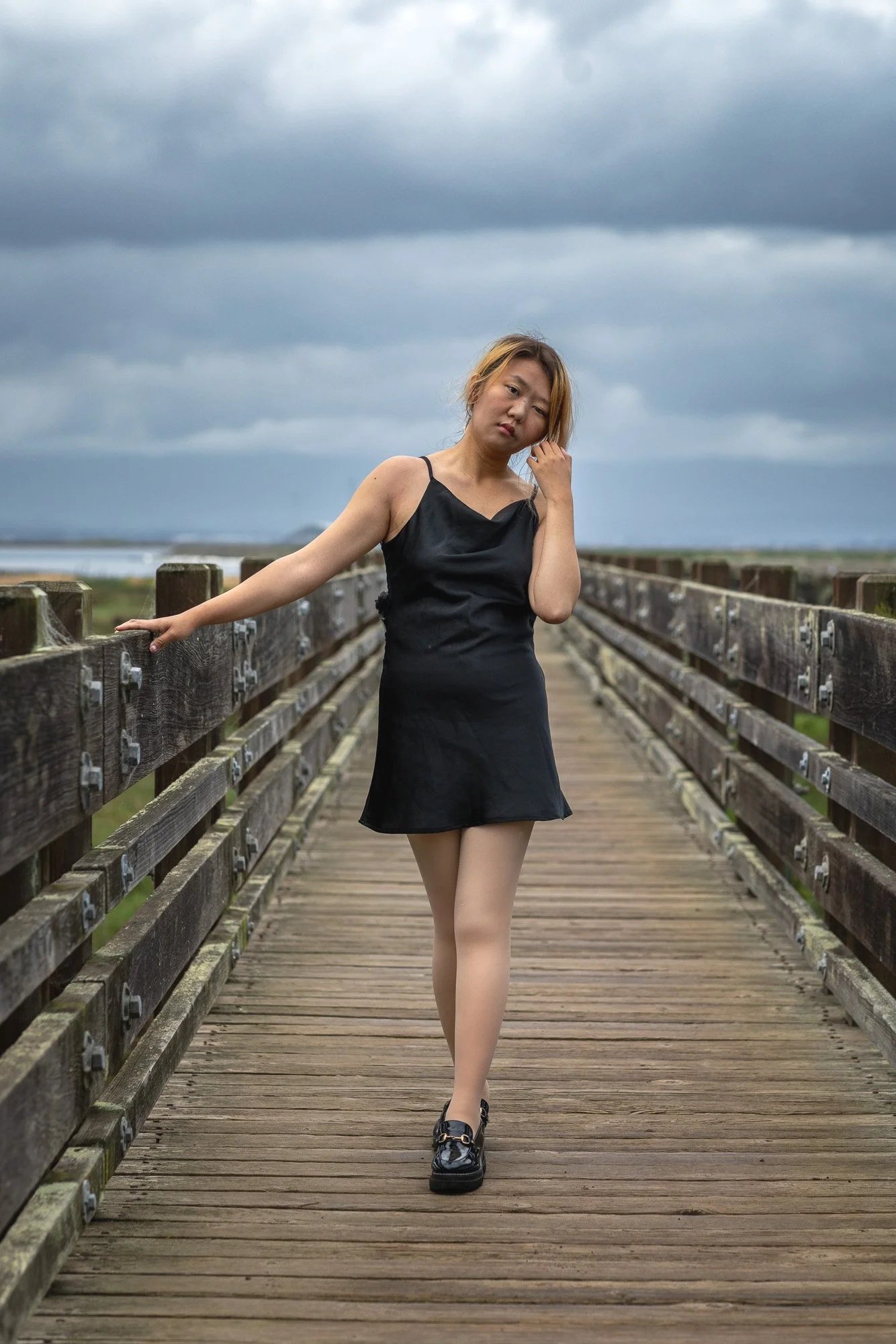
The boardwalk and the farm building
The boardwalk runs out over the marsh and ends at a gate with old decorative ironwork that most visitors never reach. On an overcast day the light here is flat and even, which gets written off as dull. For a dark, cinematic look it's exactly right: it keeps the drama in the subject and the setting instead of in hard shadows. The planks give you leading lines straight through the frame to the open water.
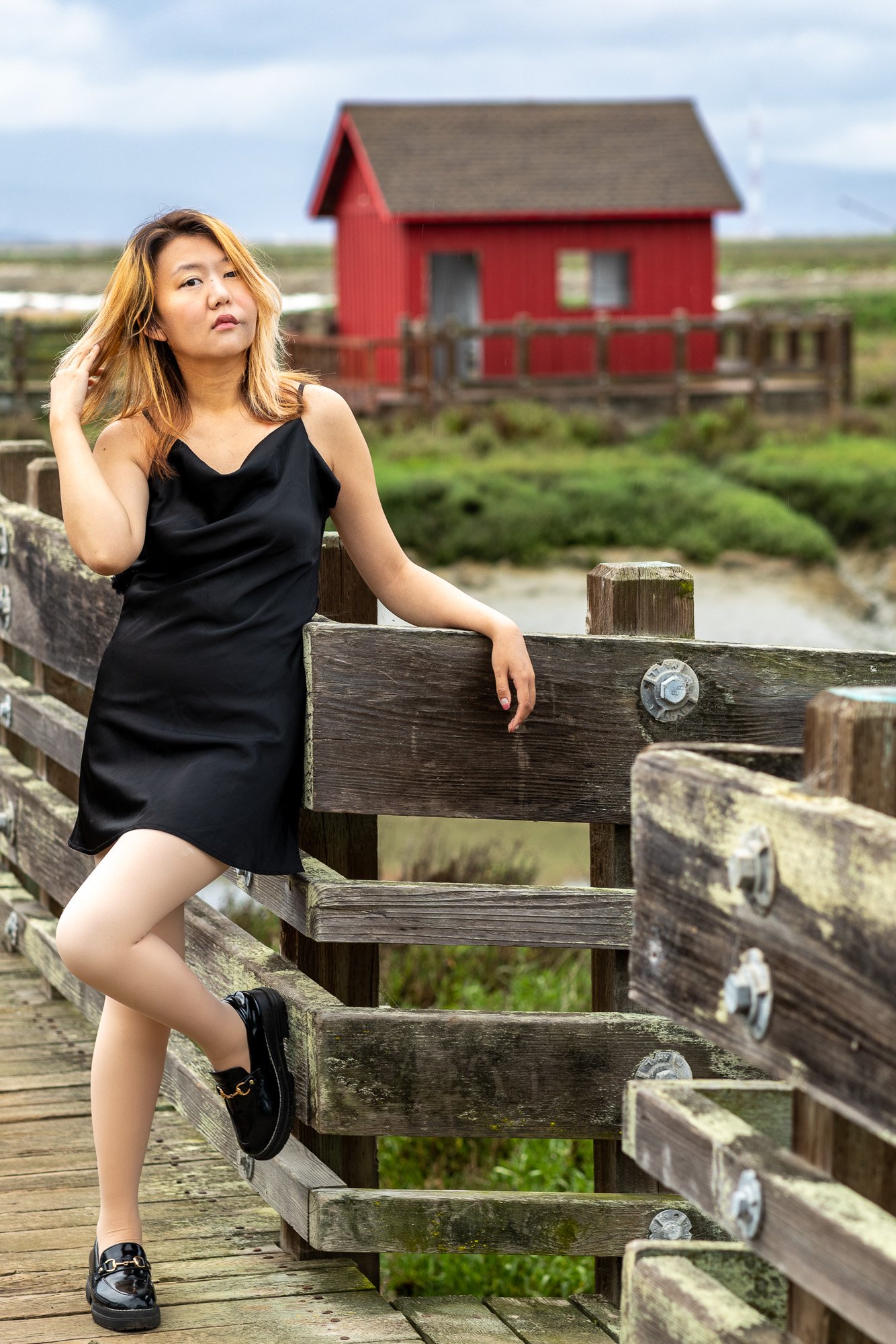
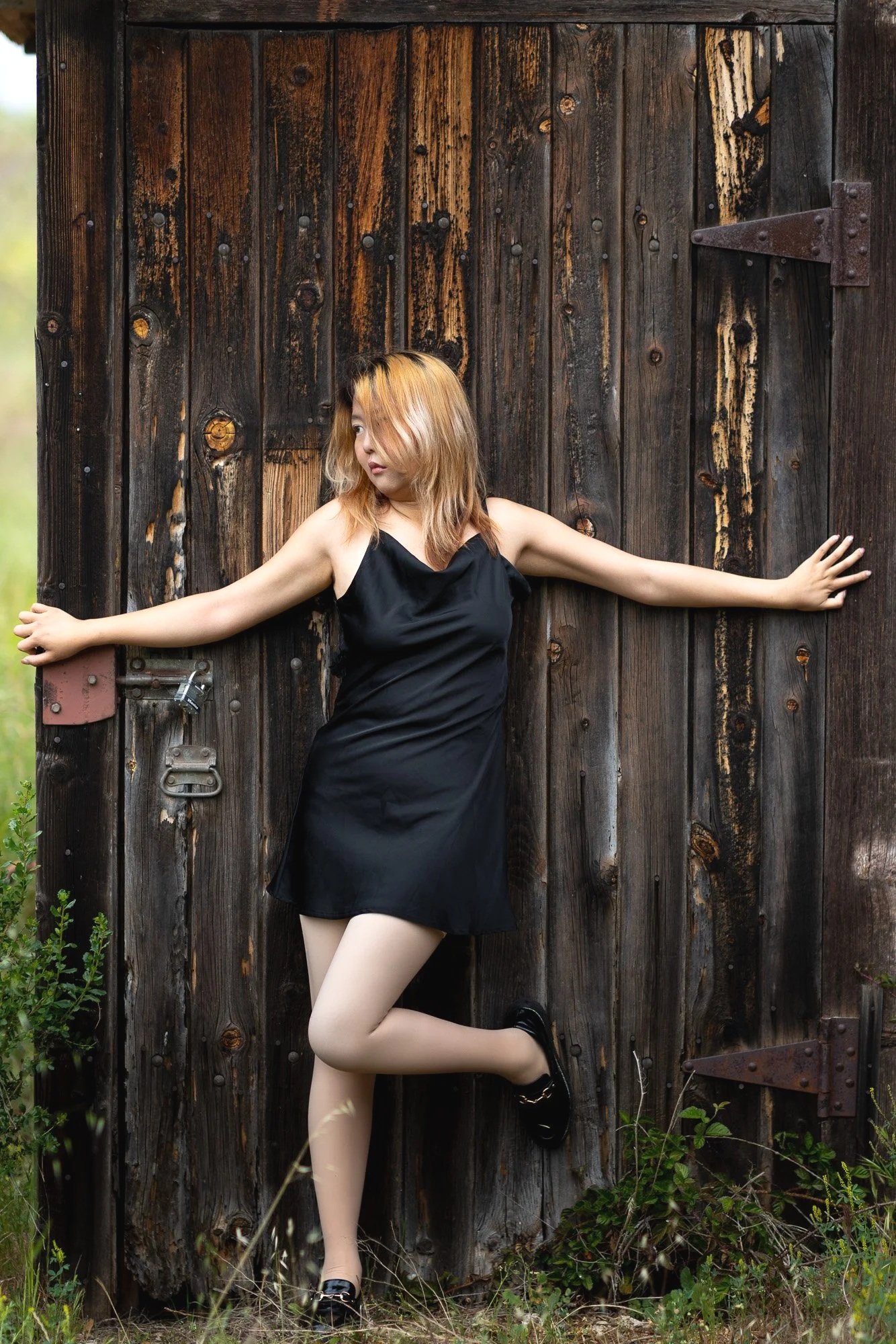
Further along, away from the boardwalk, is an old farm building with thick weathered timber doors and iron hardware rusted deep brown. That surface swallows light instead of reflecting it, which gives a natural depth behind the subject no painted backdrop can copy. Arms open against the doors, black silk against black timber: the image is about form and texture, not color.
Graffiti walls: when to go black and white
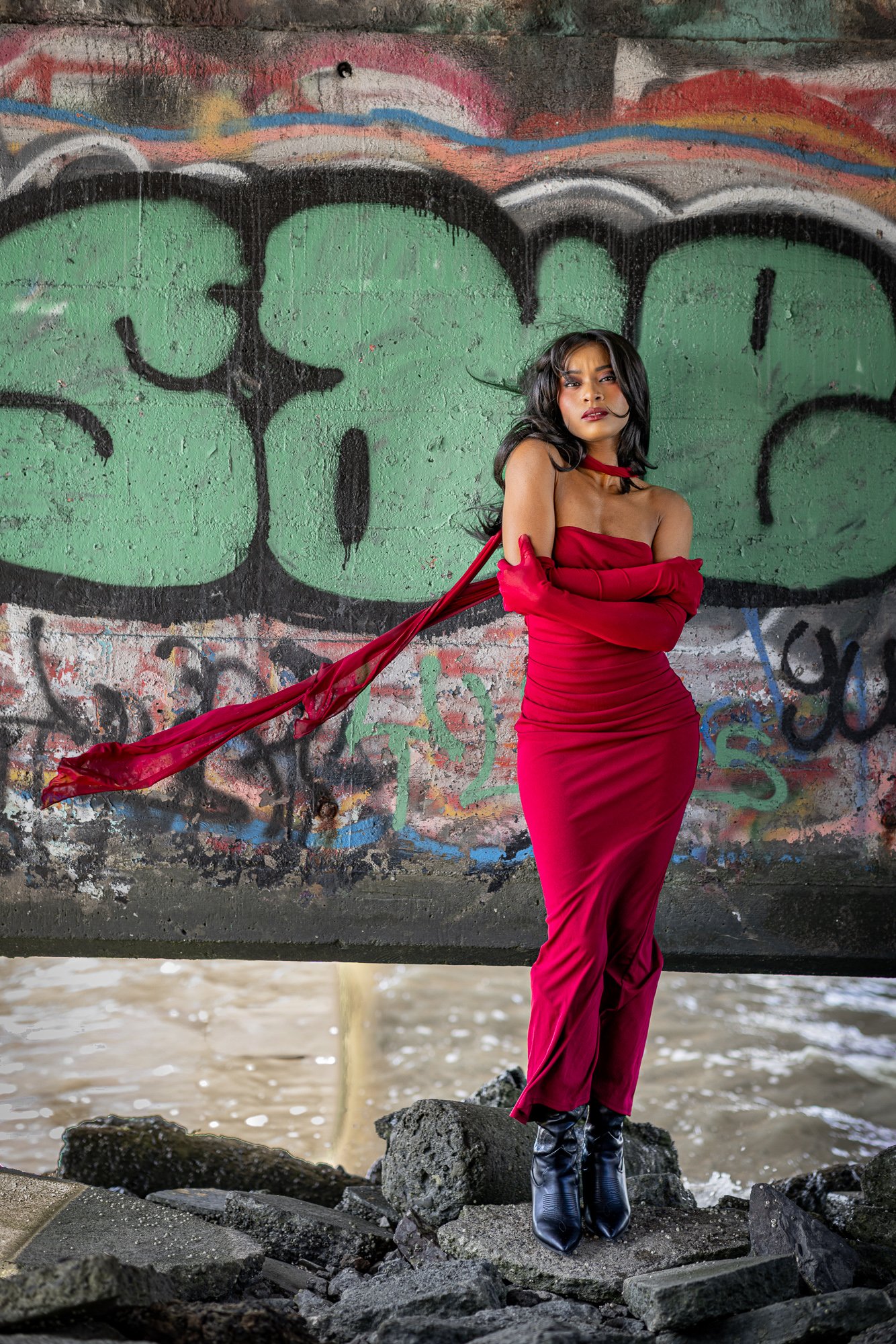
The red gown session started at the graffiti: concrete abutments tagged floor to ceiling in green, orange, red, black and white.
Put a saturated red dress in front of a saturated multicolor wall and you have a fight. Every color in the wall pulls the eye away from where it should be. So I shot it knowing some frames would end up black and white. In monochrome the graffiti turns into tone and texture, the wall becomes structure, and the subject is the only thing with presence.

Rusted steel and razor wire
Deeper in, old infrastructure has partly collapsed. Rusted grating, pipe fittings and I-beams sit just above head height. In certain light the oxidized metal reads almost like old wood. I'd noted it on an earlier scouting visit as a prop waiting to happen. Shot from low, with an arm reaching up into it and the wind moving the dress, it became one of the strongest frames of the morning.
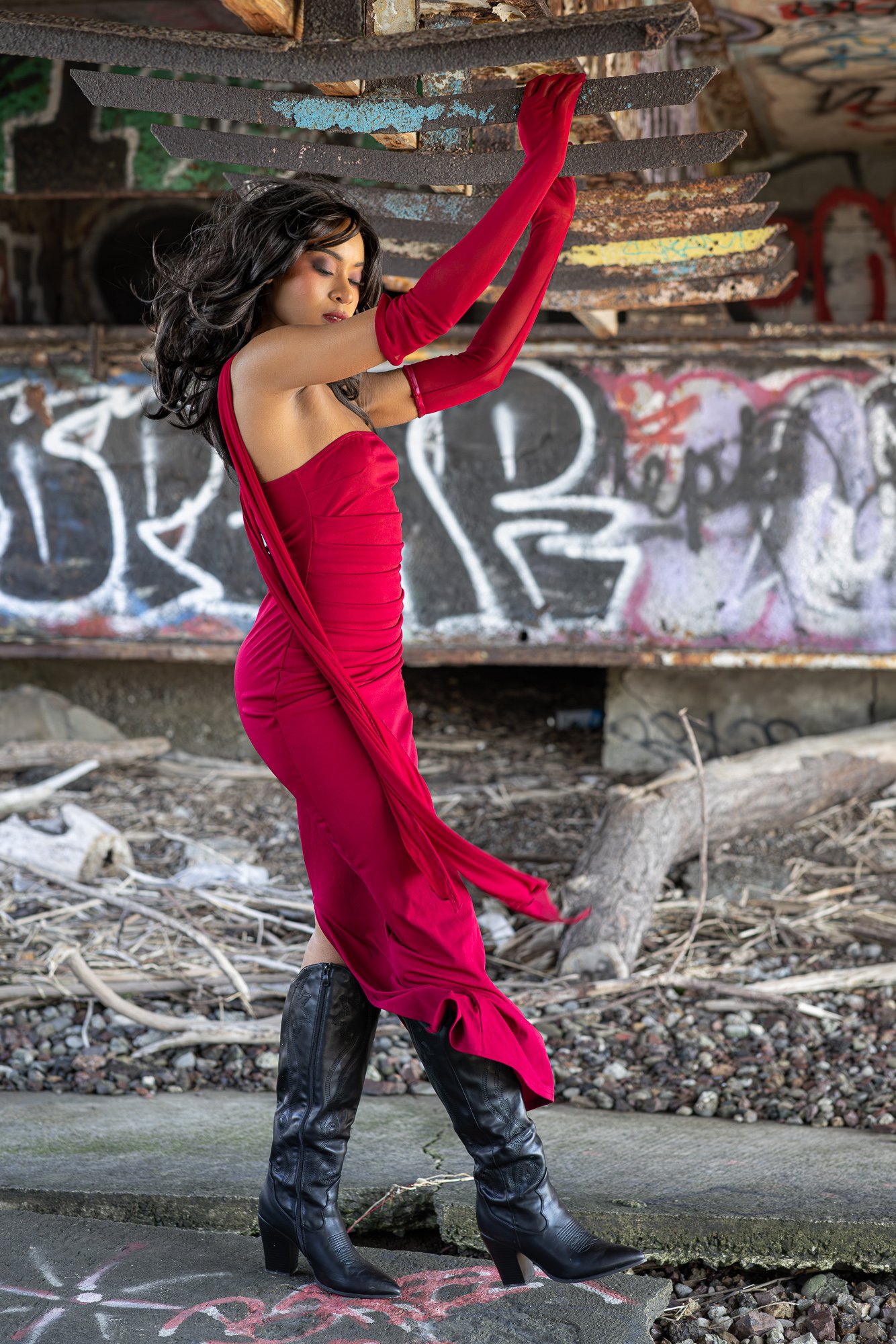
Near the water, coils of razor wire hang along the boundary fence. Rust has softened the barbs into brown spirals that photograph almost like organic shapes against the sky. Placement is everything: too little and it's background noise, too much and it takes over.
In the black dress session I converted the razor wire series to black and white. She held the ends of the wire lightly and looked straight into the lens. That frame, holding tension between something dangerous and something composed, is the strongest single image from the session.

In the red gown session I went the other way: below the wire, angled up so the spirals sat soft in the top corner against blue bay water, then a tight portrait crop with eyes closed and the wind in her hair.

The waterline
The debris field along the shore is decades of accumulated material: concrete drainage pipe, driftwood, rusted steel. At first it looks wrong to anyone used to gardens and parks. The trick is to get low and use a longer lens so all that texture compresses and goes soft behind the subject. What's left is atmosphere.
An enormous bleached driftwood log sits against the base of the bridge, with the abutments framing a gap of sky behind it. A red dress against almost colorless grey wood is a much quieter problem than red against graffiti. The driftwood recedes and the wind gives the fabric somewhere to go.
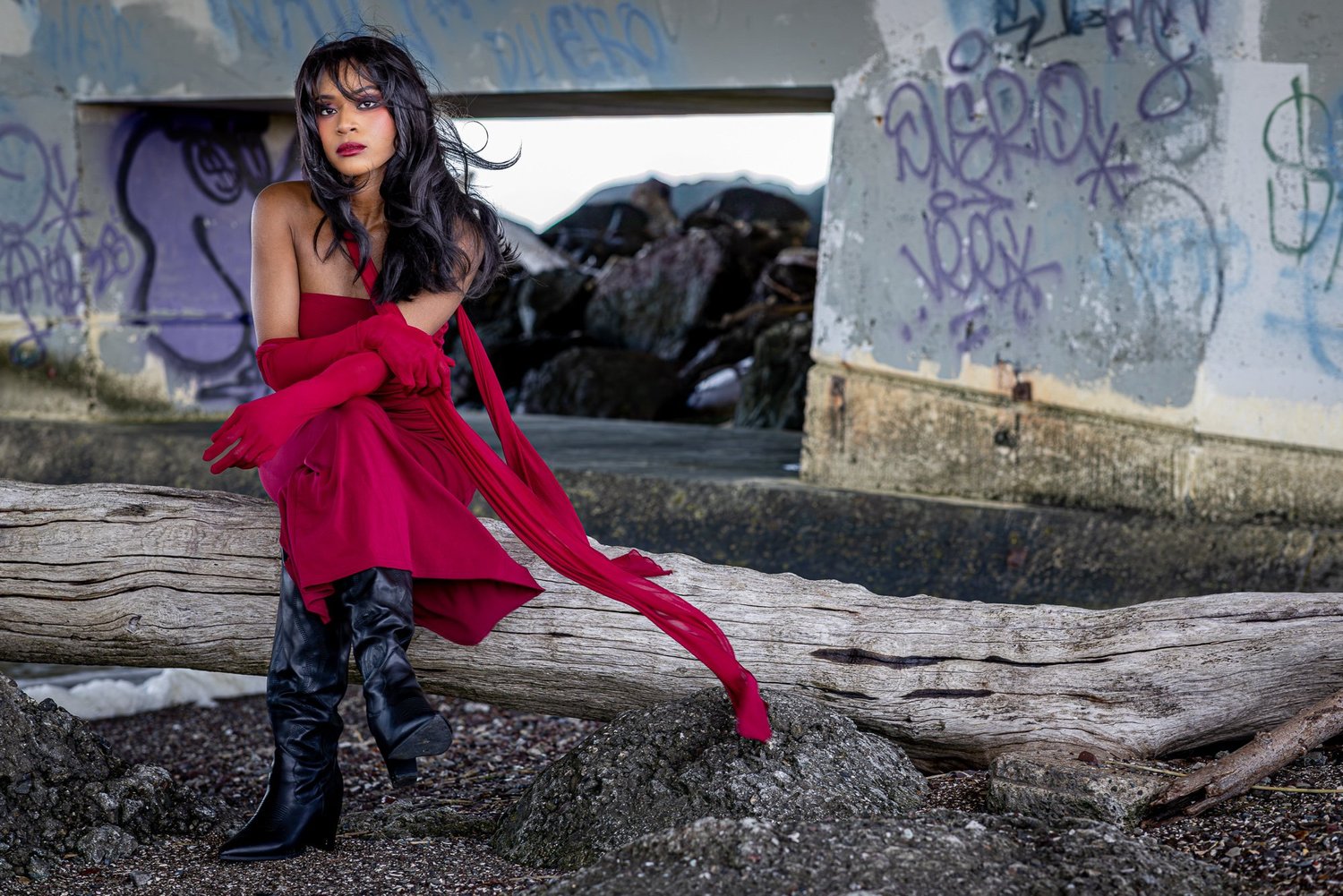
Wind is part of the picture
Dumbarton is almost always windy. You can wait for it to stop, or you can use it. Steady wind lifts fabric and moves hair in a way you can't fake, and on a red gown it turns every frame into motion.
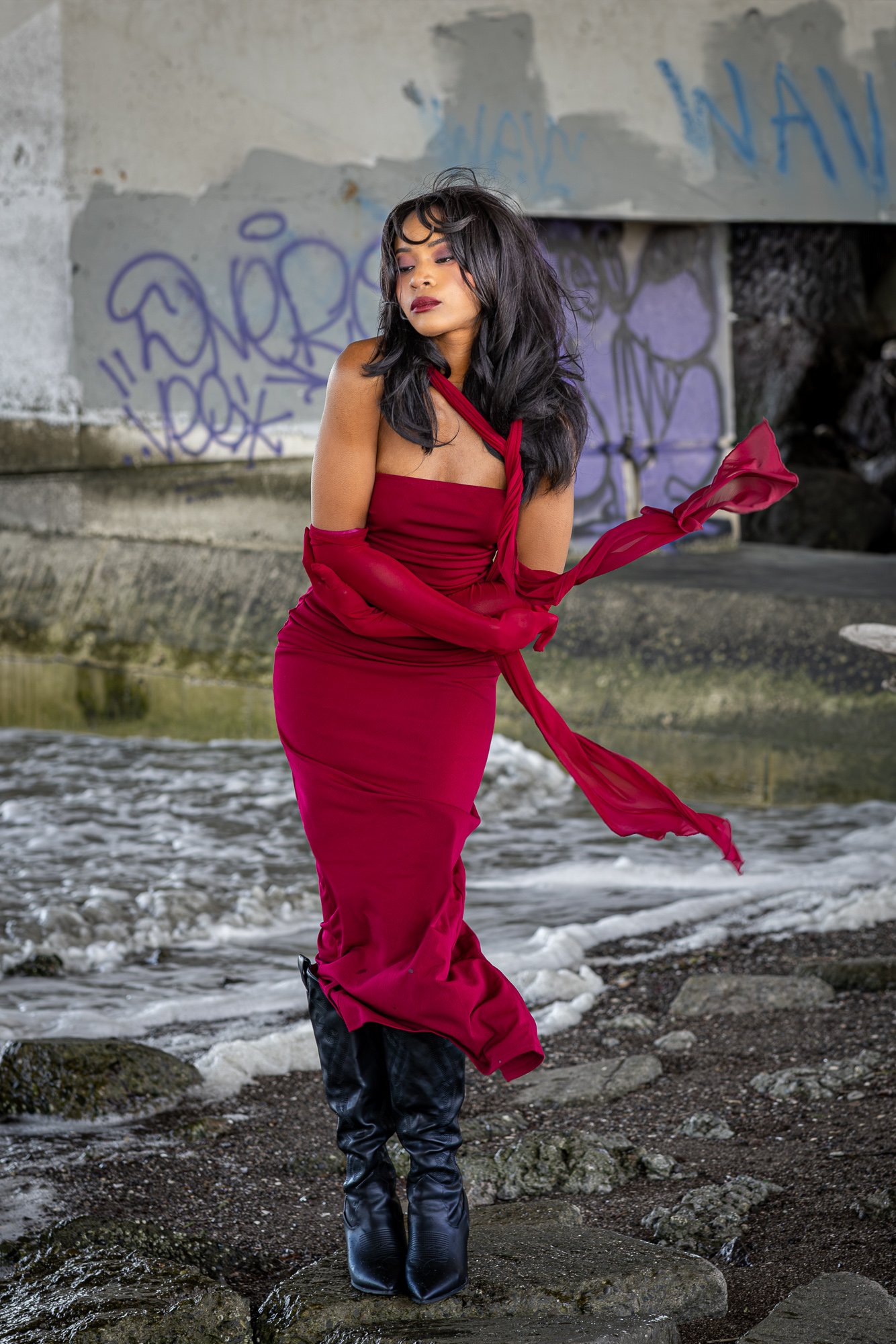
Golden hour and the veil
On a clear evening the bay turns from flat grey to hammered gold in a few minutes, and it doesn't last. We moved to the rocks at the waterline as the light changed. I shot from slightly above so the water filled the background edge to edge, then tightened in on her face and shoulders as the bay went soft and golden.

As the sky turned from gold to purple, she brought out a black lace veil. Against this landscape (rocks, wire, water, the bridge in the distance) a veil reads as something between ceremony and defiance. In a rose garden it would be decoration. Here, the location earns it.
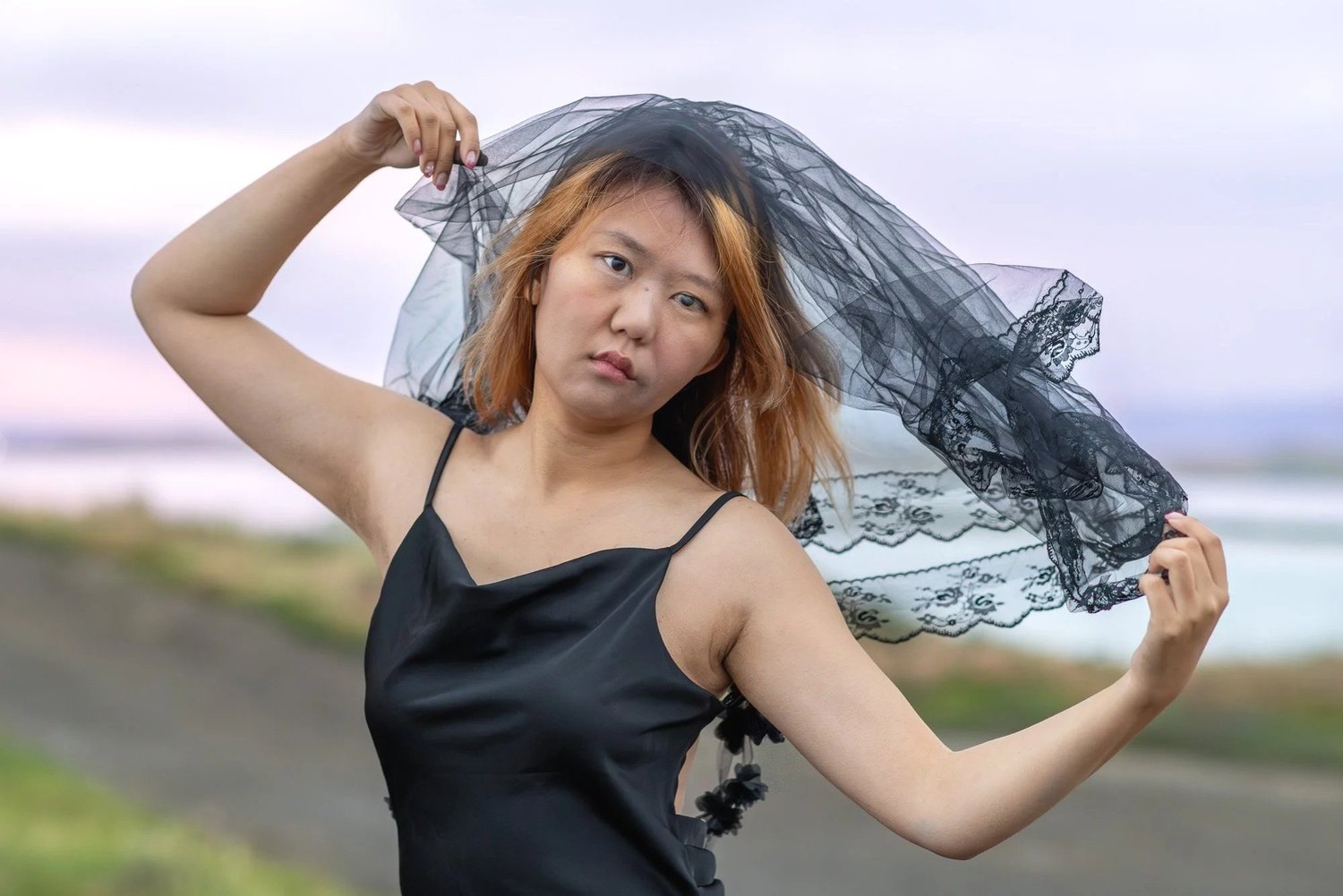
Planning a session at Dumbarton Shoreline Trail
- Getting there: the trail is at the end of Marshlands Road in Newark, with parking at the trailhead.
- Gate time: the gate closes at 7pm, so golden hour only fits inside it for part of the year. Plan your timing around sunset and be set up by about 6:30pm.
- Traffic: the bridge can be slow on weekday evenings, so allow extra time if you're coming from the South Bay or the Peninsula.
- Light: overcast and windy days suit the moody, editorial look. A clear evening gives you the gold bay.
- What to wear: strong, simple looks work best: black, deep red, one bold color. Busy prints get lost against the textures. Wear sensible shoes to walk out and bring the outfit in a bag.
- Who it suits: editorial portraits, personal branding, musicians and anyone who wants something with more edge than a garden.
Dumbarton is one of the more unusual spots in my Bay Area outdoor photography locations guide, and it's ideal for personal lifestyle and editorial sessions. Session prices are on the Services page. If you have a look you want to put somewhere with real character, get in touch.