
How to Choose a Family Photographer in the Bay Area (Who Actually Captures Your Family)
A four-year-old running across a meadow toward the camera. Parents off to the side, watching their kid, not the lens. The photographer crouched in the grass, waiting for the moment the kid breaks into a full grin two strides before they collide. The shutter fires. The kid laughs. The mother is laughing too, because she'd been told to look at her child, not the camera, and she didn't have to perform.
This is what most families actually want from a family photo session. They want their kids to look real, and they want themselves to look beautiful. They want photos that feel like their family, not photos that feel like a stock catalog. And they almost never say either of those things out loud.
Most "how to choose a family photographer" guides patronize the people reading them. They claim families want "real moments," then deliver flat advice about "trusting the experience" and "letting go of perfection." That dismisses what parents actually care about. You don't have to choose between looking beautiful and looking like yourself. The whole point of a good family photographer is they can give you both.
This is a guide to finding the rare photographer who can. It's written from the other side of the camera, but it's organized around what you should be looking at when you're trying to decide. Some of what's below is uncommon advice. Some of it goes against what other photographers will tell you. That's intentional.
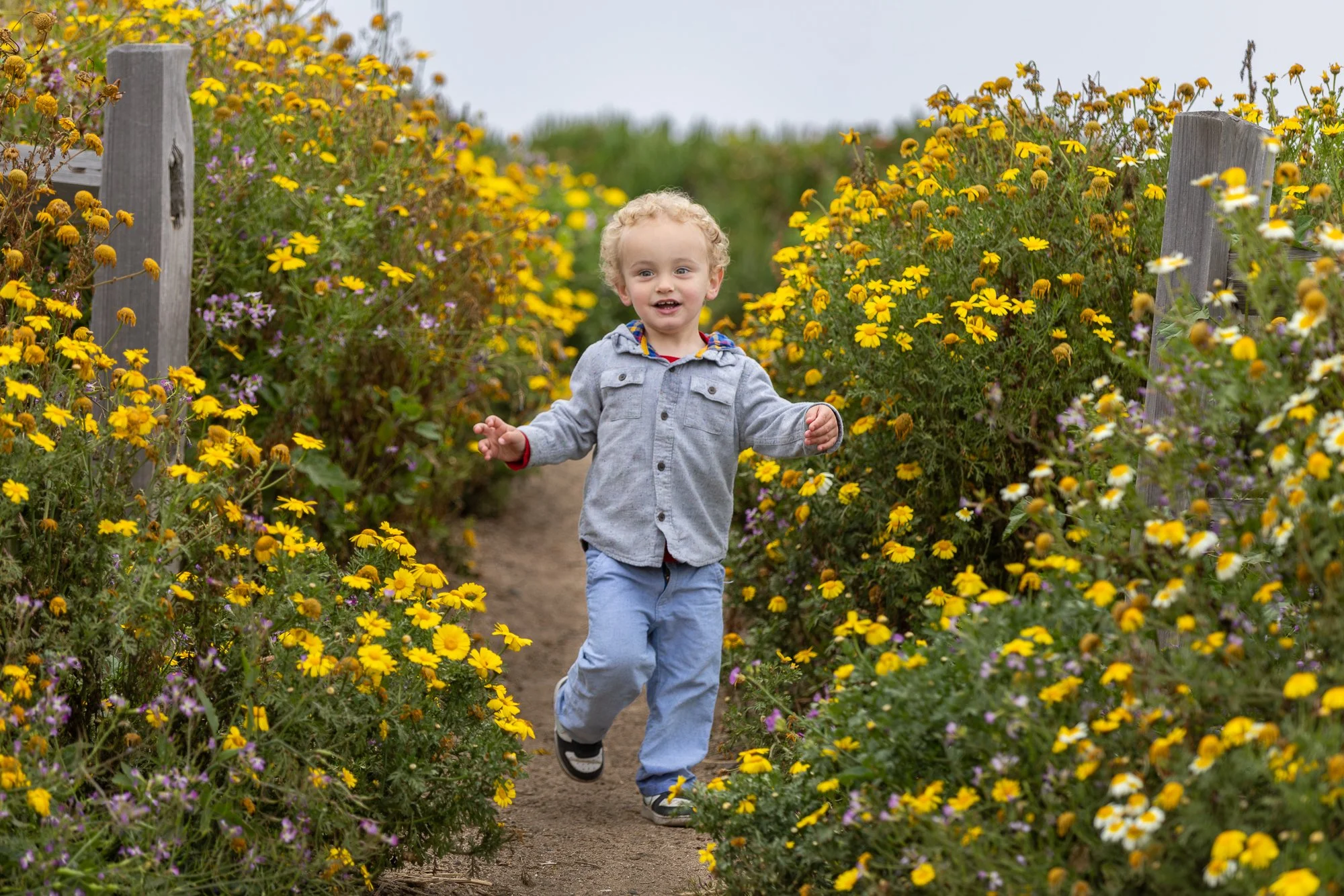
Movement, freedom in a beautiful setting.
Look past the highlight reel
Every photographer's website has good photos. That's because they curated them. A portfolio is by definition the best images the photographer has ever taken, and a single great photo doesn't tell you anything about what your gallery will look like.
What you're actually looking for is consistency and range.
Three things to check on every portfolio you review.
Look for both posed and candid frames in the same family's gallery. Not separate galleries. The same gallery, the same family. A photographer who can deliver one but not the other will give you a gallery that feels uneven. The best family photographers move fluidly between a posed three-generation portrait and a candid frame of a kid mid-laugh. You should see both, side by side, in the same set of images.
Look at the kids. Are they all artificially smiling? Are they all the same kid-in-front-of-pretty-background composition? Or do you see kids in actual states — running, refusing, looking off-camera at something more interesting, mid-laugh after the joke that wasn't for the photo? Real kids do not stand and grin for an hour. A portfolio full of grinning children is a portfolio full of posed frames.
Look across multiple families. One great family gallery could be a fluke — the right family, the right day, the right light. What you want to see is consistency across different families, different ages, different temperaments. Five great galleries means it's craft. One great gallery means it might be luck.
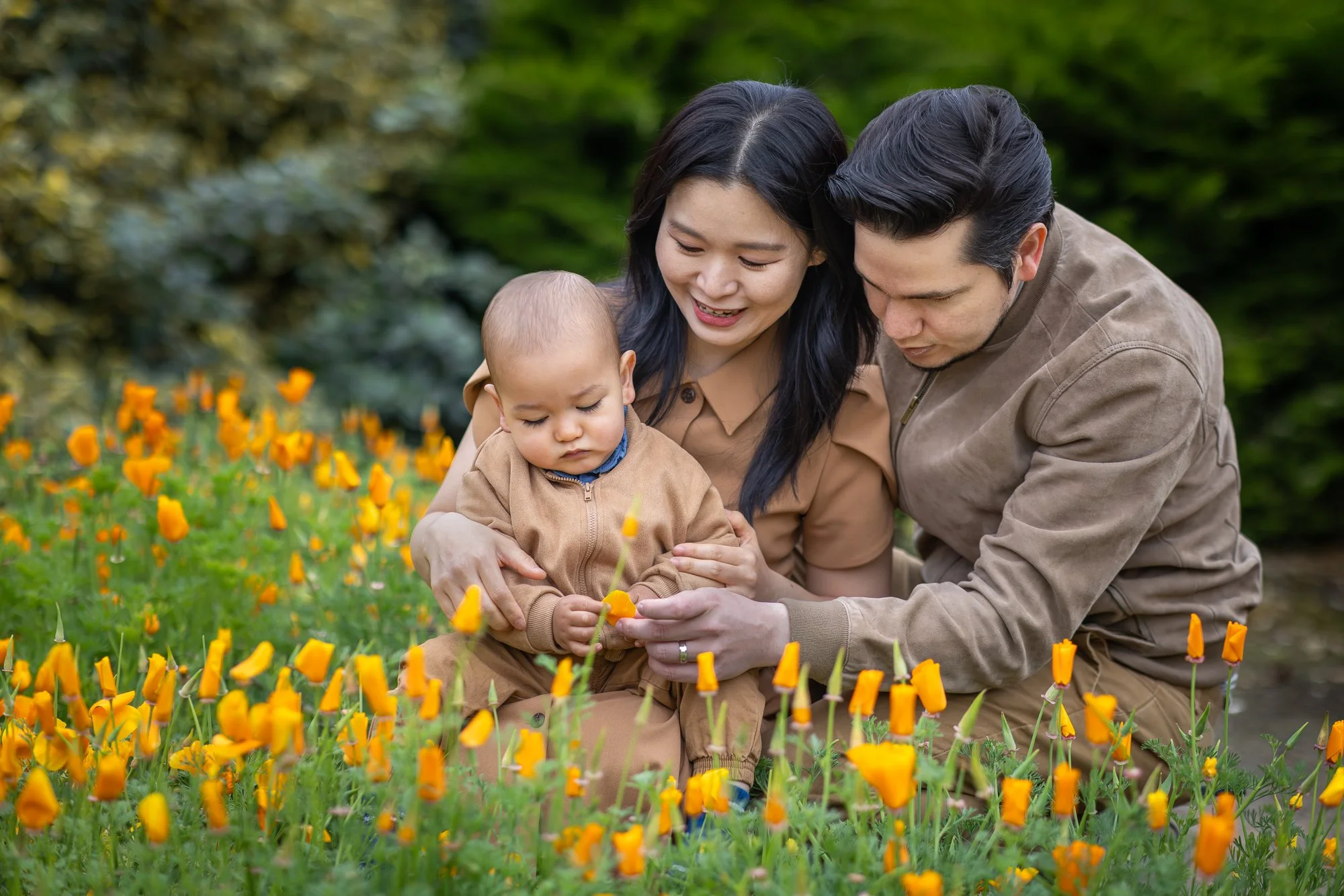
The kind of frame that doesn't happen in fifteen minutes.
Time is the first question, not price
The most common question families ask a photographer is what their session costs. The more important question is how long the session is.
Mini sessions, typically fifteen to thirty minutes, are pitched as access. Lower price, fewer photos, in and out before the toddler melts down. The economics work for the photographer, who can run ten of them in a day. The math is harder to justify on the family side.
Here's the part nobody tells you. With young children, the first thirty to forty-five minutes of a session is usually the part where nothing works. The kid is wary of the camera. The kid is wary of you. Some kids take a few minutes to warm up. Some kids take much longer, and there's no way to predict in advance which kind of kid you have. A mini session, by definition, captures only the wary part.
The frames where a family looks genuinely happy together — relaxed, present, comfortable — almost always come from the second half of a longer session. A full hour gives a photographer the time to let a child decide, on their own schedule, that the camera is fine. I wrote a longer post about exactly this, with a story about ten failed high-five attempts before the eleventh one finally landed. The principle holds for almost every family with kids under five.
When you're evaluating a photographer, ask how long their family sessions are. An hour minimum is what you want for a real family session. Anything shorter is a holiday card factory, and that's fine if a holiday card is what you want — but be honest with yourself about what you're buying.
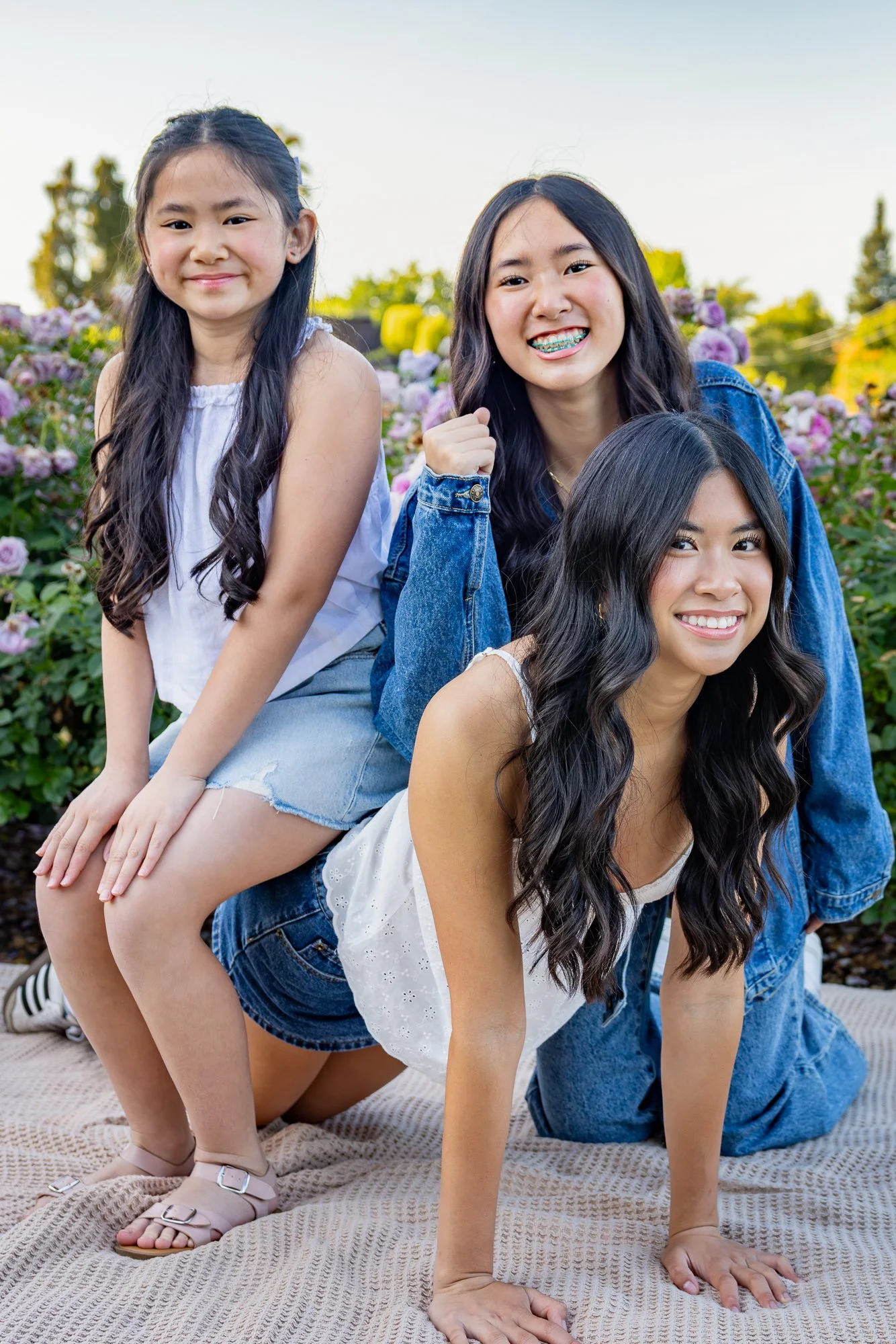
Even a quick session can deliver a smile — but the unguarded moments take real time. The girls wanted to do a “JCPenney” awkward pose!
Local knowledge is more valuable than equipment
Most family photographer searches go like this. Family searches "family photographer Bay Area," picks based on portfolio aesthetics and reviews, books the session. The location is usually a default. The photographer suggests one of three or four places they always shoot, and the family says yes.
That's a wasted opportunity.
A photographer who actually knows the Bay Area will recommend a location based on you, not on their own routine. Gamble Garden in Palo Alto is breathtaking in late March when the wisteria peaks, but the timing window is two weeks and it's done by mid-April. Filoli is extraordinary at 9am when the gates open and the light is still cutting sideways through the hedgerows, but the same garden at 1pm is harsh and crowded. Shoreline Park in Mountain View can deliver six or seven distinct visual backgrounds in ninety minutes if you walk it the right way. Stanford's Cactus Garden looks like nothing else in the Bay Area and stays empty even on weekends. Radonich Ranch in the Los Gatos hills has the working-California feel that most of the Peninsula has lost. I've shot Christmas tree sessions there that feel like nowhere else.
None of those facts are in a Google search. They come from showing up, repeatedly, in different seasons, with real clients.
Ask any photographer where they'd recommend shooting and listen for two things. One: do they have a real answer, or do they default to "wherever you want"? A photographer with location knowledge has opinions, with reasons. Two: do they ask what you want to feel in the photographs before they recommend? A photographer who suggests Filoli for everyone is treating location as backdrop. A photographer who asks first is treating location as part of the image.
I wrote up the locations I actually use, with notes on light, season, and what each one is best for.
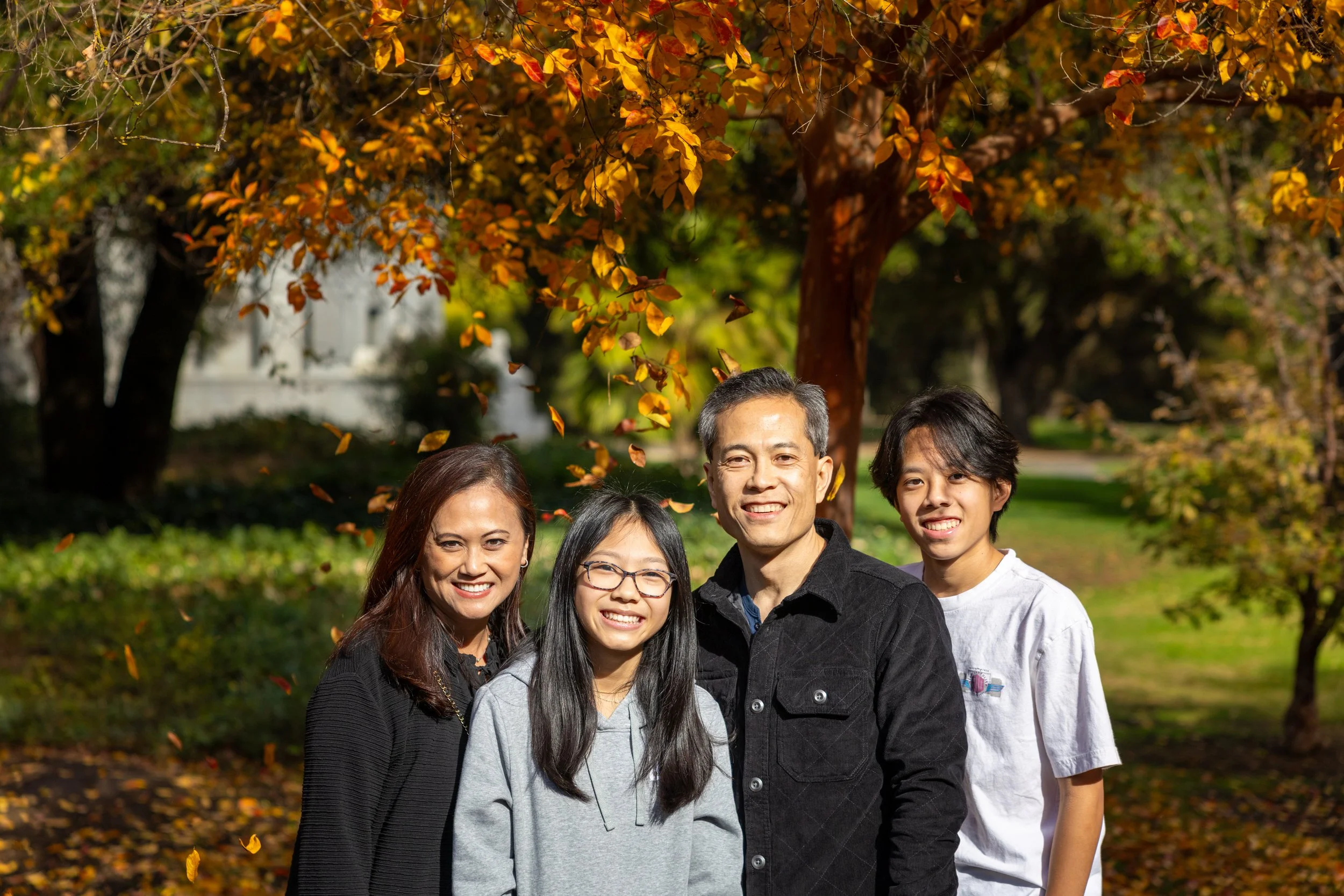
A location chosen for the family, not for the photographer's routine.
Look for a photographer with a process before the session
Most family photographers send a confirmation email and show up to the session. The good ones do a lot more than that before the shoot.
What you're looking for is a real conversation, before the session, about what you want to come out of it and how to make it work for your particular family. That conversation should cover at least three things.
Logistics. Particularly if you have very young children, very old grandparents, or both. Multi-generational sessions are not the same as a couple-with-toddler shoot. A photographer who's actually run a nine-person, three-generation family session knows that you start with the elders before they tire, that you give the kids periodic breaks to run, that the group photo gets shot in the middle when everyone's still cooperating — not at the end when half the kids have lost interest. I documented a session exactly like this — three generations on the Santa Cruz coast — and the logistics were as much of the work as the photography itself.
Outfits. A good photographer will give you real outfit guidance, not just "wear what makes you comfortable." That means specifics: avoid tiny patterns that vibrate on camera, choose a palette of three or four complementary colors rather than matching outfits, layer for marine layer mornings, no logos or characters on the kids' shirts. A photographer who hands you a generic PDF is doing the minimum. A photographer who asks what you were planning to wear and gives you actual feedback is doing the job.
Light. When the photographer schedules your session matters more than where. Morning light on the Peninsula is different from afternoon light. Marine layer mornings give you flat, even, forgiving light that's actually ideal for kids. Mid-day sun is brutal. A photographer who suggests a noon session in July without flinching is one you can probably skip. Here's my full prep guide for what to expect before an outdoor session.
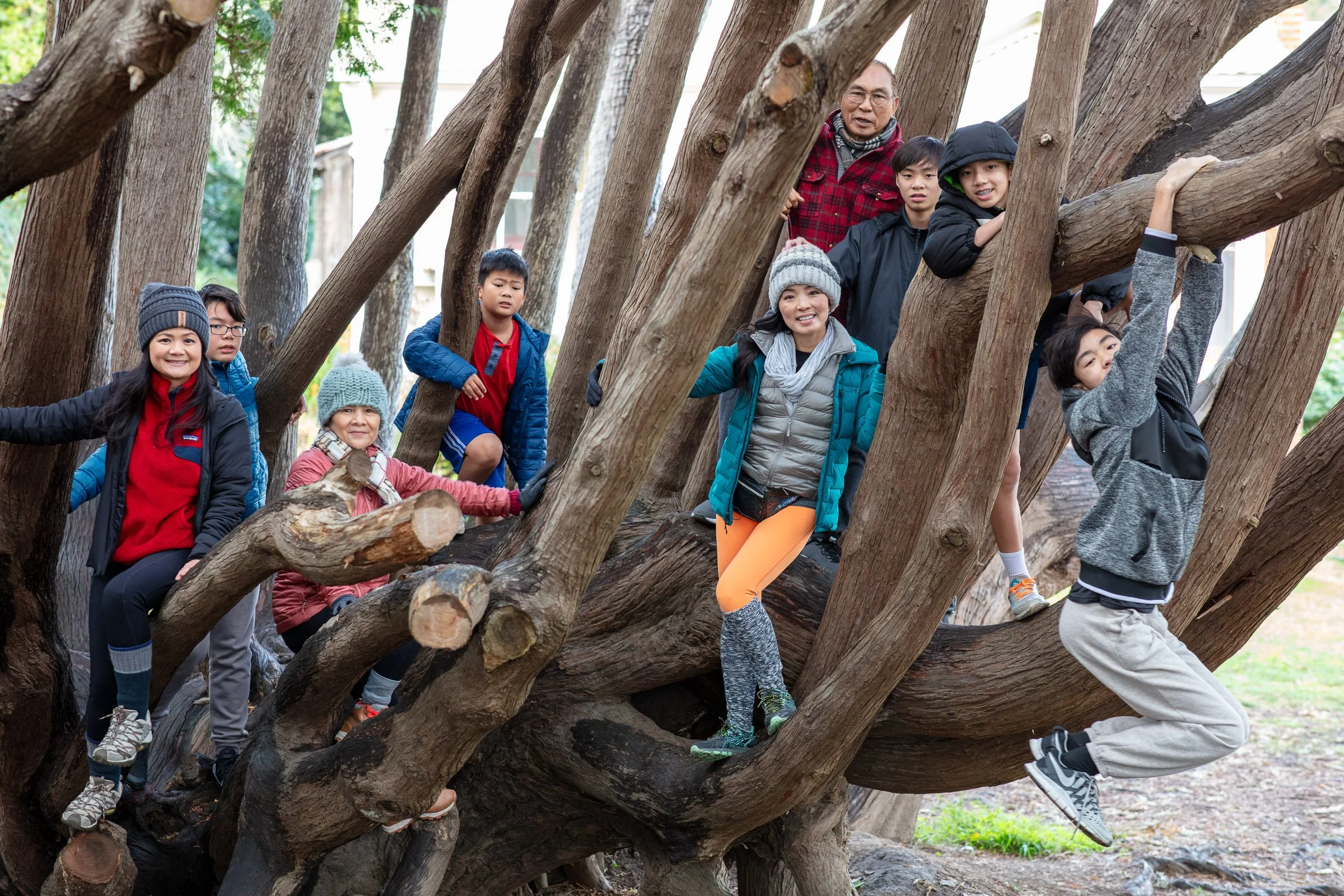
Three generations, one session — logistics is half the work.
How they direct kids tells you everything
The single biggest tell of whether a photographer can actually shoot families is how they direct kids — and equally, how they direct the parents around the kids.
Most family photographers treat kid-wrangling as performance. They show up with bubbles, props, exaggerated noises, baby-talk voices. It works on some kids and produces a particular kind of photo. The kid is laughing at the photographer, looking past the camera. The parents are watching the kid laugh and trying to also look at the camera. The frame is "everyone facing forward."
A different kind of photographer treats kid-wrangling as observation. They get quiet. They watch. They give the kid time and space to forget the camera is there. They direct the parents to look at their kid, not at the lens. The frame that comes out of that is completely different. The parents are watching their child. The child is being a child. The photograph is a record of who this family actually is together.
When you're reviewing a photographer's portfolio for family work, look for the second kind of frame. The parents looking at the kid, not the lens. The kid running, climbing, refusing, mid-laugh — not staring obediently into the camera. A child running toward the camera, alone in the frame, with no parent visible: that's a frame that requires patience, trust from the kid, and a photographer who's willing to crouch in the grass for fifteen minutes waiting for it.
The entertainer-photographer can deliver everyone-facing-forward. They cannot deliver the quiet record of how your family actually is together. You're going to want both kinds of frames in your gallery, but it's the second kind that you'll keep on the wall in ten years. The first kind ages quickly. The second kind doesn't.
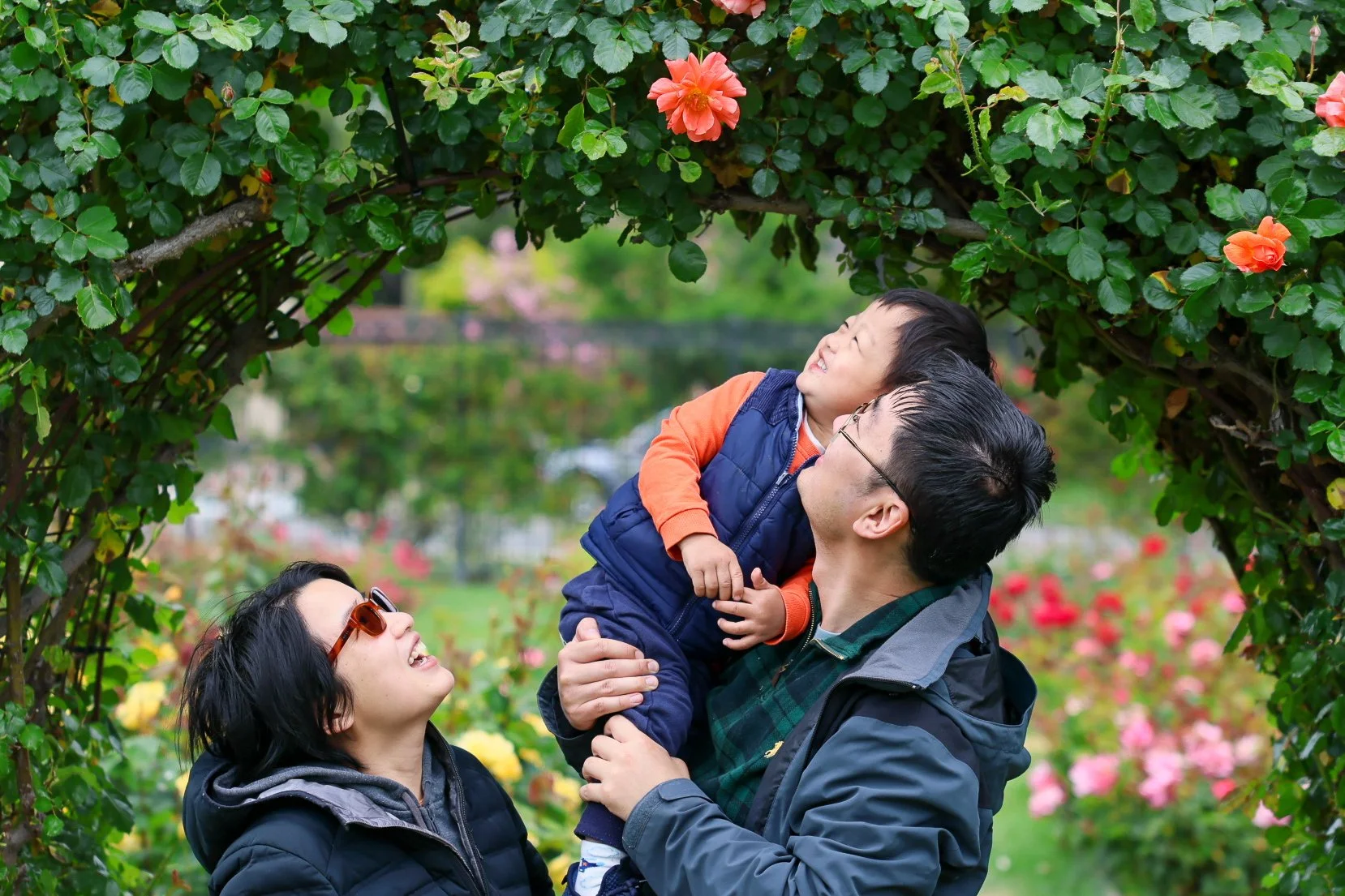
Parents watching their child, not the camera.
Questions to ask before you book
Before you commit, get answers to these questions. Most photographers will respond by email. If a photographer's response is curt, defensive, or generic, that's already a data point.
How long is the session? An hour minimum for a full family session. Anything shorter is a mini.
How many edited images do you deliver? Twenty to fifty is reasonable for an hour-long session. "It depends" is also a fine answer, but they should be able to give you a range.
Where do you typically shoot, and how do you choose location? A photographer with location knowledge has opinions with reasons. A photographer who says "wherever you'd like" is offloading the decision to you.
Do you have a pre-session consultation? Yes is the answer you want. The consultation is where a session gets planned — location, outfits, timing, logistics. No consultation usually means no real planning.
How do you handle young children, or grandparents, or large groups? Listen for specifics. A photographer who's run a multi-generational session can tell you exactly how they sequence it. A photographer who hasn't will speak in generalities.
What time of day do you recommend, and why? Morning or late afternoon, always, with a real reason involving light. If they don't have a strong preference, they're not light-reading the way good outdoor photographers do.
Can I see a full gallery from a recent session, not just your highlight reel? This is the question most photographers don't expect. The answer reveals everything.
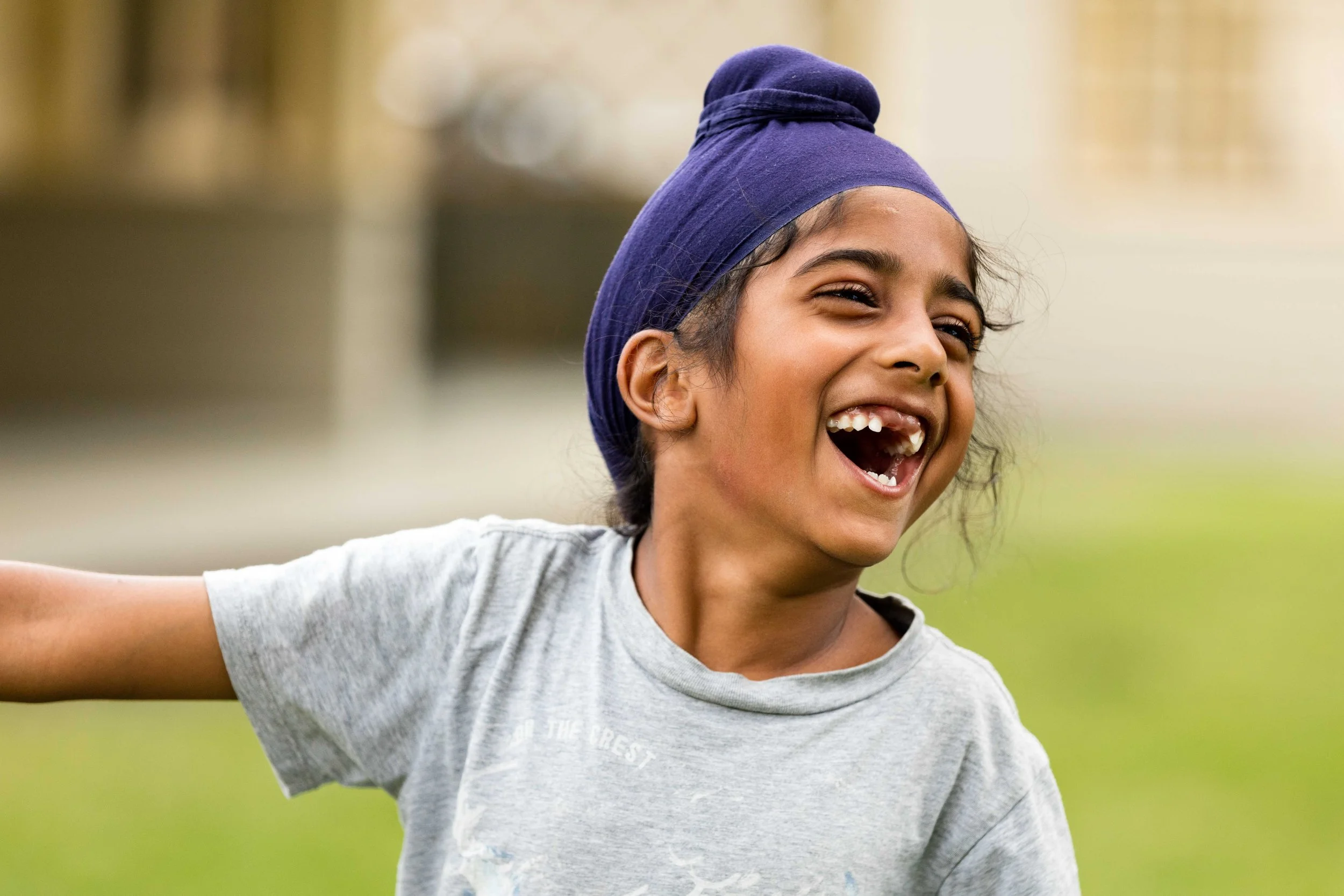
The frame you only get when a kid forgets you're there.
What's actually in a full family session
Beyond the photos themselves, here's what's in a good family session and what to look for in a photographer's offering.
Time. An hour minimum. Longer if you have multiple generations or want significant outfit changes.
A pre-session consultation. A phone or video call, typically a week or two before the shoot, where you discuss location, outfits, timing, and whatever logistics are particular to your family. This is the part that turns a transaction into a session.
A real number of edited images. Twenty to fifty for an hour, more for longer sessions. Edits should include color correction and skin work, not just straight exports from the camera.
A delivery method that works for you. A private online gallery with download access is standard. Some photographers offer print services on top of that.
Location expertise included, not extra. The photographer should be recommending location, not asking you to figure it out.
Permits and entry fees handled. Some Bay Area locations require photography permits — Filoli, Villa Montalvo, 17 Mile Drive among them. A photographer who knows the area handles permits as part of session planning and passes any fee through to you at cost.
If any of those are missing, ask why. Photographers who can't articulate what's in their sessions usually haven't thought it through.
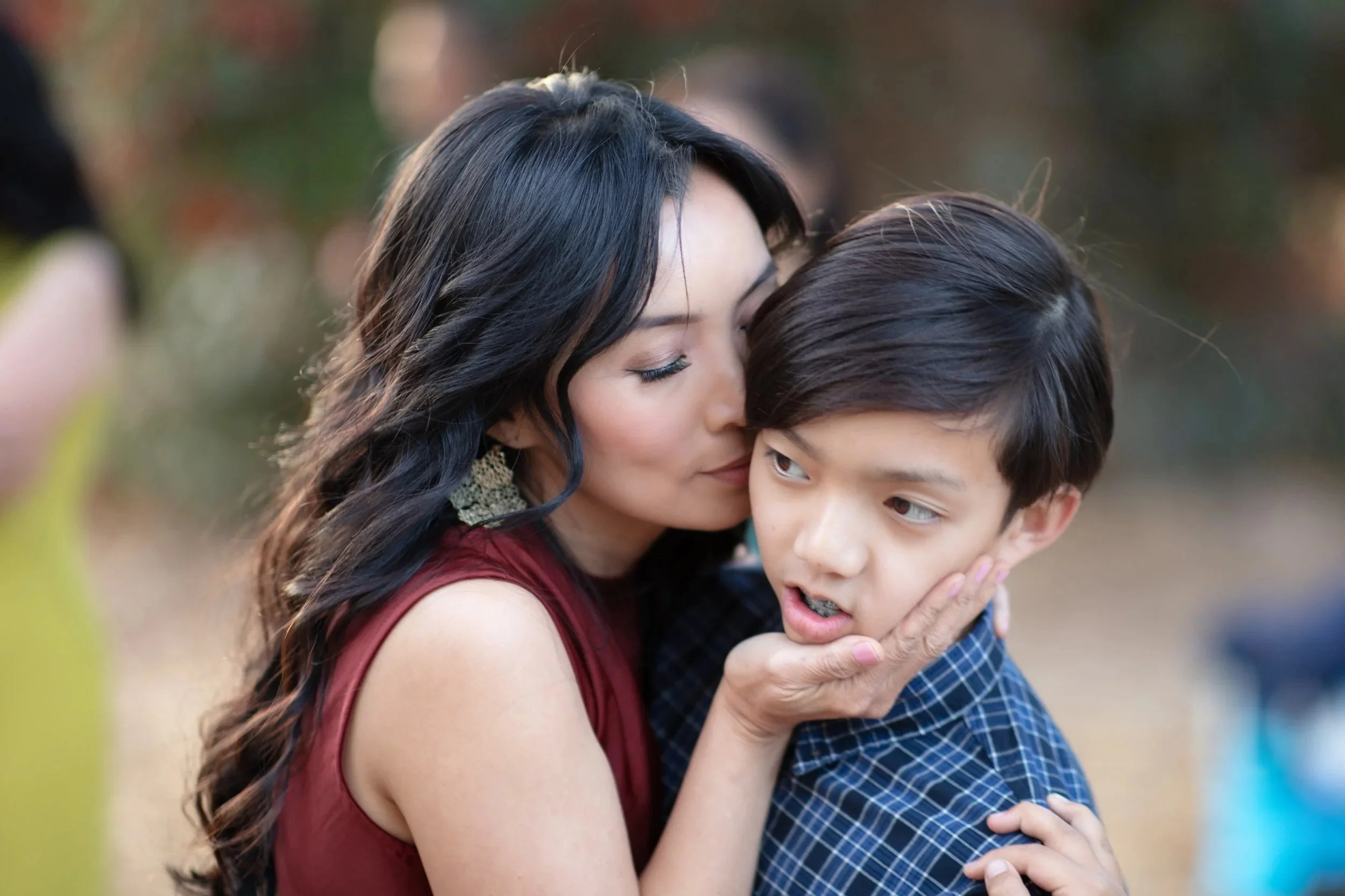
The moments that come from time, not from posing.
Frequently Asked Questions
What's the best time of year for family photos in the Bay Area? Almost any month works, but spring (March to May) and autumn (September to November) tend to produce the most reliable light and the best garden conditions. Summer in the Bay Area has tricky midday light but excellent golden hour. Winter can be beautiful — overcast skies give flat, even light that's flattering for groups — but rain risk increases.
Should we do photos indoors or outdoors? For most Bay Area families, outdoors is the right answer. The light is better, the kids have room to move, and the environment becomes part of the photograph rather than a flat backdrop. Indoor sessions work for newborns and specific creative concepts, but outdoor sessions consistently produce more natural, varied galleries.
What should we wear? Coordinated, not matching. Three or four complementary colors across the family. Avoid logos, characters, and tiny patterns that produce visual noise on camera. Layer for the Bay Area's variable weather, particularly for marine layer mornings. A good photographer will give you specific outfit guidance during the pre-session consultation.
How long should a family photo session be? An hour is the minimum for a full family session, particularly with young children. Mini sessions of fifteen to thirty minutes work for families already comfortable in front of the camera, but for first-time clients, families with toddlers, or multi-generational groups, the full hour matters considerably. The frames where families look genuinely relaxed almost always come from the second half of a longer session.
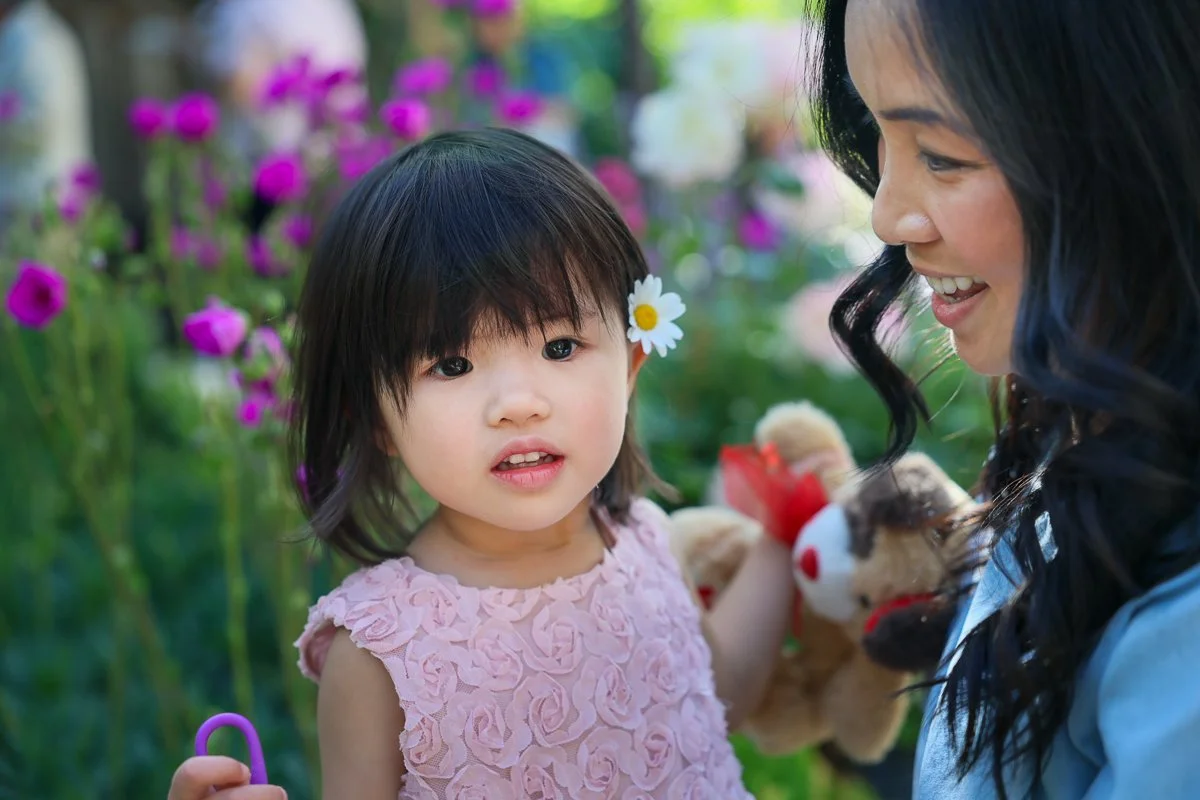
Spring gives you the most forgiving light of the year.
Choosing well
Choosing a family photographer is choosing how your family looks on the wall in ten years. The cheap, fast, fifteen-minute version of that decision usually produces a result that looks cheap and fast on the wall in ten years. The slower, more considered version — the hour with someone who knows your locations, listens to your family, waits for the real frame — produces something else.
That something else is what most families want, even when they can't quite name it. They want beautiful. They want real. They want the photograph to look like them.
If you're a Bay Area family thinking about a session and any of this resonates, I'd love to talk. I shoot families across the Peninsula, South Bay, Marin, and Santa Cruz Mountains, in the locations I know best, with a process that starts well before the shutter fires. You can also see my approach to family adventure photography and the kind of sessions I run.
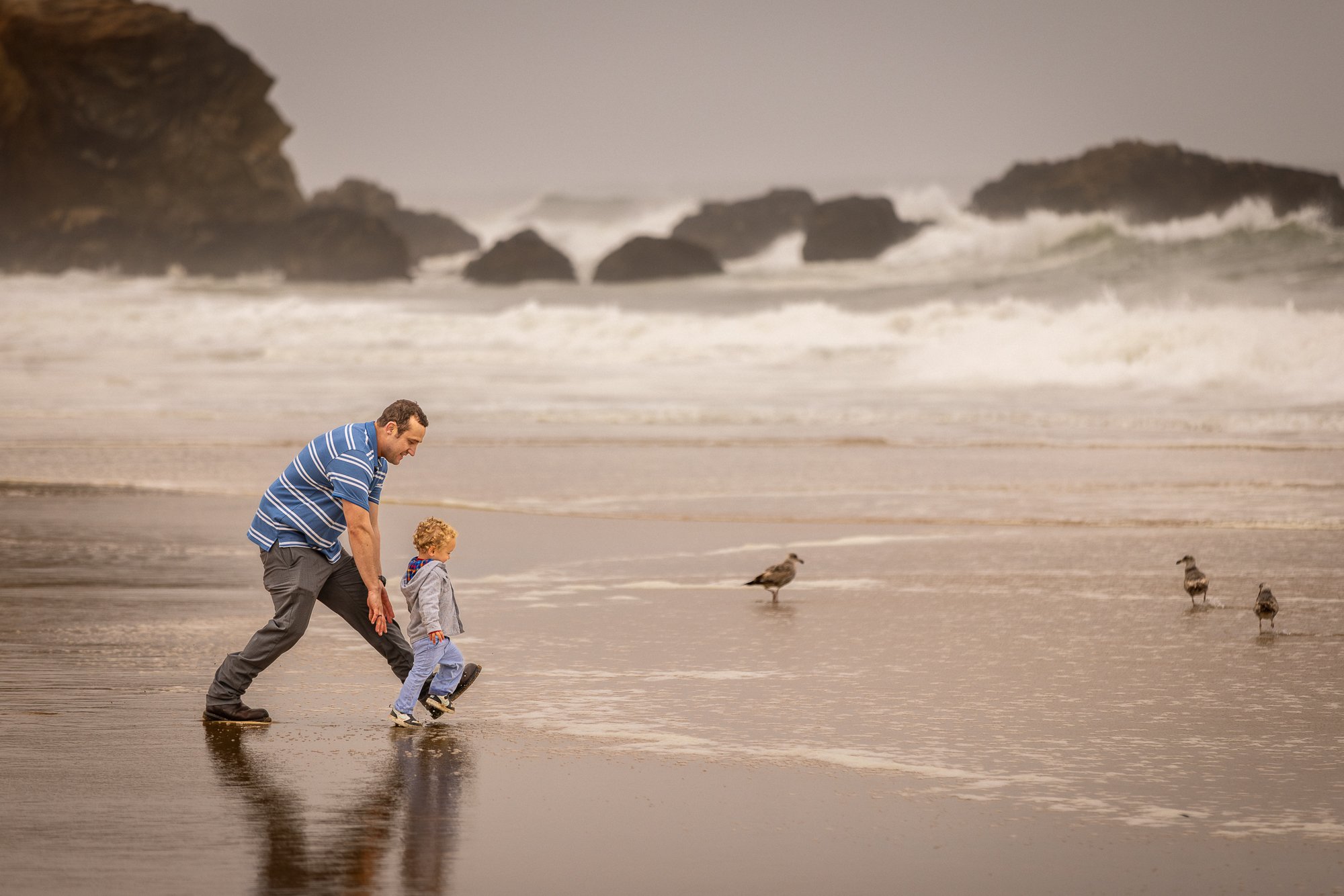
The photograph that stays on the wall in ten years.