
What Winter Tastes Like: Foraging for Chanterelles in the Santa Cruz Mountains
There's a particular kind of quiet that happens after winter rain. The trail goes soft underfoot, the air smells like moss and earth, and the forest floor turns into something worth paying attention to.
That's when we go looking.
I'm still learning to forage. I won't pretend otherwise. A few seasons in and I'm comfortable with a handful of species — chanterelles chief among them — and deeply cautious about everything else. We brought How to Forage for Mushrooms Without Dying by Frank Hyman, which is exactly as useful as its title suggests, and we used it. Repeatedly. That's not a sign of inexperience — that's just good practice.
The location stays between us. Somewhere in the Santa Cruz Mountains. After a wet February. That's all you're getting.
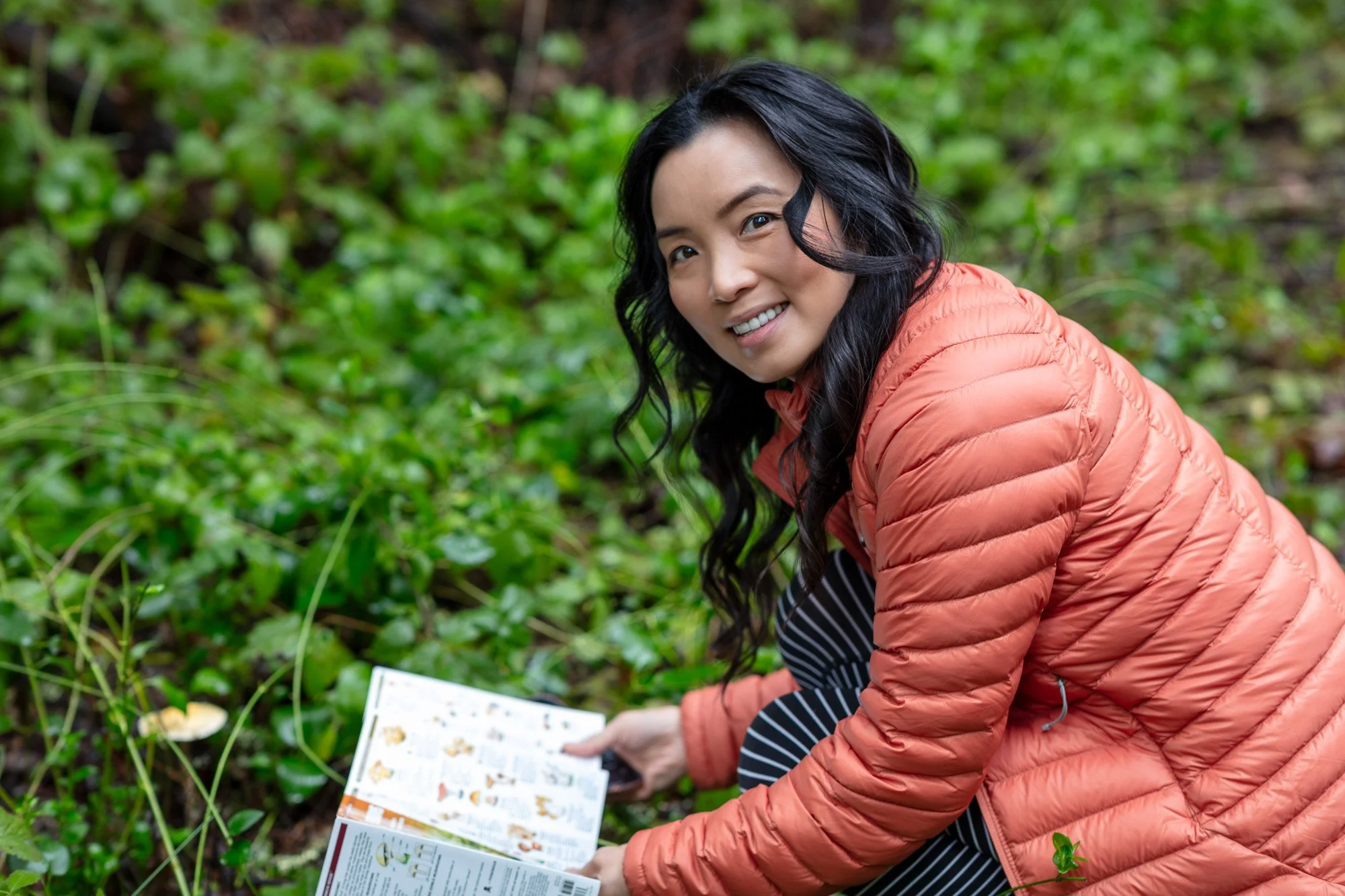
Field guide in hand — the only responsible way to forage when you're still learning.
To get to the spot, you cross a creek.
There's no bridge — just a mossy log spanning the water, slick from the rain, with a good drop to the stream below if you misjudge it. We crossed it anyway, because that's where the forest gets interesting. The terrain on the other side is tangled and overgrown, the kind of understory that doesn't see much foot traffic, which is part of the point.
Chanterelles don't grow where people have been walking all day. They grow where you have to make a small effort to reach them.
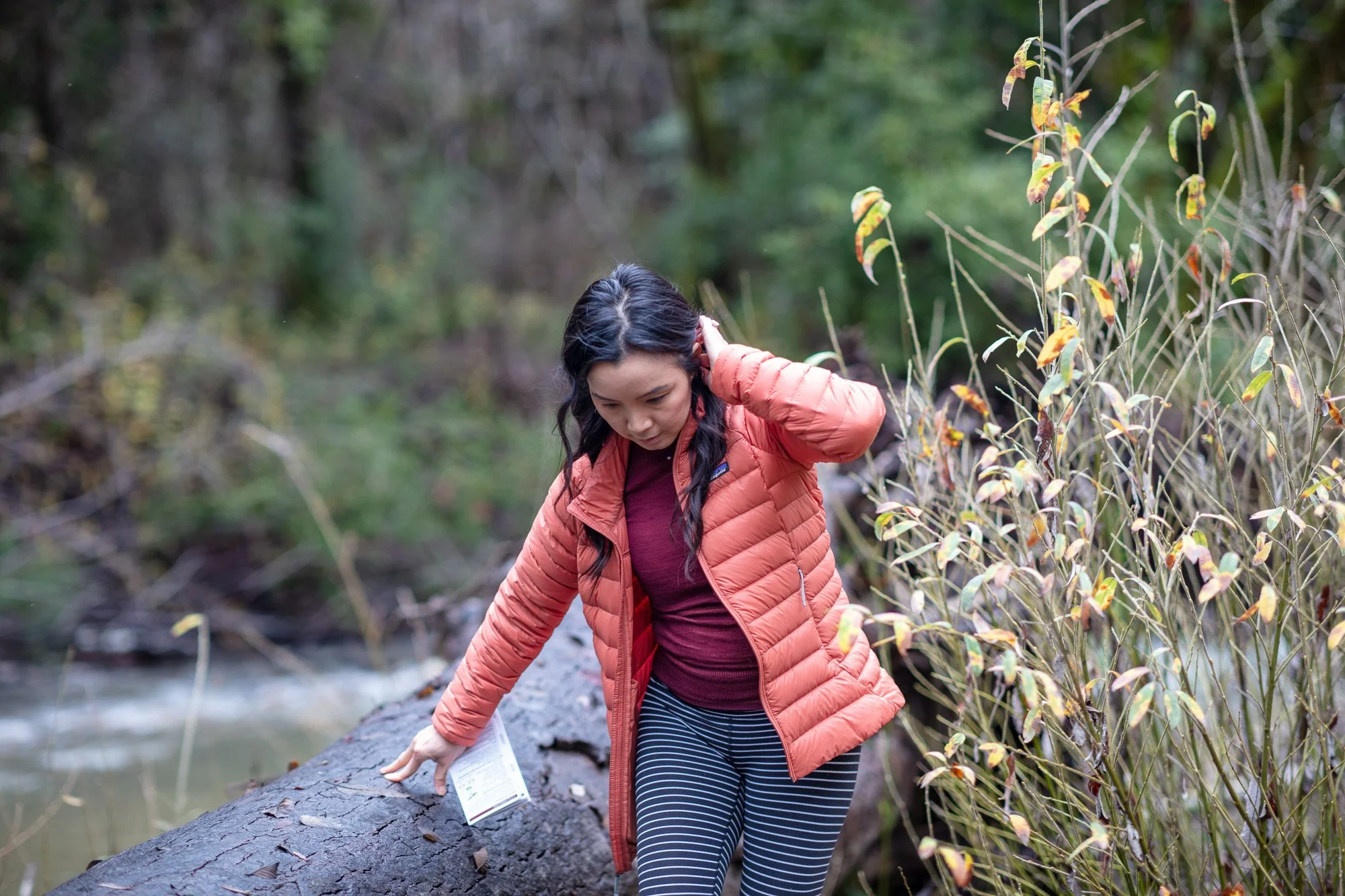
The creek crossing that means you are on your way.
The field guide came out within the first ten minutes.
There was something on a log — a bright orange shelf fungus spreading along the bark in wavy, layered frills, vivid against the grey-green moss. Turkey tail, we thought. The markings matched. We photographed it, noted it, and moved on. We weren't here for shelf fungi today — we were here for chanterelles — but part of what makes foraging interesting is everything else you notice along the way.
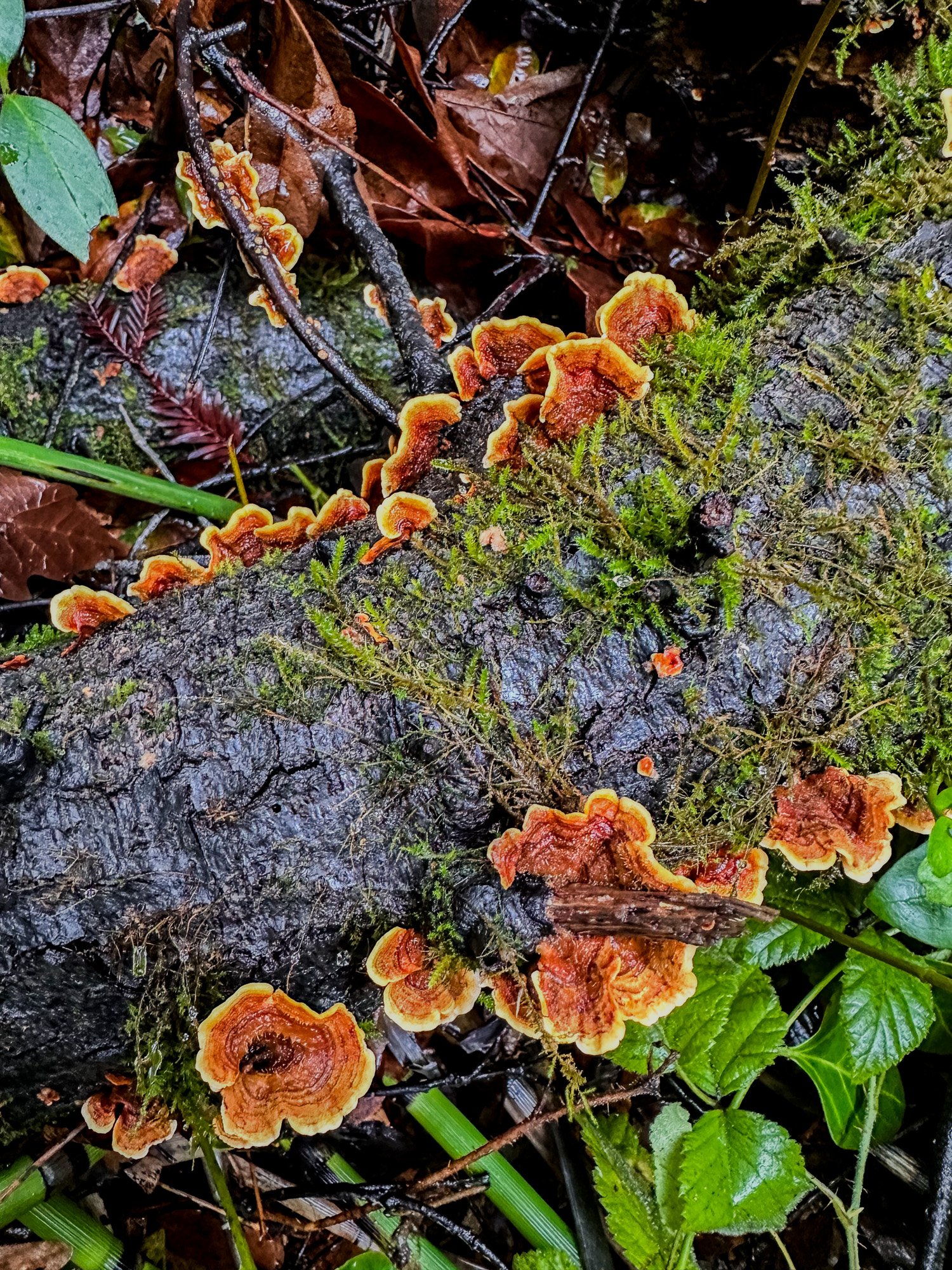
Turkey tail shelf fungus on a mossy log — one of dozens of finds that weren't chanterelles.
The chanterelles announced themselves differently.
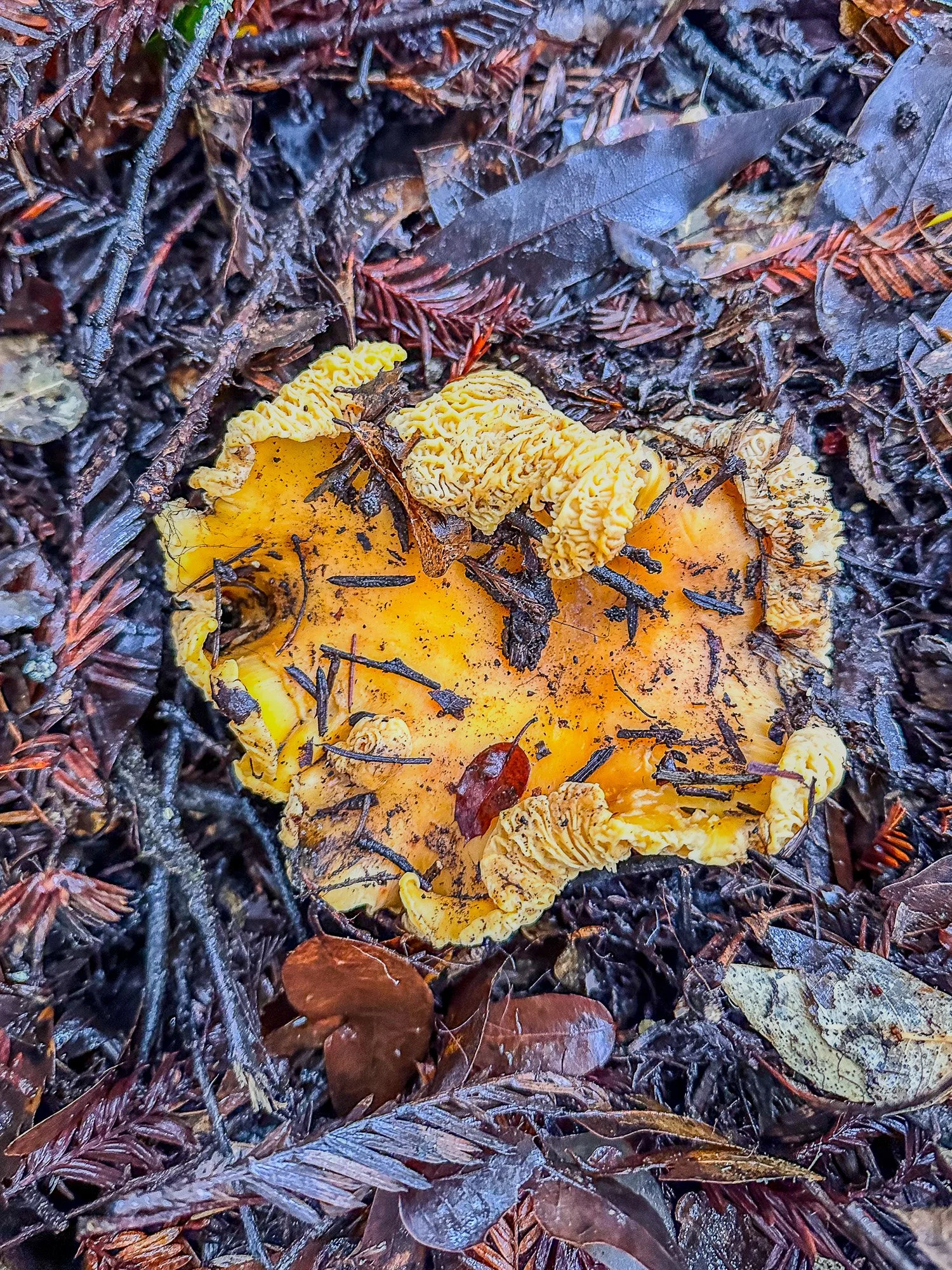
Our first find.
You don't find them so much as your eye suddenly calibrates to them — and then you can't stop seeing them. That particular golden-orange against the dark duff, the wavy-edged cap, the false gills running down a thick pale stem. Once you've found one, you find twenty.
The first one she pulled was enormous. Both hands. The underside showed those characteristic forking ridges — not true gills, which is one of the key ID markers — fanning out from the stem in long pale lines. Dinner-plate size is not an exaggeration. It was one of the larger chanterelles I've seen in person.
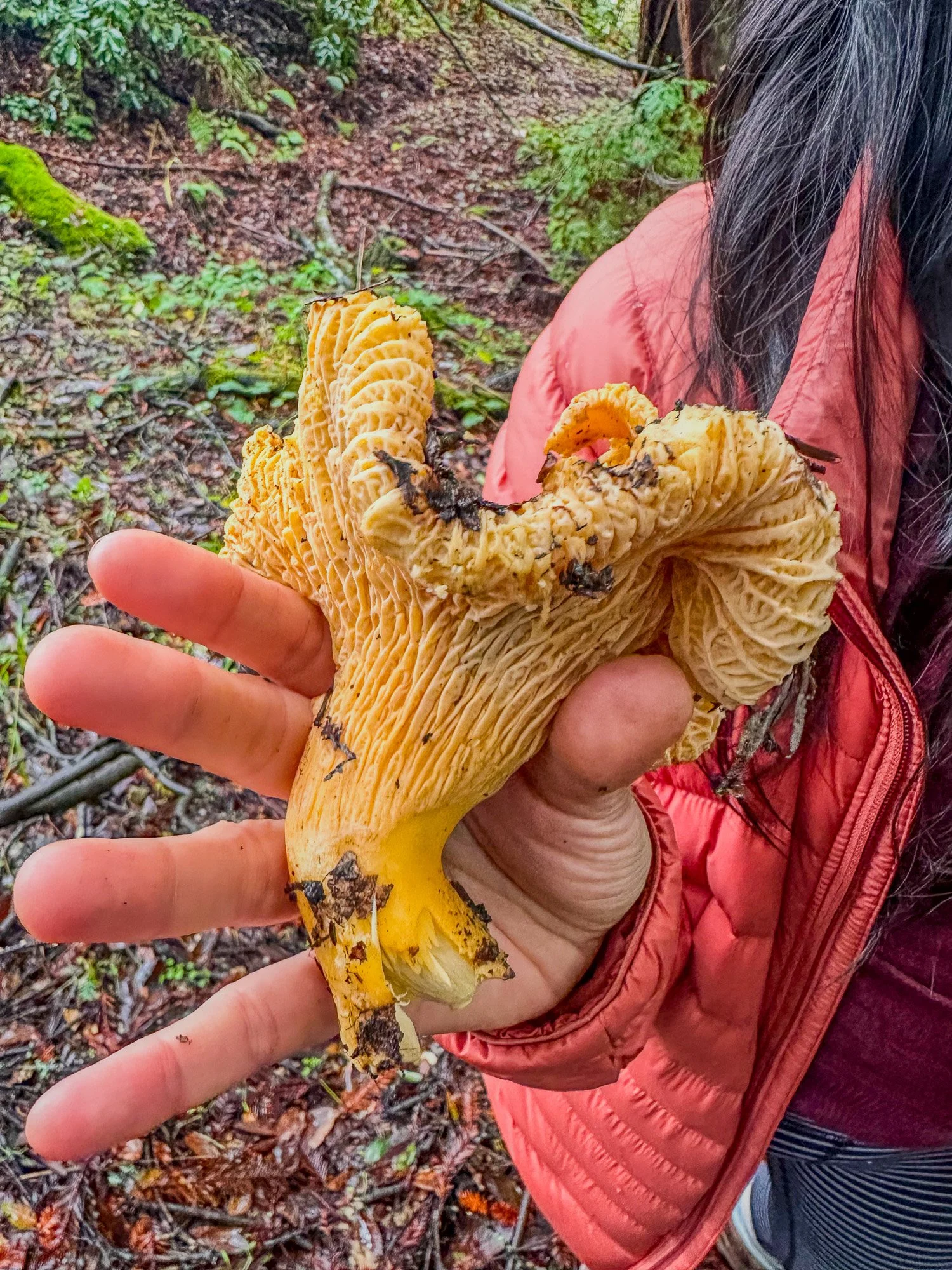
Dinner-plate chanterelle — the forking false gills are the key ID marker.
We kept going. The container filled.
At some point foraging shifts from searching to harvesting — you've found the patch, you know what you're looking at, and it's just a matter of moving carefully through the area, checking under the duff, looking where the light suggests the right moisture conditions. We filled the container and started the bag. Not greedy — you take what you'll cook, leave the rest, and make sure you're not disturbing more than necessary.
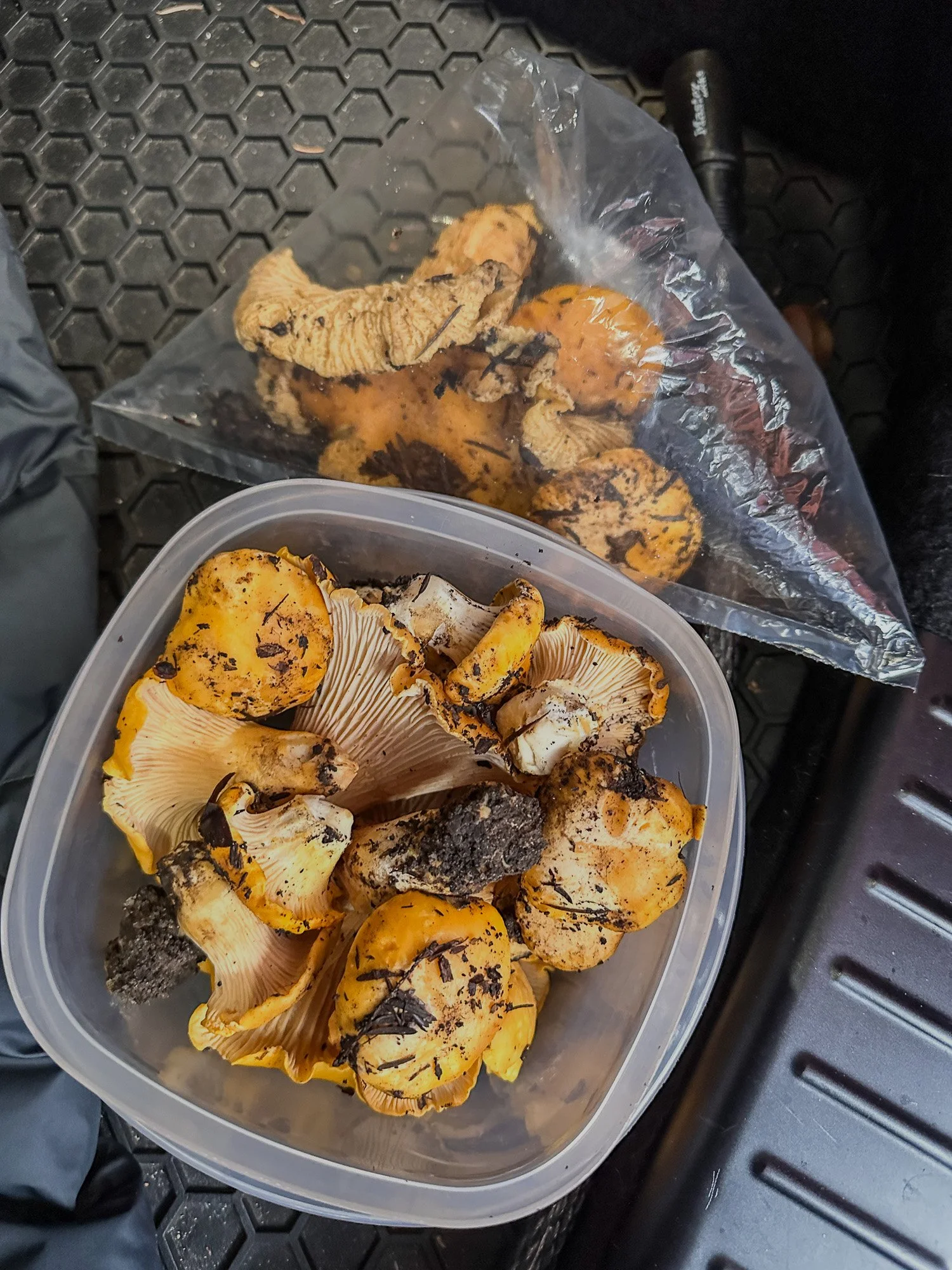
The container filled. A good February.
Back at the car, we laid everything out.
The haul was better than expected — a mix of sizes, all golden, all firm. A few were slightly past prime, a bit soft at the edges, and those went back into the forest on the way out. The rest made it home.
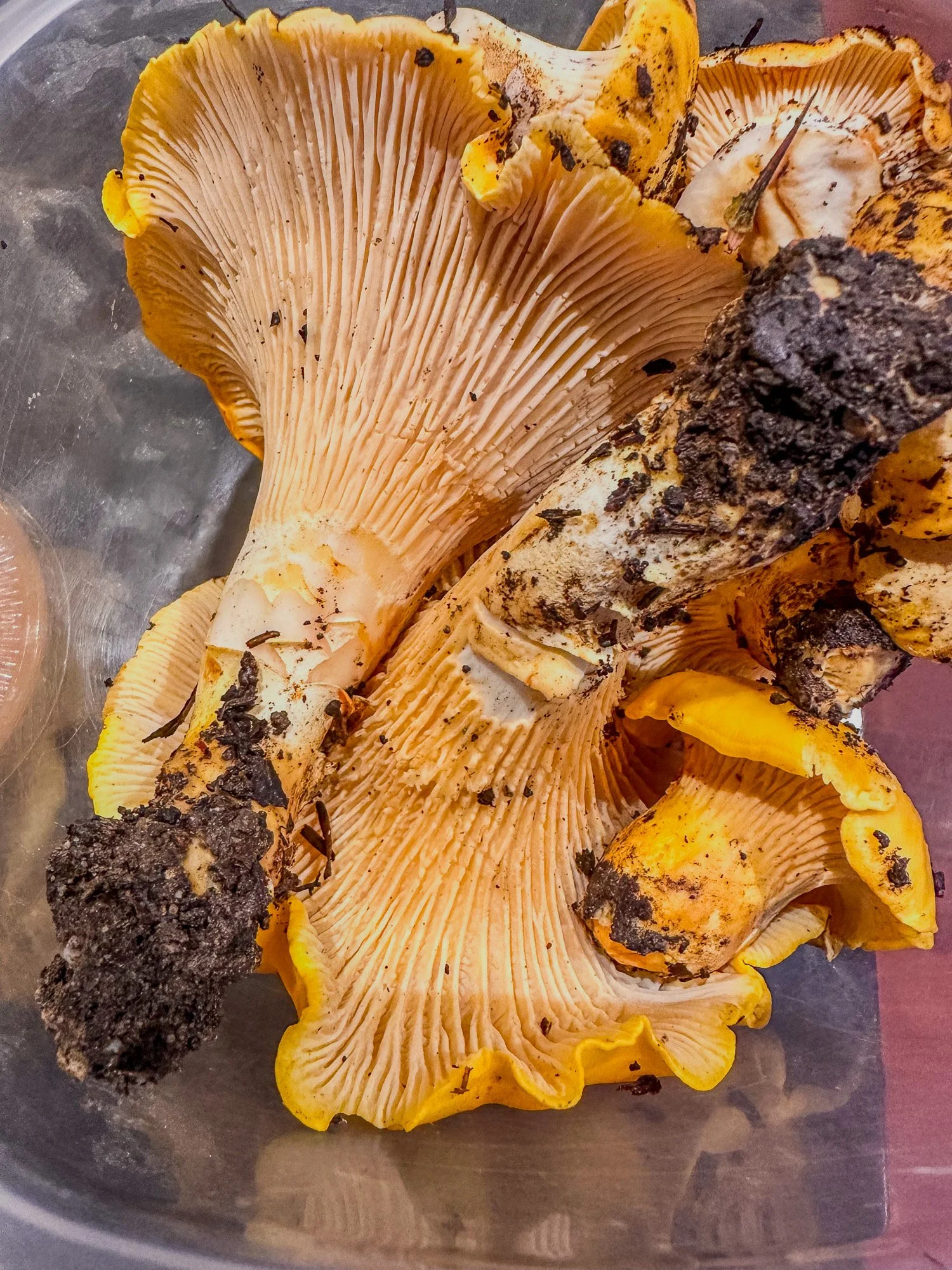
The container filled. A good February.
Cleaning chanterelles is meditative work. A quick rinse — not a soak, never a soak — a soft brush for the gills, a damp cloth for the caps. They're fragile in the wrong ways and resilient in the right ones. The kitchen smelled like the forest by the time we were done.
Then butter. Medium heat. The chanterelles go in dry, no oil first — they release their own liquid almost immediately, a pale mushroom liquor that you let cook off before the butter goes golden and starts to catch. Fresh herbs near the end. Salt. That's it. No need to complicate it.
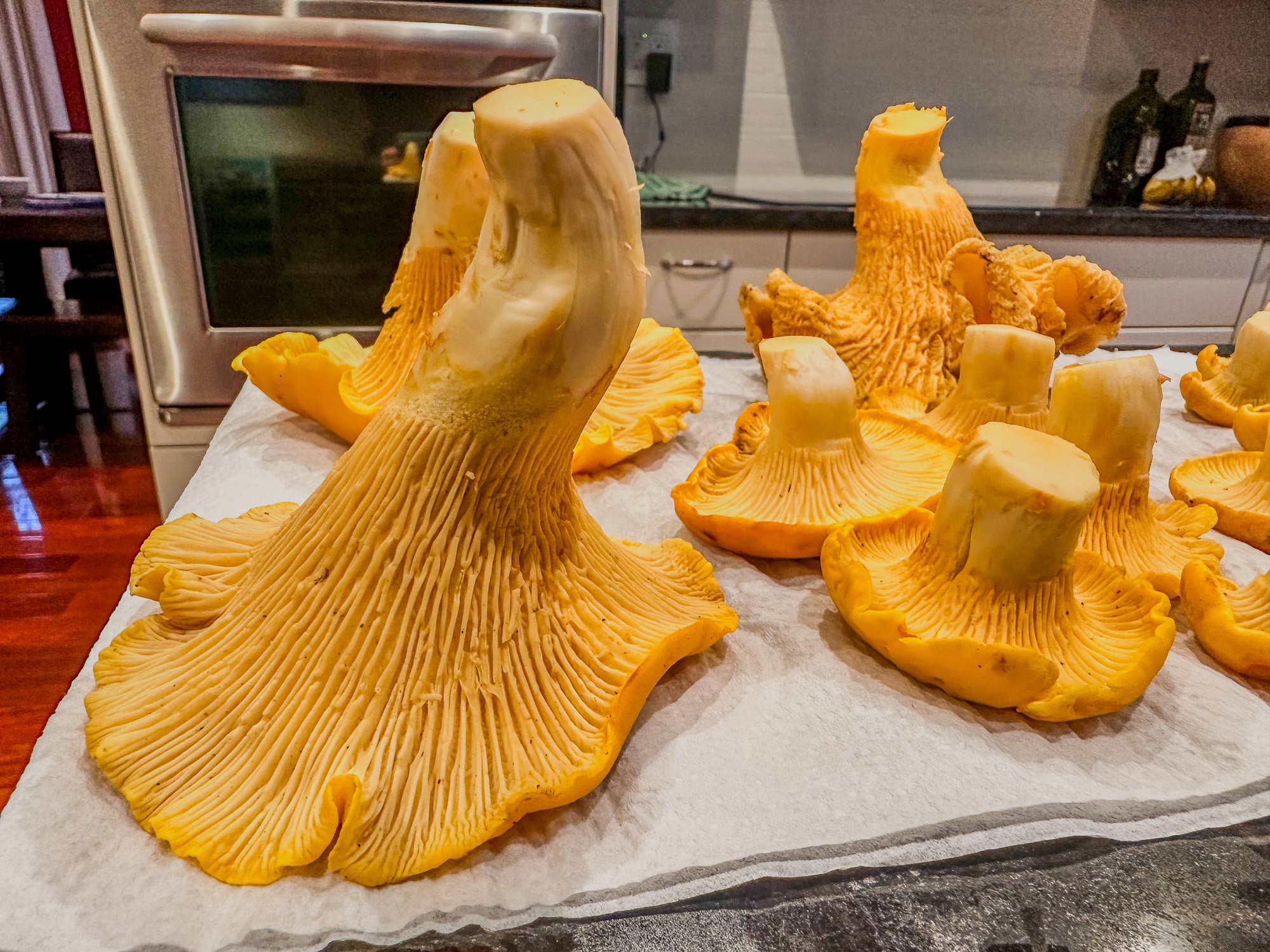
Cleaned and ready — the kitchen smelled like the forest.
The flavour of a chanterelle you foraged yourself is not the same as one from a grocery store. I'm not sure if that's chemistry or psychology. Probably both. There's something about the effort — the creek crossing, the log, the field guide consultation, the walk back — that makes it taste different. Earned, maybe. That's the whole point of the loop.
You go out into the forest in February when it's cold and wet because that's when the forest is giving something back. You pay attention, you move carefully, you take only what you'll use. And then you go home and cook it simply, because it doesn't need anything else.
About the Photography
These images were shot on a personal lifestyle session in the Santa Cruz Mountains — one of a series of outdoor adventure sessions I do throughout the year that go well beyond the standard portrait setup. If you spend your weekends doing something worth documenting — foraging, hiking, climbing, exploring — that's exactly the kind of session I'm built for.
If you're interested in a personal lifestyle session or a family adventure session, I'd love to hear what you have in mind. Sessions start at $450. Get in touch here.
Find out more about the photographer, my services or my portfolio.