
Tomales Point Trail in Spring: Wildflowers, Wildlife, and a 9.6-Mile Adventure at Point Reyes
There are hikes you plan, and then there are hikes that exceed every expectation before you're even a mile in. Tomales Point Trail at Point Reyes National Seashore is the second kind — especially in May, when the entire peninsula erupts in wildflowers and the morning fog hangs low over Tomales Bay.
I hiked this trail with a client for a personal branding photography session, and what we found was one of the most spectacular spring wildflower displays I've seen anywhere in the Bay Area. California poppies, shooting stars, yellow lupine, silver thistle, vast fields of purple and white mustard flowers stretching all the way to the ocean — and wildlife we weren't expecting at all. This post is part trail guide, part photography journal, and part honest account of what 9.6 miles on the Marin coast actually feels like.
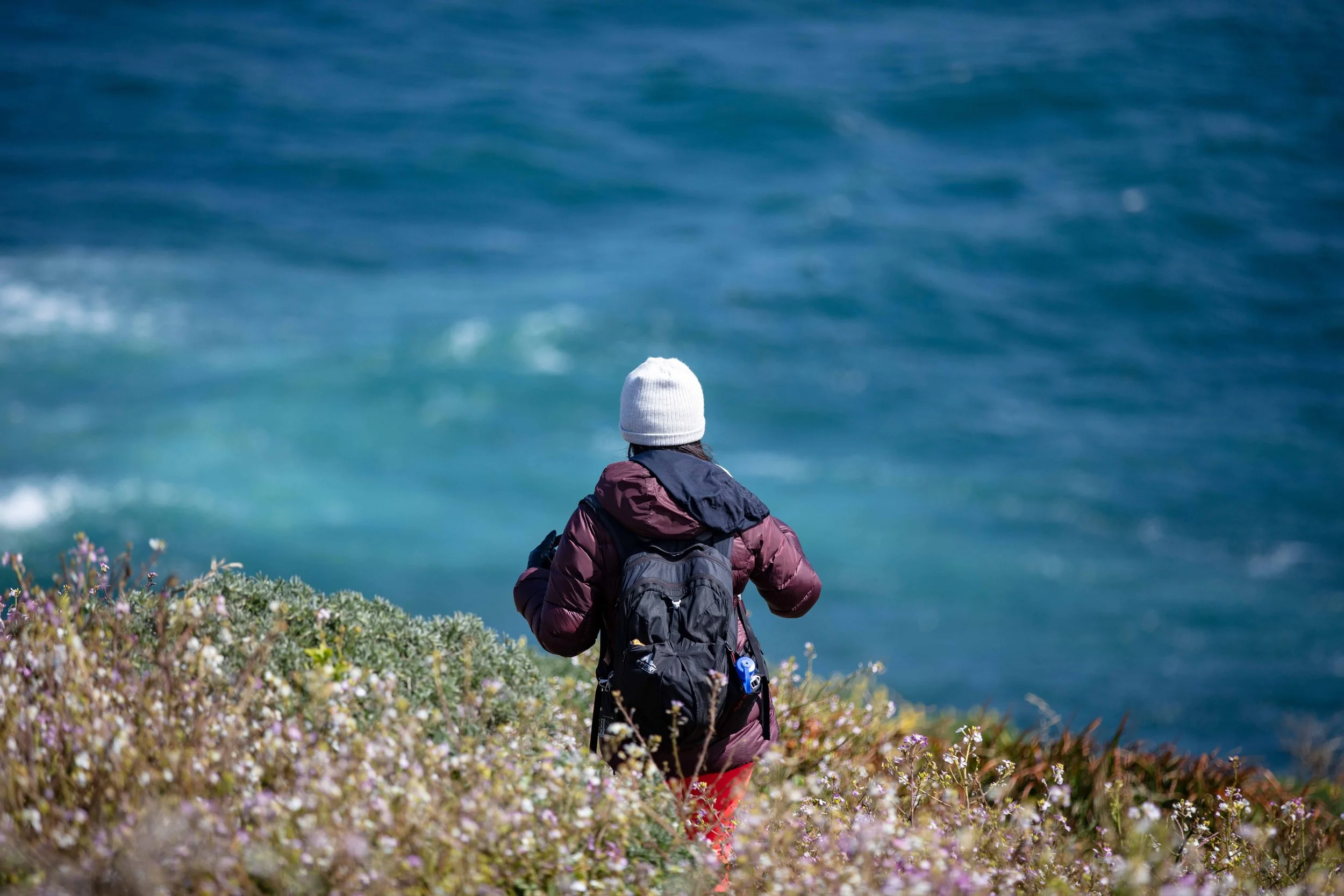
The Tomales Point Trail follows the spine of the peninsula with the Pacific on one side and Tomales Bay on the other. This is what 9.6 miles of exposed coastal ridgeline looks like.
The Basics: What to Know Before You Go
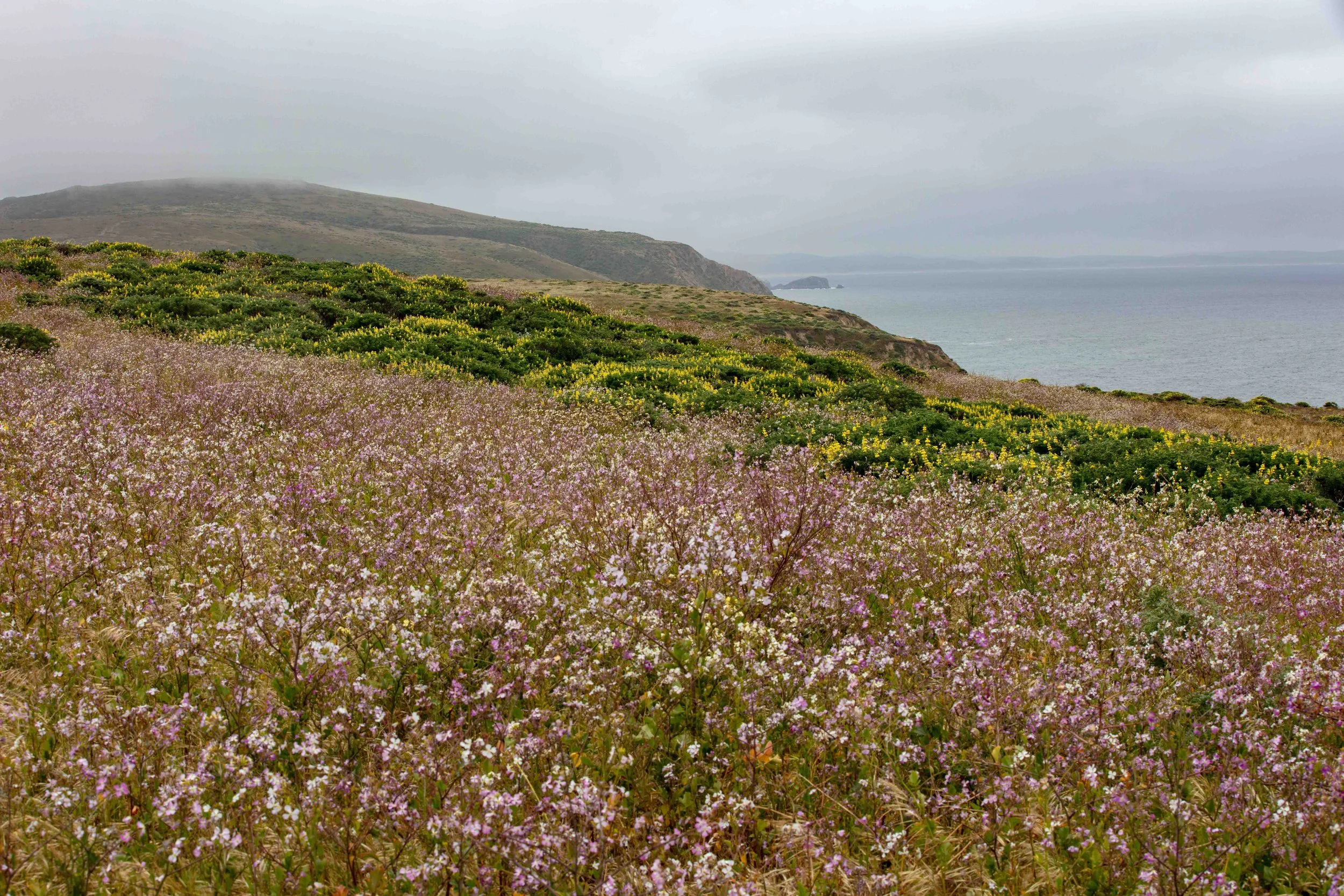
The view that stops you mid-stride - a hillside blanketed in wild radish flowers stretching to the Pacific Ocean. This is the heart of the Tomales Point wildflower display in May.
Trail name: Tomales Point Trail (also called the Pierce Point Trail) Location: Point Reyes National Seashore, Marin County, CA Distance: 9.6 miles out and back Elevation gain: Approximately 750 feet Difficulty: Moderate — long but not technical. Suitable for fit hikers and active families with older children. Trailhead: Pierce Point Ranch parking lot, end of Pierce Point Road Best season for wildflowers: Late March through May, peak typically mid-April to mid-May Start time recommendation: Early morning — ideally at or before sunrise
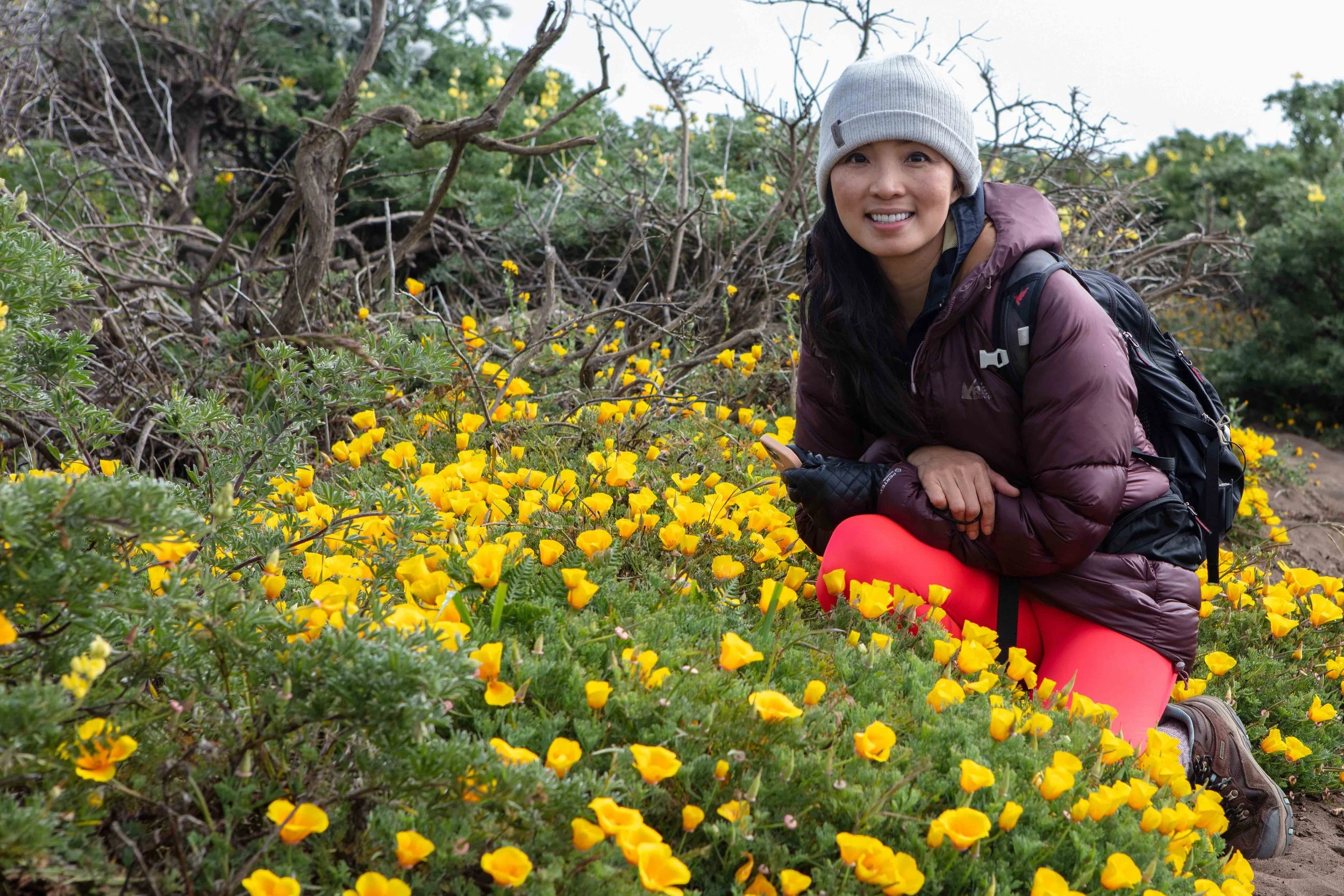
Surrounded by California poppies in the first mile of the trail. On overcast May mornings the flowers stay closed into soft cone shapes which is actually more beautiful for photography than fully open blooms.
Why You Should Start Before Sunrise
We left early. Really early. The reward was one of those Bay Area morning moments that reminds you why living here is extraordinary — oak tree silhouettes against a horizon that was shifting from deep blue to orange, fog sitting low in the valleys below, and the trail entirely to ourselves.
Morning light on this trail is exceptional. The coastal fog creates soft, diffused light that's perfect for photography — no harsh shadows, no blown-out highlights. Colors feel saturated and rich. By the time the fog burns off mid-morning, the light changes completely. If you're hiking purely for the experience, any time works. If you're hiking with photography in mind — for yourself or as part of a session — early morning is the only answer.
The Pierce Point Ranch trailhead also gives you an interesting start. The old white barn at the ranch is a striking landmark and a nice way to orient yourself before the trail opens up onto the ridgeline. It's been there since the ranching days of Point Reyes and feels like a portal between the world behind you and the wild coastline ahead.
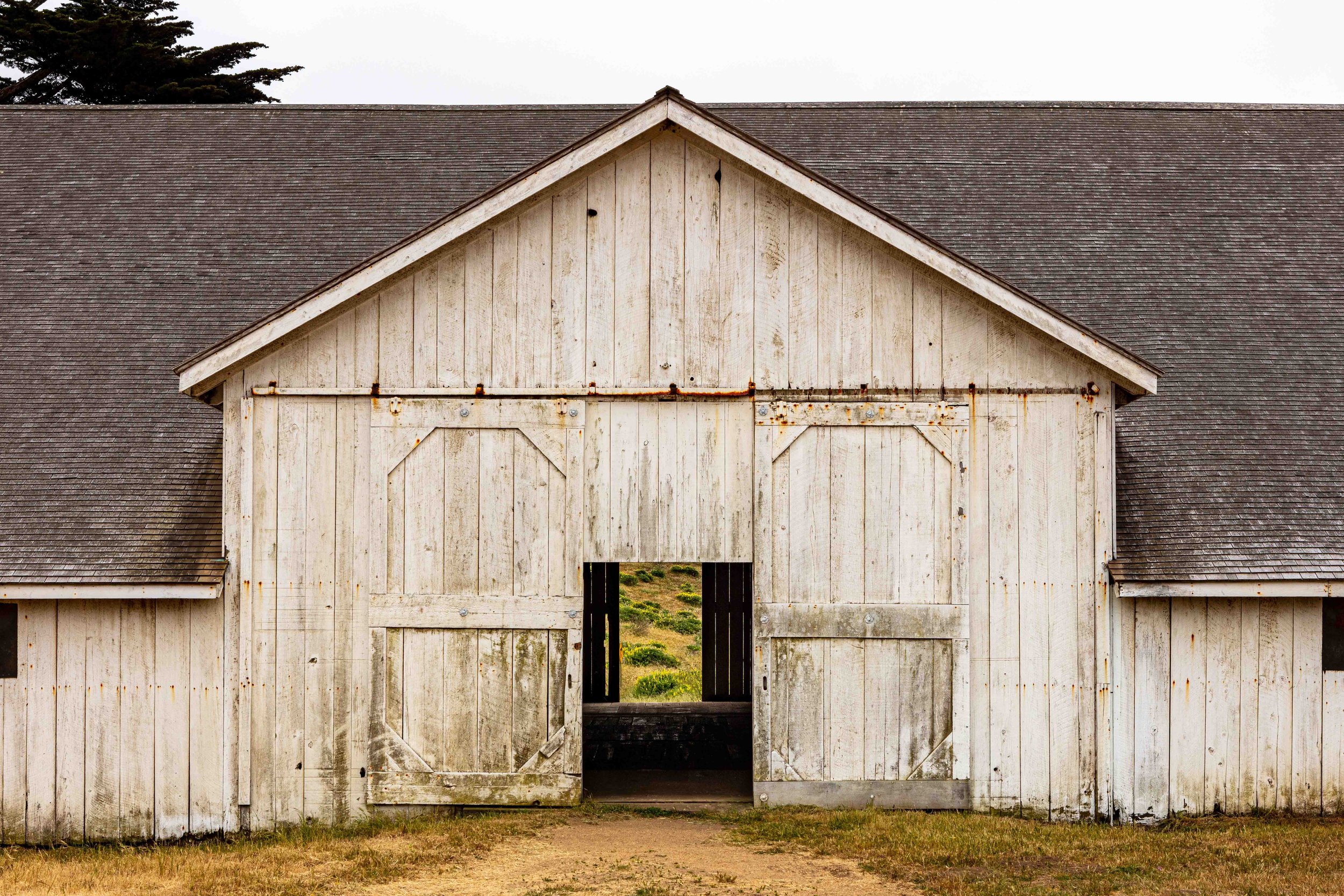
Pierce Point Ranch at the trailhead - the historic white barn marks the start of the trail and feels like a portal between the everyday world and the wild coastline ahead.
What You'll See: The Wildflowers
In May, Tomales Point is blanketed in color from the trailhead to the tip of the peninsula. Here's a breakdown of what we encountered:
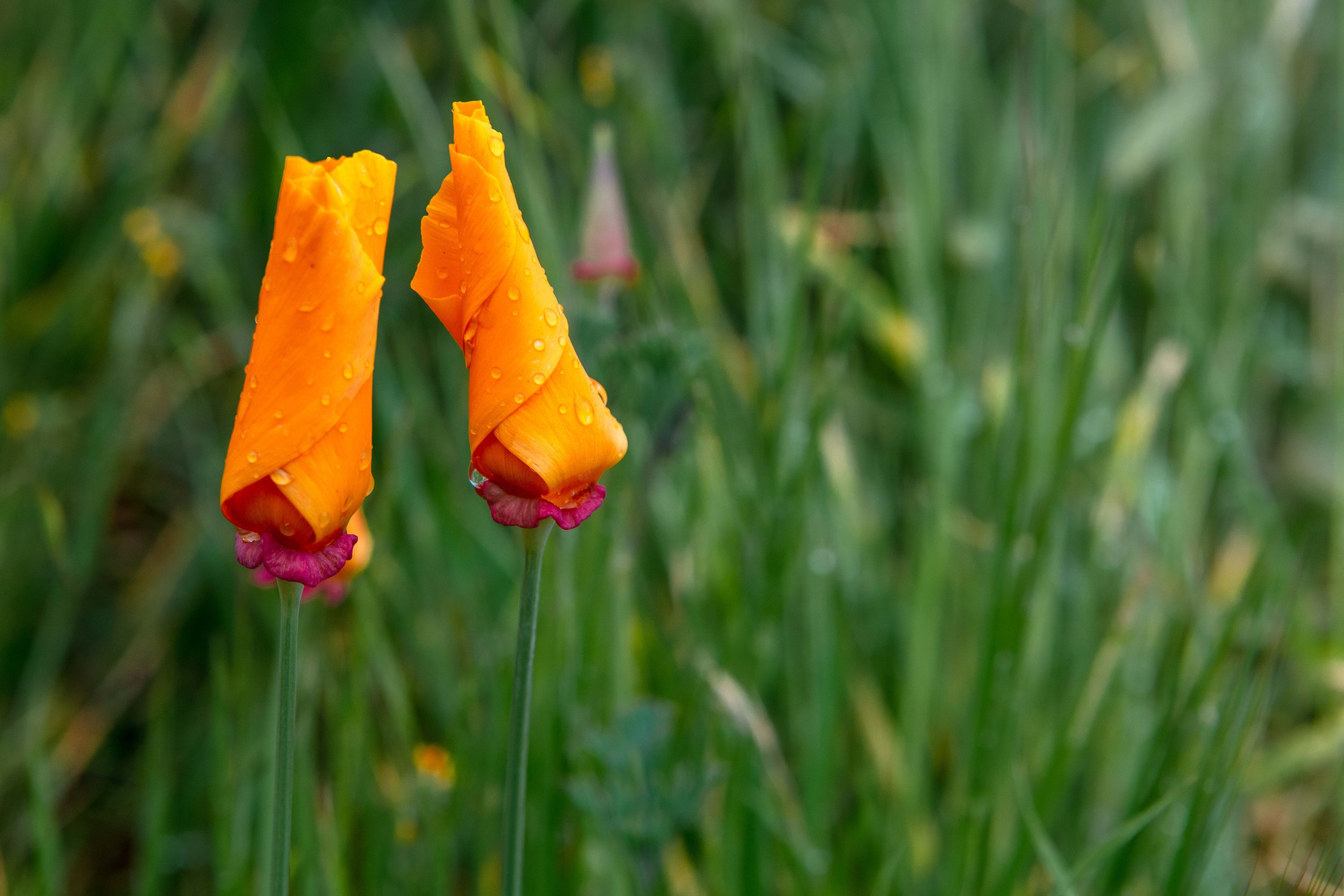
Two poppy buds covered in morning dew, still closed in the cool coastal air. California poppies close at night and on overcast days - early morning catches them in this beautiful furled state.
California Poppies (Eschscholzia californica) The state flower dominates the early sections of the trail. Clusters of bright orange and yellow blooms push up through the rocky soil, sometimes growing right out of granite crevices where you'd think nothing could survive. On overcast mornings the flowers stay closed into soft cone shapes covered in dew — which is actually more beautiful for photography than fully open blooms. By mid-morning they open wide and face toward the sun.
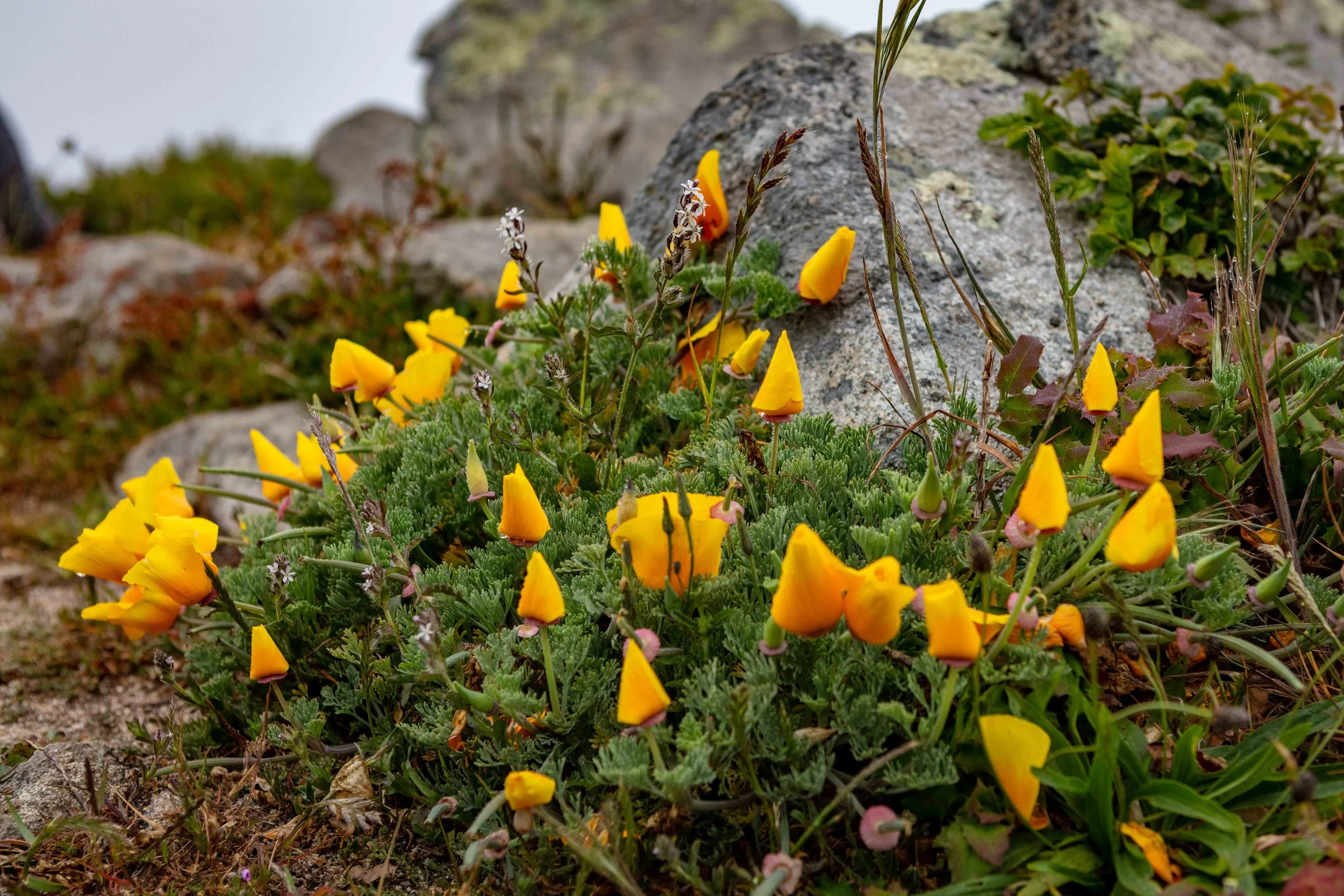
California poppies growing straight out of granite - these flowers find a way through every crack in the rock along the upper sections of the trail.
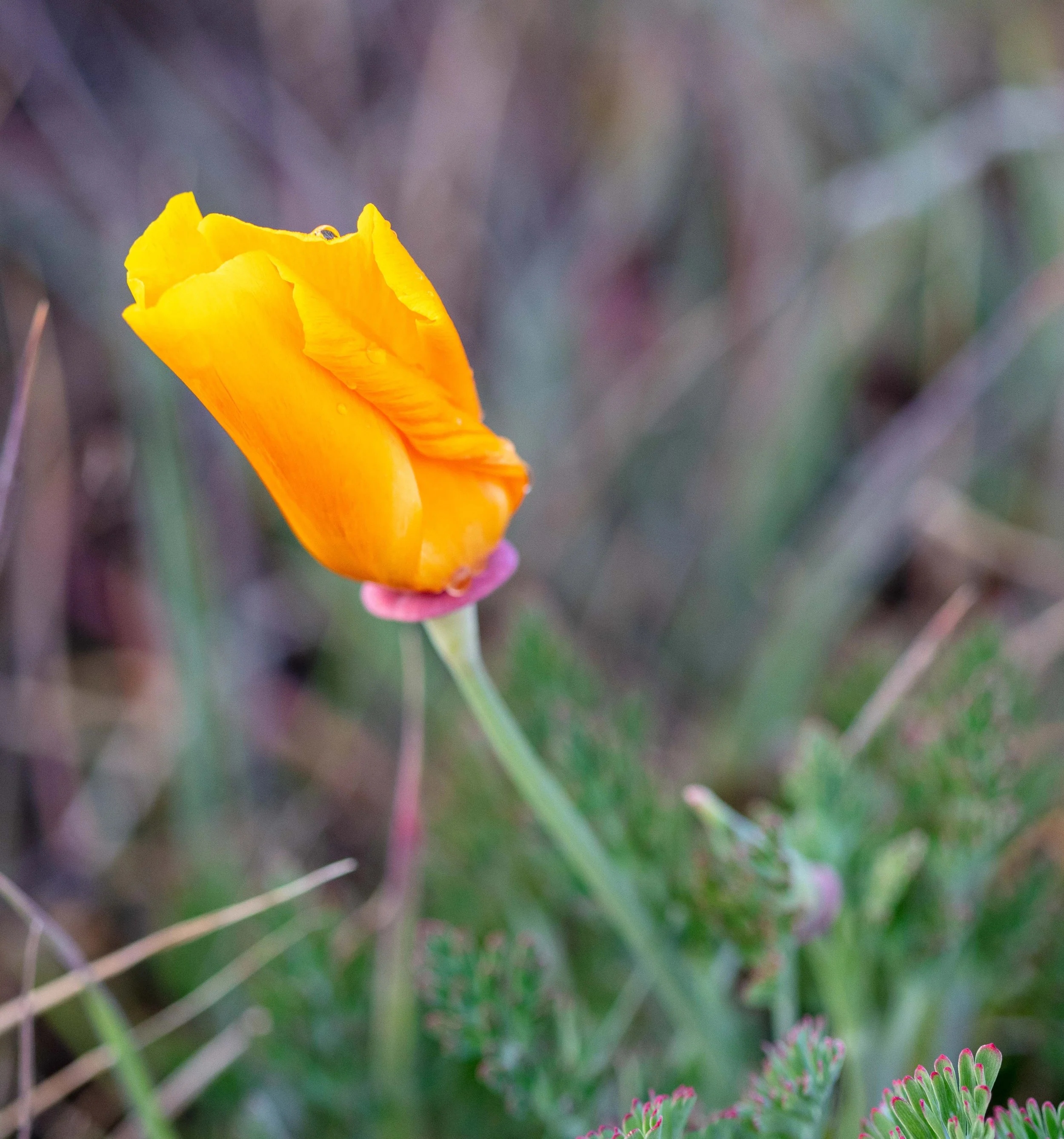
A single poppy holding morning dew shot wide open at f/1.4 to isolate the flower against the soft coastal background.
Yellow Lupine Tall spires of yellow lupine line the trail with Tomales Bay visible in the distance behind them. These are coastal lupine, shorter and bushier than the purple varieties you'll find inland, and they cover entire hillsides in deep gold.
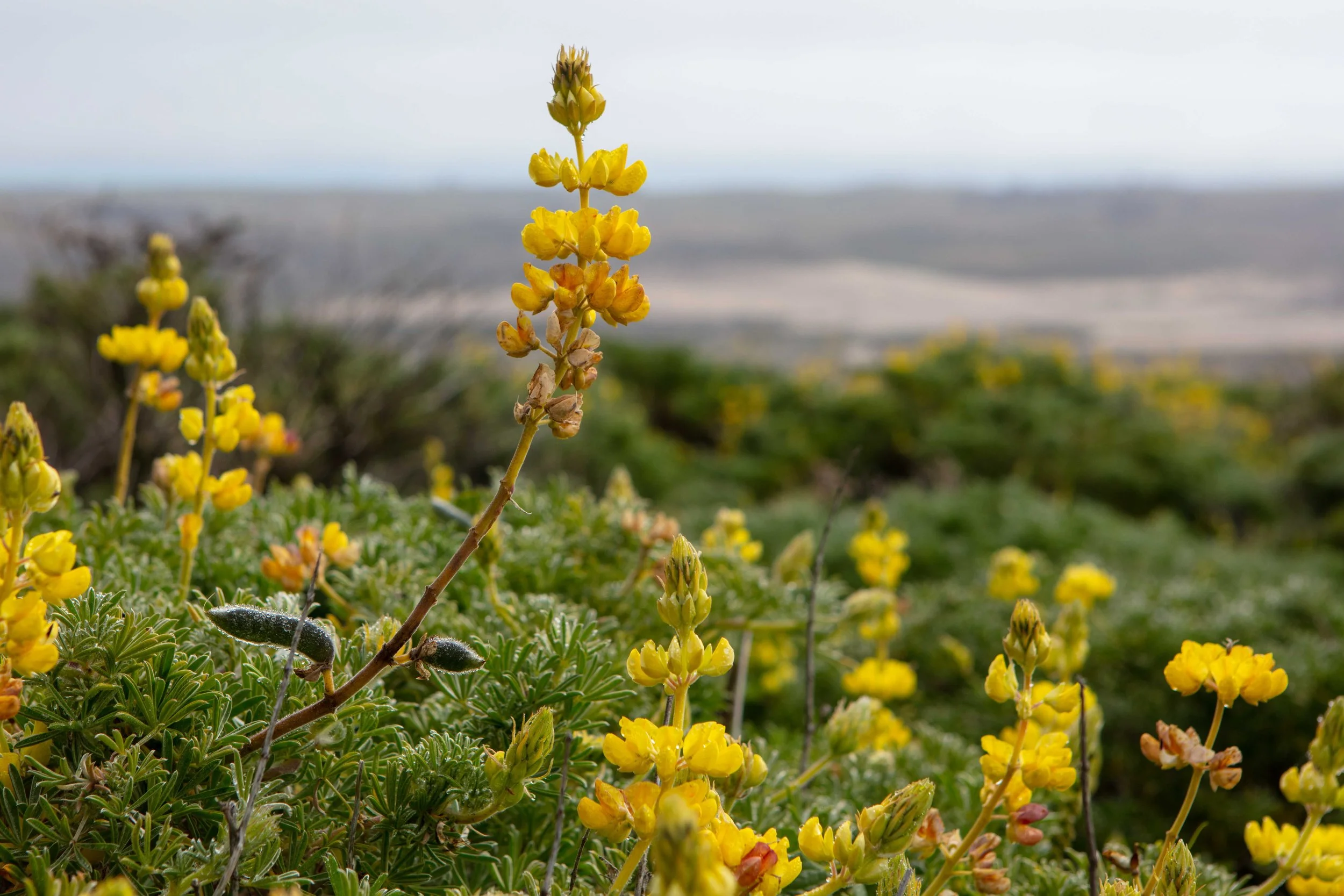
Yellow coastal lupine with Tomales Bay stretching to the horizon. This view - flowers in the foreground, water behind - is unique to the Tomales Point peninsula.
Purple and White Mustard (Wild Radish) The most visually dramatic display on the entire trail. In the middle sections, the hillside becomes an unbroken carpet of lavender, white, and pale yellow — thousands of wild radish flowers stretching all the way to the clifftops above the ocean. Standing in the middle of this field with the Pacific in the distance is one of those moments where you just stop and take it in.
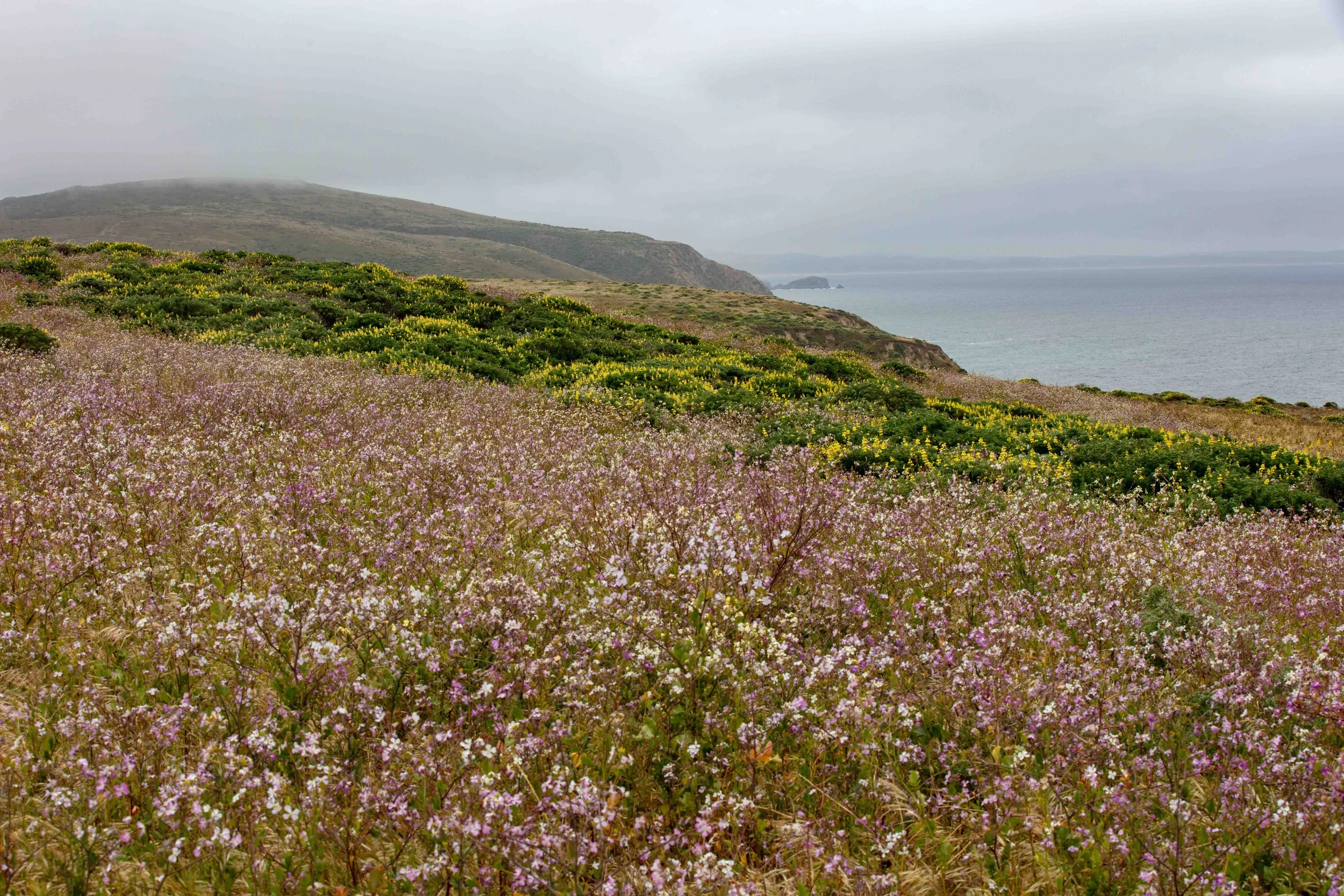
The wildflower carpet at peak bloom - purple, white, and yellow wild radish covering the hillside as far as you can see, with the Pacific Ocean beyond. This is the image that makes people plan a trip.
Shooting Stars (Dodecatheon) These delicate pink flowers with their swept-back petals and dark pointed stamens are found along the wetter, sheltered sections of the trail. They're easy to miss if you're moving fast. Slow down and look at ground level in the morning — the dew on their petals catches the light beautifully.
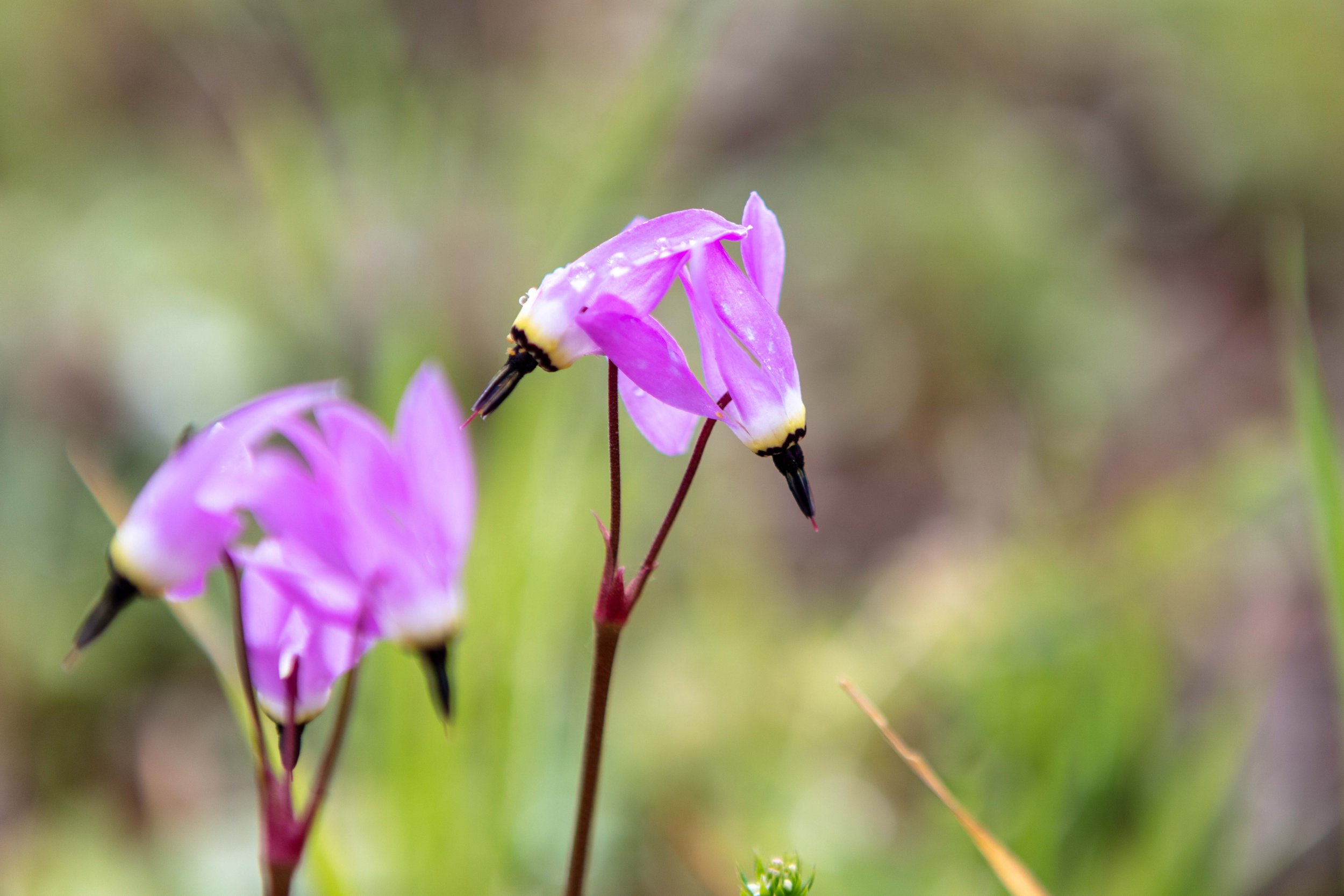
Shooting stars (Dodecatheon) along the sheltered sections of the trail - delicate pink swept-back petals with dark pointed stamens. Easy to miss if you're moving fast. Slow down.
Silver Thistle (Cirsium occidentale — Cobweb Thistle) One of the most unusual flowers on the trail. The cobweb thistle has a ghostly silver-white base covered in fine webbing, with a shocking burst of hot pink at the top. They grow tall and isolated, which makes them natural focal points for photographs. Look for them in the mid-trail sections.
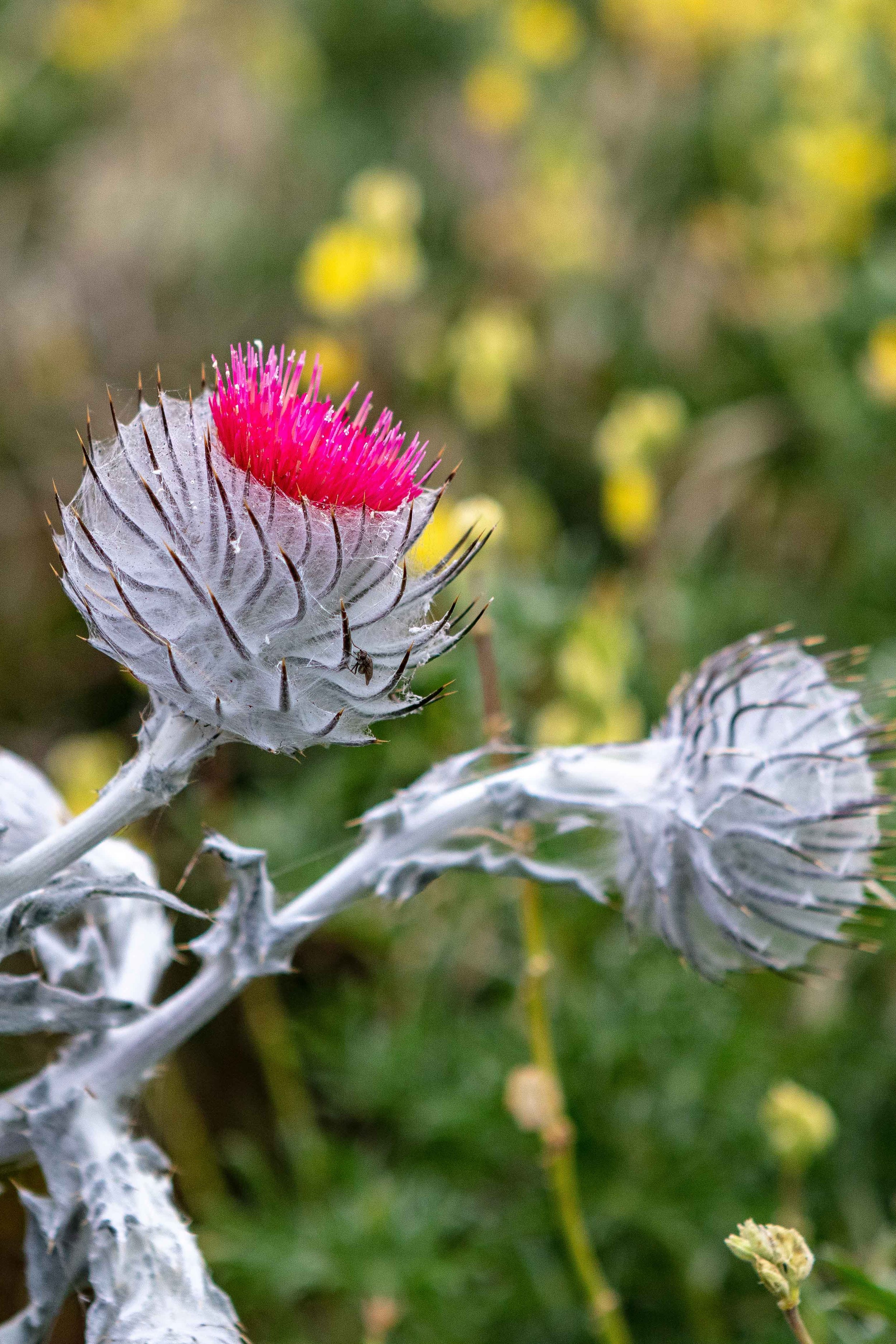
The cobweb thistle - one of the most distinctive plants on the trail. A ghostly silver-white base covered in fine webbing, with a shocking burst of hot pink at the top. They grow tall and isolated along the mid-trail sections.
Coastal Succulents (Dudleya) Scattered throughout the rocky sections, red-tipped Dudleya succulents grow in crevices and along cliff edges. Their geometric rosette shapes are striking close-up, especially when backlit in early morning light.
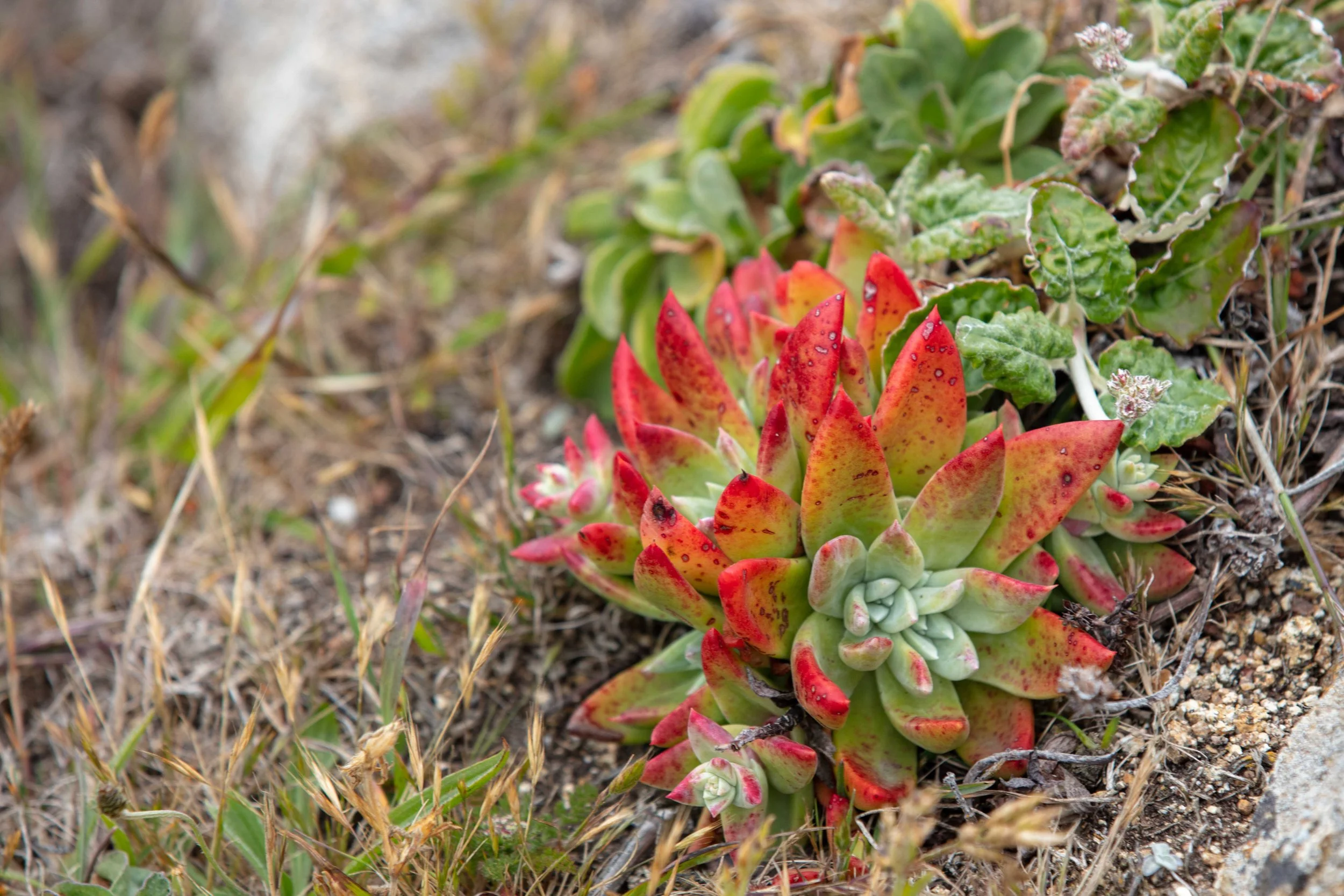
Dudleya succulents growing in a granite crevice along the cliff edge - their red-tipped rosettes appear throughout the rocky sections of the upper trail.
The Wildlife: Expect the Unexpected
Tomales Point Trail runs through the Tule Elk Reserve, so elk sightings are common — though we didn't encounter them on our particular morning. What we did find was equally memorable.
A Long-Tailed Weasel on the trail. This was a genuine surprise. The weasel stood in the middle of the path and held its ground, staring directly at us for long enough to photograph. Long-tailed weasels are native to Point Reyes but rarely seen — they're fast, shy, and typically gone before you realize what you've spotted. Getting a clean shot of one mid-trail is the kind of luck that makes early starts worthwhile.
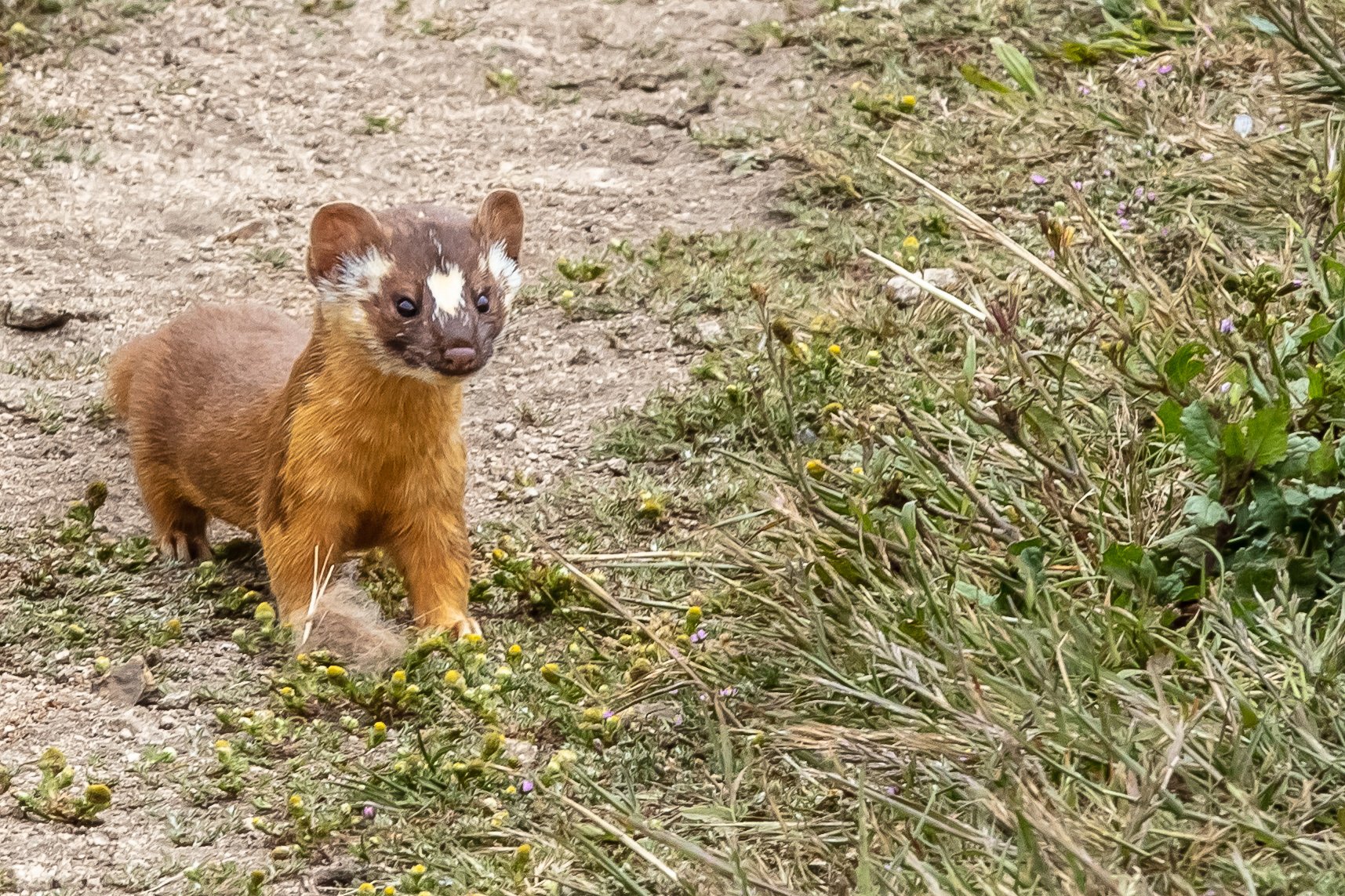
The unexpected highlight of the day - a long-tailed weasel held its ground in the middle of the trail and posed long enough for a proper portrait. These animals are native to Point Reyes but rarely seen. Pure luck.
Woolly Bear Caterpillars were everywhere in the wildflowers. These fuzzy black and orange caterpillars were feeding on the lupine stems and flowers, covered in morning dew and completely unbothered by our presence. At macro distances they're genuinely extraordinary — the dew drops on their fur, the texture, the color contrast against the yellow flowers.
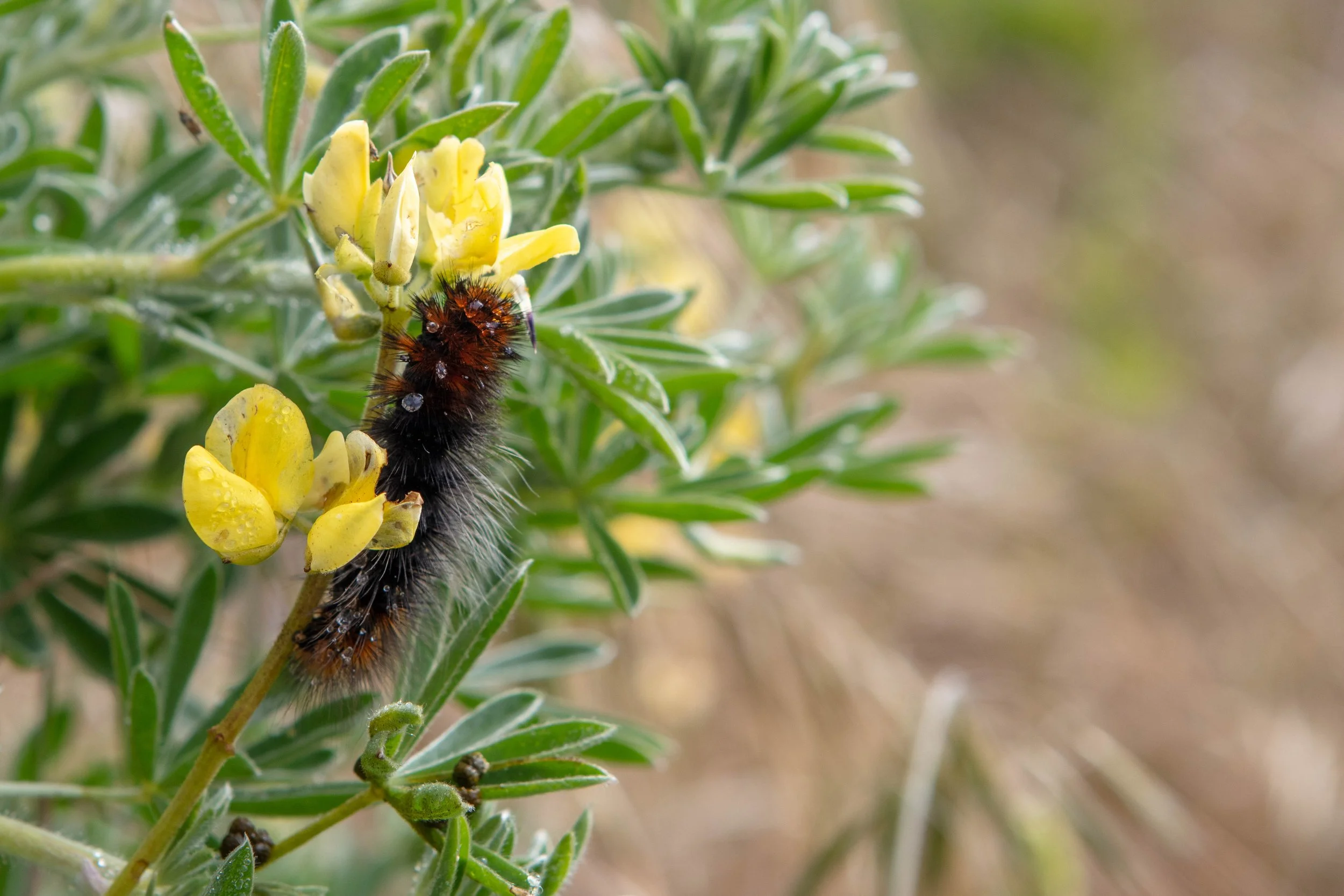
A woolly bear caterpillar feeding on yellow lupine, covered in morning dew. These fuzzy caterpillars were everywhere in the wildflower sections - slow down and look at ground level.
Ladybugs on thistles. Early in the morning while the cobweb thistle flowers still held dew, we found ladybugs sheltering in the thistle's webbing. Shot close up with shallow depth of field, this kind of small-scale detail is what makes a long hike feel like a continuous photography discovery.

A ladybug sheltering in the cobweb thistle's webbing, with morning dew throughout. This kind of small-scale detail is what makes a long hike feel like a continuous photography discovery.
The Trail Itself: What the Hike Is Actually Like
The trail follows the spine of the Tomales Point peninsula, with the Pacific Ocean on the west and Tomales Bay on the east. For most of the hike you can see both. The terrain is open grassland and coastal scrub — exposed, windswept, and dramatic.
The footing is generally good. There are some rocky sections and the trail narrows in places, but there's nothing technical. The elevation gain is gradual and spread across the full length, so you rarely feel like you're climbing steeply. The wind can be significant — this is a fully exposed ridgeline — so layers are important even in May.
At 9.6 miles round trip, this is a committed full-day hike. We took our time, stopping frequently for photographs, and the day felt well-paced. If you're moving at a hiking pace without many stops, expect 4-5 hours. With photography stops, plan for 6-7 hours.
Is it suitable for families? Yes, for fit families with older children (roughly 8 and up who are used to hiking). The distance is the main consideration — there's nothing dangerous about the trail itself, but 9.6 miles is a long day for young legs. Bring plenty of water and snacks. There are no facilities on the trail.
Photography Tips for This Trail
Bring a macro lens or macro extension tubes. The wildflower detail shots — caterpillars, ladybugs, dew drops, individual poppy petals — are some of the best images from this trail. A 100mm macro or even an 85mm with close-focus capability will open up a whole world that most hikers walk right past.
The wide shots are best in the middle sections. Once you're past the initial ranch area and into the heart of the wildflower fields, look for compositions that layer the flowers in the foreground with either Tomales Bay or the Pacific in the background. The depth you get from this peninsula — water on both sides — is unique to this trail.
Shoot in portrait orientation for the client shots. The vertical compositions — tall lupine in the foreground, ocean on the horizon — work especially well for personal branding and lifestyle content where the subject is surrounded by, rather than standing in front of, the landscape.
Don't ignore the overcast light. Point Reyes is famously foggy. Many photographers feel disappointed when it's overcast. Don't be. Overcast light is ideal for wildflower photography — it's even, soft, and brings out the saturation of the oranges, yellows, and purples without blowing out the whites. The moody atmosphere also reads beautifully in portraits.

A natural smile mid-hike, surrounded by yellow lupine. No posing, no direction just genuine joy from a day spent somewhere extraordinary.
How to Get There
Address: Pierce Point Ranch Trailhead, Pierce Point Road, Point Reyes Station, CA 94956
From the Bay Area, take Highway 1 north toward Point Reyes Station, then follow Sir Francis Drake Boulevard west through the park. Turn right on Pierce Point Road and follow it to the end. The parking lot at Pierce Point Ranch is the trailhead.
Arrive early — the parking lot fills up quickly on spring weekends.
Park fees: Point Reyes National Seashore is free to enter.
This Trail as a Photography Session Location
I brought a client here for a personal branding session, and it delivered beyond what either of us expected. If you're looking for an outdoor portrait location that feels genuinely wild and distinctive — not a manicured park or a well-worn trail that shows up in every Bay Area photographer's portfolio — Tomales Point in spring is exceptional.
The variety of backdrops in a single hike is remarkable: the historic ranch barn, open ridgeline with ocean views, intimate wildflower fields at ground level, dramatic cliff edges above the Pacific. A full-day session here produces a library of images that feel like they span multiple locations.
This is the kind of location that suits the personal lifestyle photography sessions I specialize in — people who want something real, something that reflects who they actually are and where they feel most alive. If you spend your weekends on trails like this one, your photographs should look like it.
Final Thoughts
Tomales Point Trail in spring is one of the best day hikes in the entire Bay Area. The wildflower display in May is genuinely world-class — not overhyped, not "you have to see it in the right year." It's reliably spectacular, and the combination of dramatic coastal scenery, abundant wildlife, and photographic variety makes it a trail worth clearing your calendar for.
Leave early. Bring layers. Slow down for the caterpillars.
Matthew Duncan is a Bay Area adventure photographer specializing in personal lifestyle sessions, family adventures, and action sports. If you're planning a hiking or outdoor photography session at Point Reyes or anywhere in the Bay Area, get in touch.
Looking for more Bay Area location guides? Check out the Best Bay Area Photography Locations post or see what a full-day cycling session looks like in Pacific Grove and 17 Mile Drive.