
Patagonia O Circuit: What I Wish I'd Known Before Hiking Torres del Paine
I got back from Patagonia last week. I've been to some extraordinary places — Trolltunga in Norway, Glacier National Park, the slot canyons of Utah. But nothing quite prepared me for the O Circuit at Torres del Paine. Not the scale of it, not the wildness of it, and certainly not the number of times it stopped me completely in my tracks.
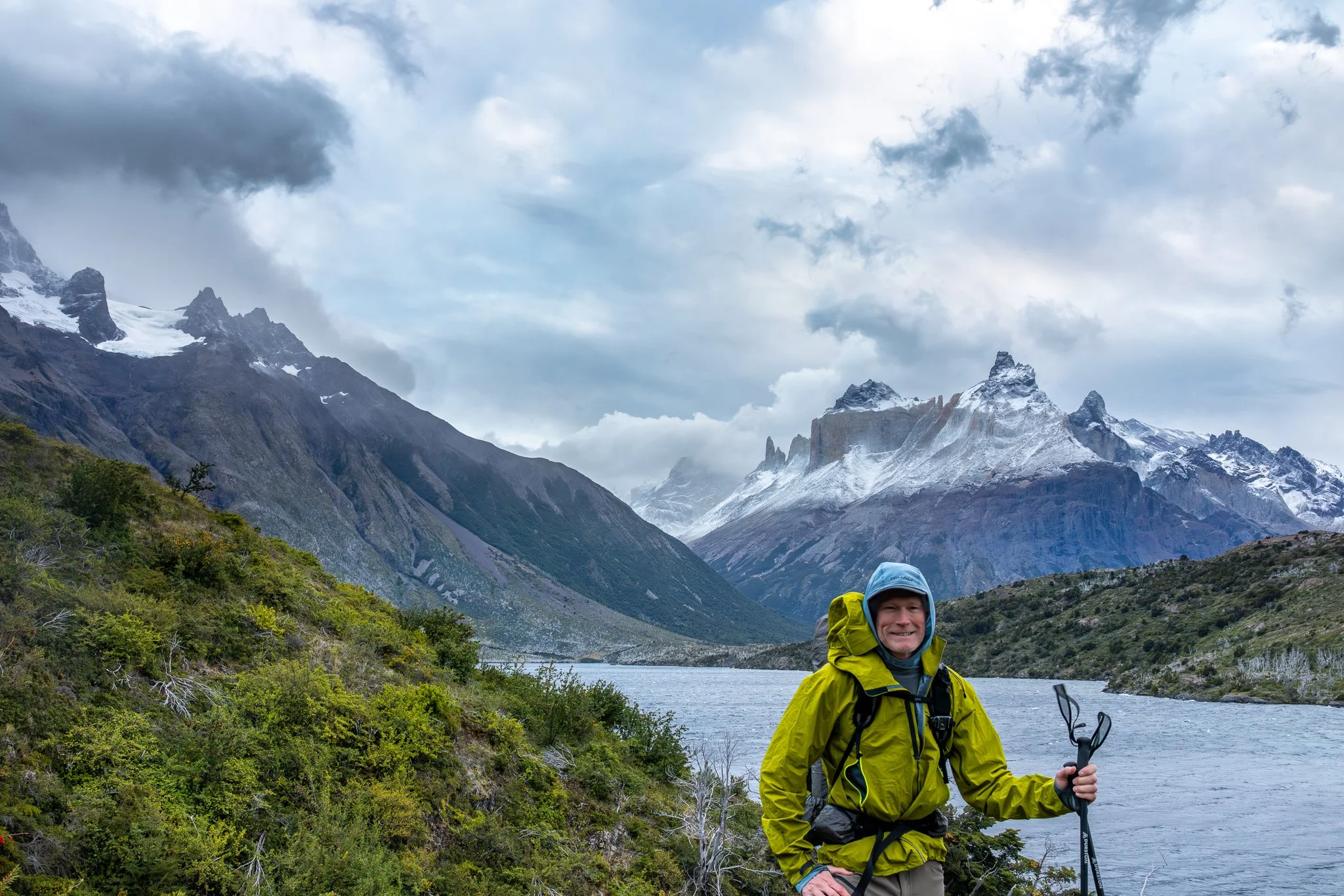
Somewhere between Refugio Paine Grande and Frances, with the full Cuernos massif emerging from the clouds.
I went with three friends. We booked through Torres Hike, packed more gas canisters than we needed, and prepared obsessively using every guide we could find online. Most of that preparation was excellent. Some of it turned out to be wrong. And some of the best moments were completely impossible to prepare for.
This is the post I wished I'd had before I went.
What the O Circuit Actually Is
The O Circuit is the full loop around the Torres del Paine massif in Chilean Patagonia — roughly 130 kilometers of trail passing through some of the most dramatic mountain scenery on earth. Most trekkers do the W Trek, which covers the famous highlights on the southern side of the park. The O Circuit adds the remote northern section — the part most visitors never see.
The northern section is rawer, quieter, and in my opinion just as beautiful. It's where you'll find glacier-fed turquoise lakes with almost no one else around, where the trail crosses open pampa with wind so strong it pushes you sideways, and where the refugios are simpler and the people you meet become genuine friends by the end.
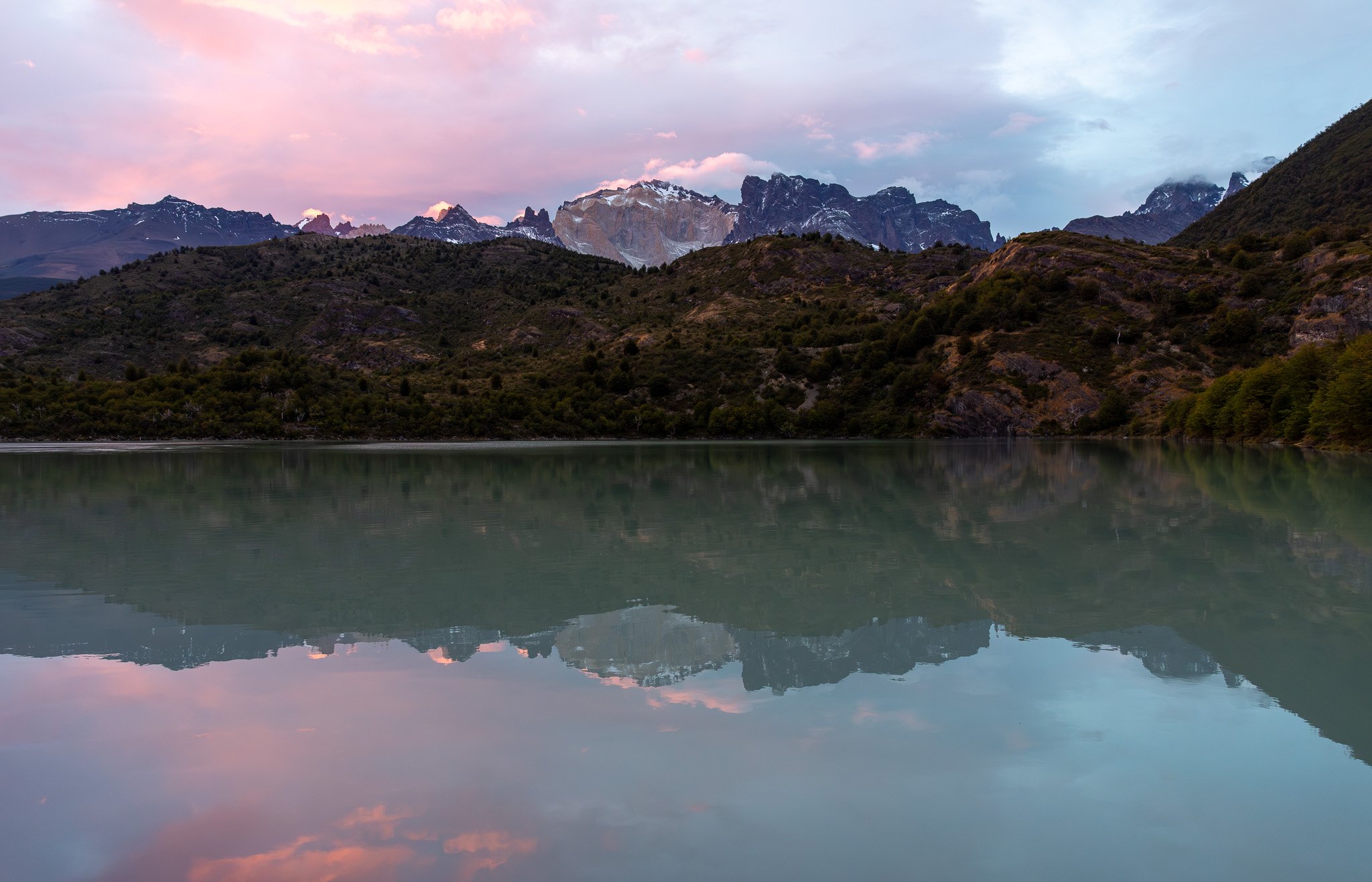
Dawn on the northern circuit — glacial light on water that no postcard ever quite captures.
Completing the full O Circuit took us 8 days, including the Torres Base day hike at the end. The circuit is notoriously hard to book — start early, because dates sell out months in advance. We used Torres Hike to manage logistics, which added cost but saved enormous planning headaches. You could do the trek in 7 or 6 days but we appreciated the time each day to relax in the refugios and get to know our fellow hikers! As they say in Patagonia - “If you rush…you are only wasting your time”.
The Cash Myth: What Every Guide Gets Wrong
Before I left, I read dozens of guides — including advice from Claude — all warning me to bring plenty of Chilean pesos in cash. The refugios were said to be cash-only or unreliable with cards. I dutifully withdrew enough cash to feel prepared.
Here's the reality in 2026: every single refugio on the O Circuit accepted credit cards and Apple Pay. Not one of them had change. The cash I brought sat untouched in the bottom of my pack for nine days.
My recommendation: bring the equivalent of around USD $50 as an emergency reserve — a power cut or system outage is always possible in a remote location — but do not stress about carrying large amounts of cash on this trek. The refugio system is more modernized than the internet currently suggests.

Climbing the Gardner Pass - Views are unbeatable - Take your time
Refugios: What to Expect at Each Stop
The refugio system on the O Circuit is better than most first-timers expect. Every stop has running water, flush toilets, power outlets, and somewhere to charge your devices overnight. After a long day on trail, this feels like an extraordinary luxury.

Refugio Los Cuernos — small cabins dwarfed by one of the most dramatic mountain faces on the circuit.
The quality varies considerably. Seron and Dickson had excellent pre-purchased meals — genuinely good food (although we prepared our own hot meals those nights). The W Trek refugios at Cuernos and Central were notably nicer (the W section sees more visitors and investment). Paine Grande and Grey had buffets that were, charitably, underwhelming.
A special mention for Los Perros: it is the no-frills night of the circuit. No alcohol, no evening meal available, cold shower only, an early start the next morning, and the longest day of the trek ahead of you. Stock up before you arrive, get to bed early, and set your alarm. Los Perros builds character.

Approaching Dickson - wonderful spot overlooking the glacier and the back of the Torres.
Two pieces of practical advice for the dorms: bring earplugs and eye mask and keep them in your sleeping bag pocket every single night. Snorers, 3am early starters, and headlamp-wearing night owls are guaranteed. A sleeping bag liner adds warmth and makes the refugio bedding feel considerably more pleasant.
Gear: What Matters and What to Leave Behind
Waterproofing
Do not use a rain cover on your backpack in Patagonia. The wind will remove it almost instantly, leaving you with false security and a soaked bag. Instead, line the inside of your pack with a dry bag or pack liner. Your gear stays dry; the cover stays home.
Your rain jacket matters more here than almost anywhere else. It needs to be functional in sustained high winds, not just rain. A jacket that billows or doesn't seal properly will make you miserable on the exposed sections. Make sure it is comfortable and does not cover your eyes - I found a baseball cap underneath helped although at some stages the wind was just too strong for the cap to stay on!

On one of the many swing bridges — waterproof gear is non-negotiable when the weather turns without warning.
Footwear
Waterproof boots are helpful. The trail crosses muddy sections, stream beds, and boardwalks over marshy ground daily. You may get your feet wet in trail runners. Camp shoes for the evenings are genuinely worth the weight — giving your feet an hour off after a long day is one of the small luxuries that matters enormously by day five. I love the Zero camp shoes - they were warm, comfortable and sturdy enough to go for some short night strolls.
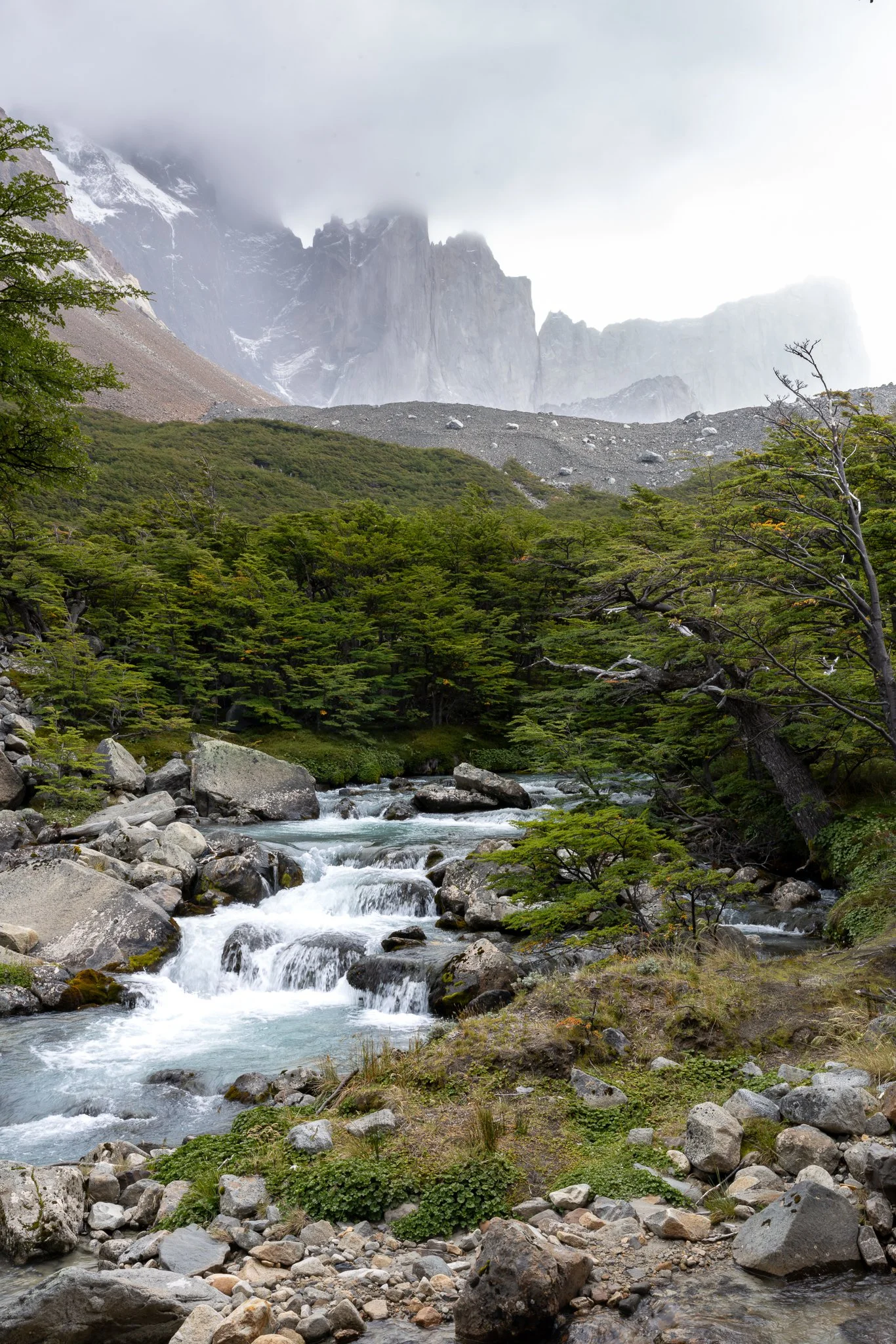
Climbing Frances Valley towards Mirador Britannia - dramatic peaks of the Cuernos and Paine Grande Massif!
Cooking Gas
Every guide online will tell you to bring more gas than you think you need. We brought three medium (450g) canisters plus two small ones for a group of four. We used approximately 1.5 medium canisters. The overcaution stems from older information — the refugios now provide hot water at most stops, and cooking indoors out of the wind dramatically reduces consumption. In many of the refugios there is a big pile of half full gas canisters that people have discarded. You can even buy gas cannisters at some refugios. Underestimate your gas cannister needs and then bring 30% less.
Our recommendation: two medium canisters for a group of four. Solo or pair trekkers cooking outdoors should budget slightly more per person. And remember — gas canisters cannot be flown, so buy yours in Puerto Natales before heading to the park.
Camera Batteries in Cold Weather
Cold temperatures significantly impact battery performance. I shoot with a Canon 5DS and brought three batteries plus a 15,000mAh power bank. Most days two batteries were sufficient — but the longest photo-heavy day plus the cold drained all three. My recommendation: two batteries minimum, three if you shoot heavily. Look for third-party batteries with built-in USB-C charging — the standard Canon charger and adapter is bulky and competes for limited power wall space at the refugios.

Looking towards Grey Glacier at Sunset.
Water: Leave the Filter at Home
The water on the O Circuit is clean and drinkable directly from streams throughout the trail. We drank from streams daily without any issues. A one-litre bottle is workable; two litres is more comfortable. You do not need a water filter on this trek — it's one less piece of kit to pack and one less thing to think about.
Wildlife: Keep Your Camera Ready
Torres del Paine has one of the healthiest puma populations in the world, and sightings on the O Circuit are more common than almost anywhere else. Our group was lucky enough to see pumas at three separate locations — near Central, at the Welcome Center, and near Seron.
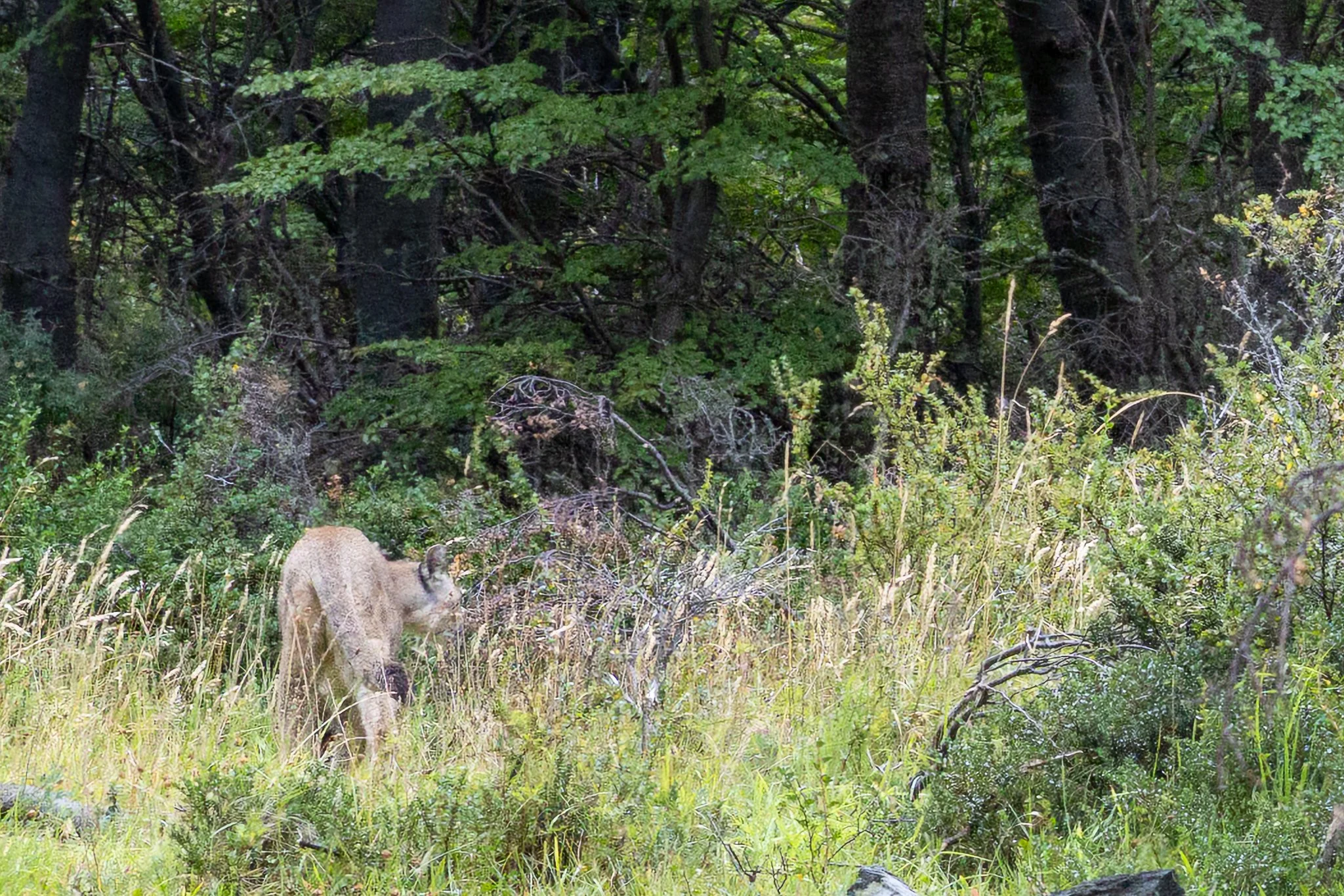
A puma moving through the undergrowth near Seron. Keep your camera ready — they appear and disappear in seconds.
Peak activity times are early morning and dusk — the hours you'll typically be arriving at or leaving refugios. Move quietly, scan the hillsides and open grassland, and keep your camera accessible, not buried in your pack. Pumas are masters of camouflage. If you see one, stay calm, don't run, and enjoy the encounter from a respectful distance.
Beyond pumas, guanacos are everywhere — often running in open grassland and occasionally crossing the trail directly in front of you. Condors ride the thermals over the passes. Horses graze freely near Seron on the early days of the northern circuit. The wildlife is part of the experience, not a side note.
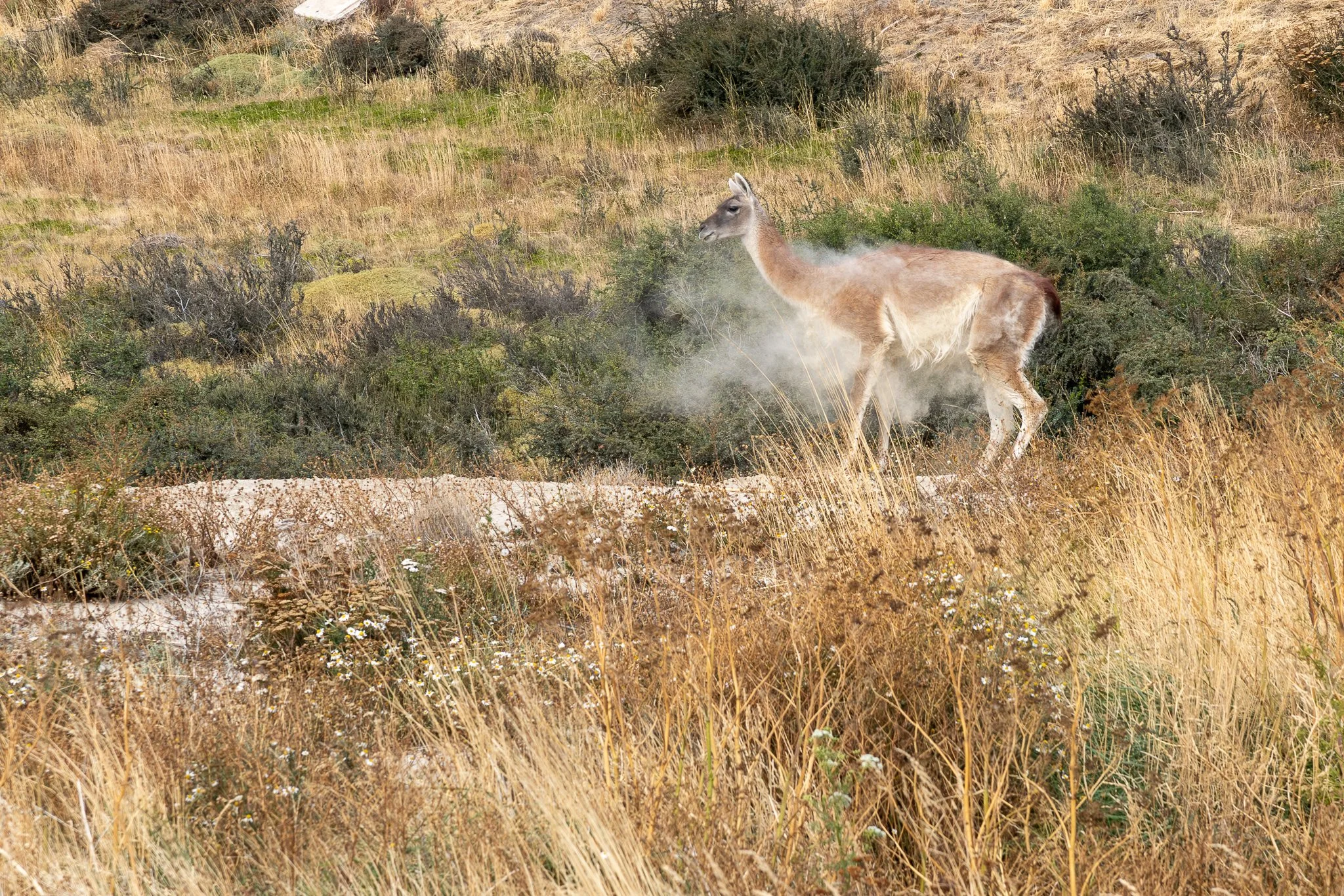
A guanaco enjoying a roll in the pampa grass near the park entrance.
The Moments That Stopped Me
No practical guide fully prepares you for the views. I've photographed in Iceland, Norway, and across the American west. The O Circuit sits alongside any of them.
Cresting Gardner Pass and Seeing Grey Glacier
Gardner Pass is the hardest section of the O Circuit. The climb is brutal (but fun). Once you crest the pass, you are less than halfway to Refugio Grey. Save energy for the long descent and multiple accents back to Grey refugio.

Grey Glacier stretching further than you can take in. This is the moment that justifies the climb.
But the moment you reach the top and Grey Glacier comes into view — stretching further than you can take in, blue ice meeting grey sky — all of that effort becomes irrelevant. It's one of the great reveals in trekking. I stood there for longer than I should have - luckily there was minimal wind but for most visits, this will be an incredibly cold and windy spot!

Crossing the suspension bridge above Grey Lake, with the glacier visible beyond the forest.
The Towers at Sunrise
The Torres del Paine — the three granite towers the park is named for — are best seen at sunrise. Conditions deteriorate as the day progresses, and fog can obscure them entirely by mid-morning. The strategy is to stay at Refugio Chileno rather than Central, which puts you close enough for a 4am start to the Torres Base (our group started at 2am from Central).
We hiked up in darkness. When the towers emerged from the dark, the first light catching the granite and reflecting in the still lagoon below — it's one of those moments I knew, even as I was standing in it, that I would remember for the rest of my life.

The Torres del Paine at first light, reflected in the lagoon at Torres Base. This is why you set the 2am alarm.

The towers in full — three columns of granite catching the first light of the day.
Connectivity: Just Unplug
Cell service is essentially non-existent for the duration of the circuit. WiFi is available at refugios for around USD $10 per hour and is neither fast nor reliable. Before leaving Puerto Natales, download offline maps — AllTrails worked well. If you need emergency contact capability, consider a Garmin inReach or similar satellite communicator.
My honest recommendation: tell your family and friends you'll be off-grid for the duration, download what you need, and let the digital detox happen. The forced disconnection turns out to be one of the unexpected gifts of the trek.
The People: Don't Underestimate This
The O Circuit draws a self-selecting group of people — adventurous, curious, and willing to be uncomfortable for the sake of something extraordinary. You will see the same faces every day from Seron onward, and by the time you finish, what started as trail nods and brief conversations becomes something that feels like genuine friendship.
Be open to it. Talk to people at the refugios. Ask where people are from and what brought them here. Some of the richest moments of the trek happen over a plate of pasta at Seron with strangers who are about to become companions for the next nine days.
Quick Reference: The Essential Tips
Cash: Bring around USD $50 for emergencies only. All refugios accept credit cards and Apple Pay in 2026.
Gas: 2 medium (450g) canisters for a group of 4. Buy in Puerto Natales — you can't fly with them.
Waterproofing: Line your pack from inside with a dry bag. Skip the rain cover — the wind will take it.
Boots: Waterproof, non-negotiable. Camp shoes for evenings — worth every gram.
Water: Drink from the streams. No filter needed. Carry 1-2 litres between stops.
Poles: Highly recommended, especially for Gardner Pass and the Torres Base ascent.
Sleep: Earplugs and an eye mask, in your sleeping bag pocket every single night.
Camera batteries: 3 for heavy shooters. Third-party USB-C batteries save space at the refugio outlets.
Pumas: Camera accessible at all times around Seron, Central, and the Welcome Center. Dawn and dusk.
Booking: Start early. It sells out months in advance. Las Torres Hike simplifies logistics significantly.
Don't shorten it: If you're considering cutting the trek by 2 days, don't. Use the easier days to breathe and socialize!
Refugio strategy: Stay at Frances not Cuernos (better position for Britannia day hike). Stay at Chileno not Central (better position for Torres sunrise).
Also consider your strategy for accommodation. Los Perros, Seron and Dickson have spartan / no dorm rooms. Where available, the “pop up” tents are wind proof, quiet, dark and spacious. Camping - some locations are tight and be careful you don’t end up next to the “snorer”. Dorms are nice for days when there is ferocious wind or raid but really noise and bright at night when you have 6 people sharing a room. The rental sleeping bags and maps are comfy if you want to reduce weight. But at the end of the day, you are probably going to be booking “what is available”!

View from Gardner Pass.
Final Thought
I came back from the O Circuit physically tired and genuinely changed. That sounds like hyperbole. It isn't. When you're cresting a pass and Grey Glacier appears, or you're sitting in darkness at Torres Base watching three columns of granite turn gold in the first light — these are the kinds of experiences that recalibrate what you think is possible.
The logistics are manageable. The preparation is straightforward. The physical demands are real but not out of reach for anyone who trains before they go. What the internet cannot fully convey — and what no amount of preparation will manufacture — is the view.
Go. Take the full circuit. Don't cut it short.

First light over the mountains from Refugio Seron on night one — and we still had eight more days of this ahead of us.
Planning an adventure trip and want photographs that do it justice? My adventure photography sessions are designed for people who'd rather be moving than posing. Get in touch to talk about your trip.