
Filoli Portrait Session for an Older Couple: A Gift
Gift sessions are different from self-booked ones, and the difference matters. The subjects did not pick me. They did not browse my portfolio or come in with a Pinterest board of poses. They arrived trusting the family member who had set it up, and trusting me by extension. That places more of the session on the photographer's shoulders — to read the room, set the pace, and find the moments without leaning on a pre-existing brief.
This was a gift commissioned by a Bay Area family. Given to an older couple, in their later years, by people who loved them and wanted to mark something quietly meaningful. The brief was simple. Make them beautiful photographs of this season of their life.
We met at Filoli on a clear spring morning. The roses were beginning. The wisteria was still on the loggia. And we started, deliberately, inside the mansion.
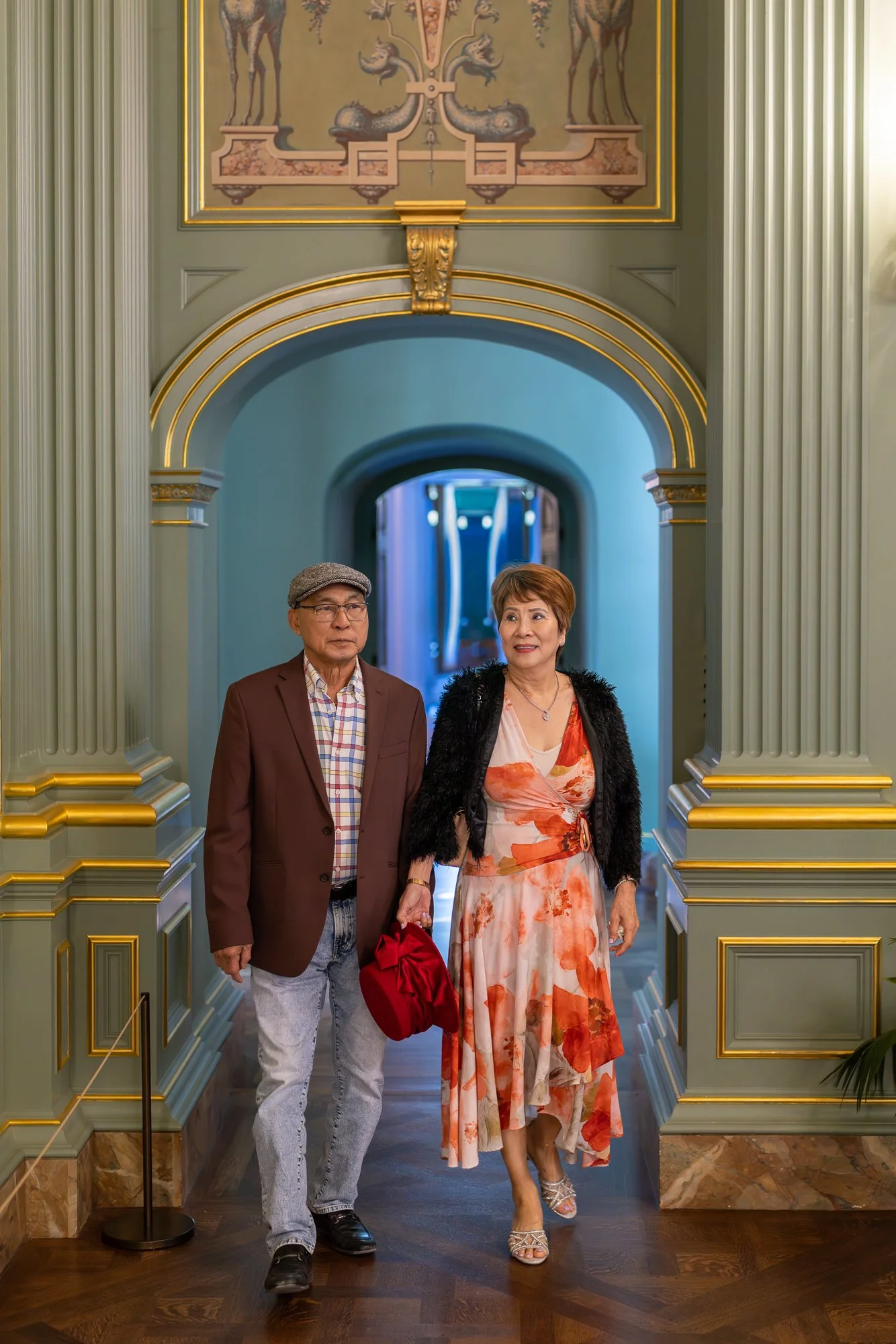
The interior at Filoli is photographed often and rarely well. This frame is why I always start indoors when the light is right.
The Filoli mansion is photographed often and rarely well. Most photographers come for the gardens and treat the house as an afterthought. The interior is one of the strongest portrait environments on the Peninsula when the morning light is doing what it does best — long, low, raking across the formal rooms through east-facing windows, throwing soft pools of warm light onto dark wood floors and pale walls.
They loved the house. That mattered. You can tell quickly when subjects connect with a location, and they were drawn to the rooms — the Reception Room with its fireplace and dark portraits, the sage-green hallway running back toward the Ballroom, the Billiards Room with its famous chinoiserie wallpaper. We worked through three rooms slowly. The frames were intimate, close, almost editorial in their stillness. They were both observant people, and the house gave them something to look at, something to comment on, something to be quietly present in together.
In the Billiards Room I asked them to raise their glasses to each other over the green felt. He smiled at her. She smiled back. The frame caught both of them in the kind of moment couples have in their own kitchen — not performing for the camera, just enjoying themselves in a place they happened to be.
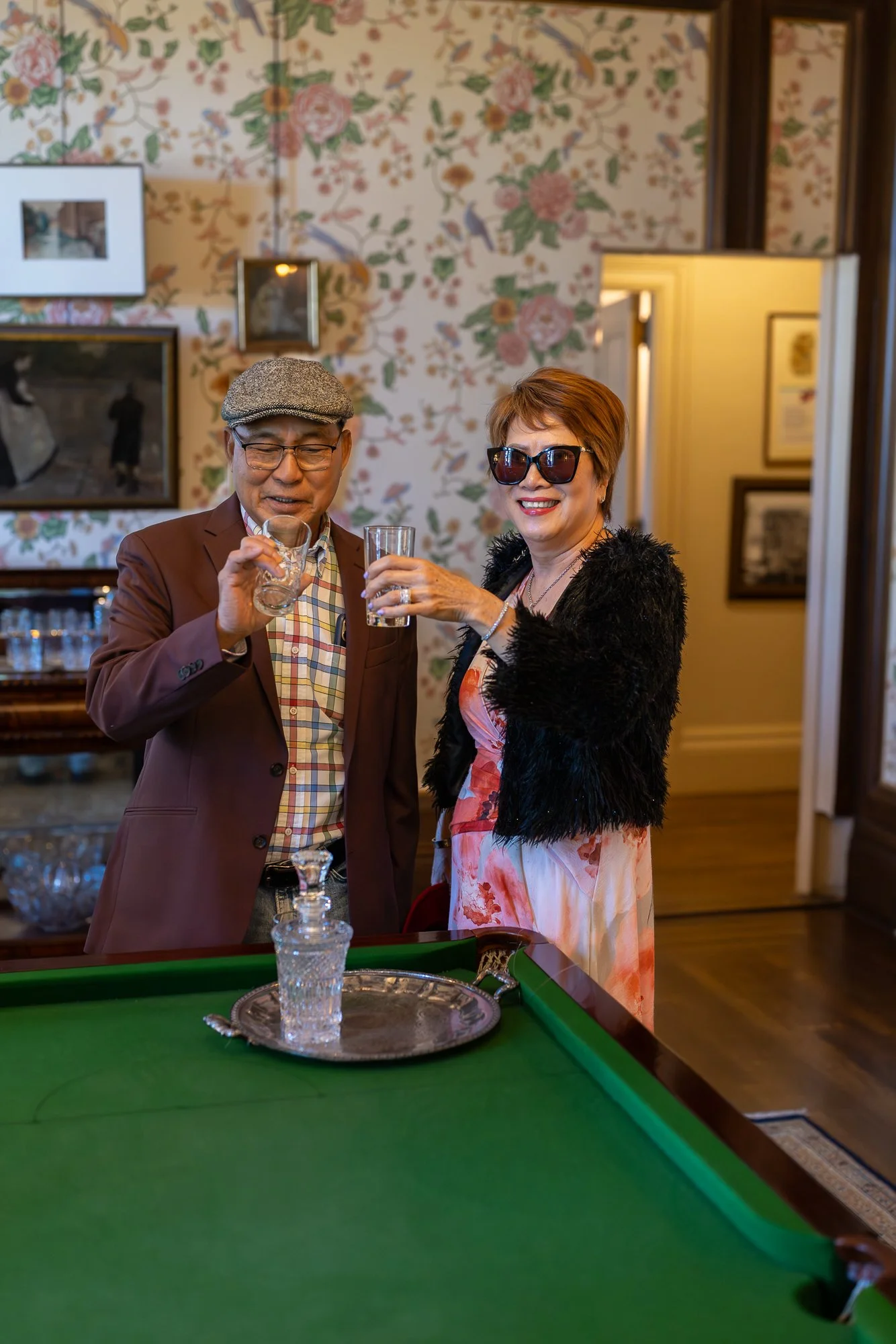
The Billiards Room with its chinoiserie wallpaper. They were enjoying themselves in a place they happened to be.
If the whole session had been interiors I would have been content. But Filoli is a garden, and the brief was spring portraits, and we needed to move outside.
The first half-hour in the gardens was comfortable. They were close to each other, holding hands, standing in beautiful light, doing what couples do in front of cameras. The frames photographed well. There was no problem with them.
What I could see, though, was that the outdoor frames were not catching the same depth of connection the interior frames had been catching. Inside the house they had been absorbed in each other and in the rooms. Outside they were smiling at the camera, doing the work of being photographed. It is a register difference rather than a quality problem — and it is one that comes up often in outdoor sessions, particularly with subjects who learned what a portrait was from formal studio sittings. There is a generation of subjects for whom a camera triggers a particular kind of posture. Chin up, eyes here, smile please. That template returns the moment a lens is raised in their direction. It is not a fault of theirs. It is software running in the background.
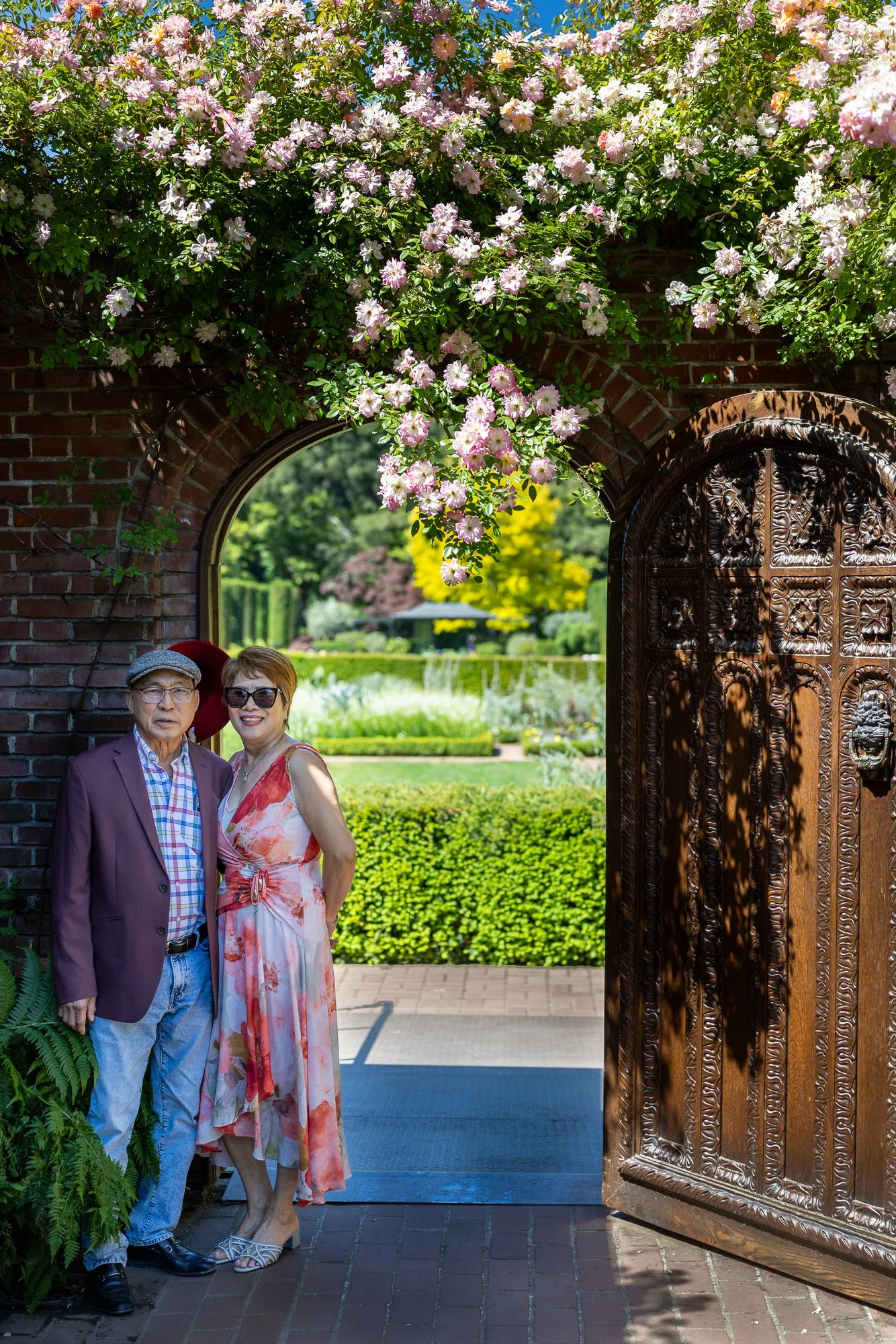
Comfortable, photographing well, doing what couples do in front of cameras. Beautiful, but the deeper register was still inside the house.
I made comfortable frames for half an hour. They were beautiful. They were what the family was probably expecting. But I had seen what the indoor frames had caught, and I knew I could do better than this.
We arrived at the sunken garden. The light was perfect. The composition was waiting. If I had asked them to walk down the central path holding hands I would have made a clean, beautiful, polite frame. I would have made the photograph their family was probably expecting.
Instead I asked them to dance.
It was not in my plan. It was a response to what I had been watching for the last hour. The interior had shown me who they actually were with each other. The outdoor frames were correct but not yet absorbed. I needed a way to bring the indoor register out into the gardens. Dancing is a particular kind of physical contact — close, structured, with shared rhythm, no eye contact with the camera required, and impossible to do while stiff. It also asks the couple to attend to each other rather than to the camera, which is exactly what I wanted.
He looked at her. She laughed. They started to dance in the middle of the sunken garden, awkward at first, finding a rhythm. He led, the way men of his generation tend to lead, with one hand at her back. She let him. They began to talk to each other quietly, the way couples do when they are absorbed in something together and have forgotten you are watching.
The light was raking across the boxwood. The garden was empty. And the frames I made in the next ten minutes are the frames the couple ended up loving.
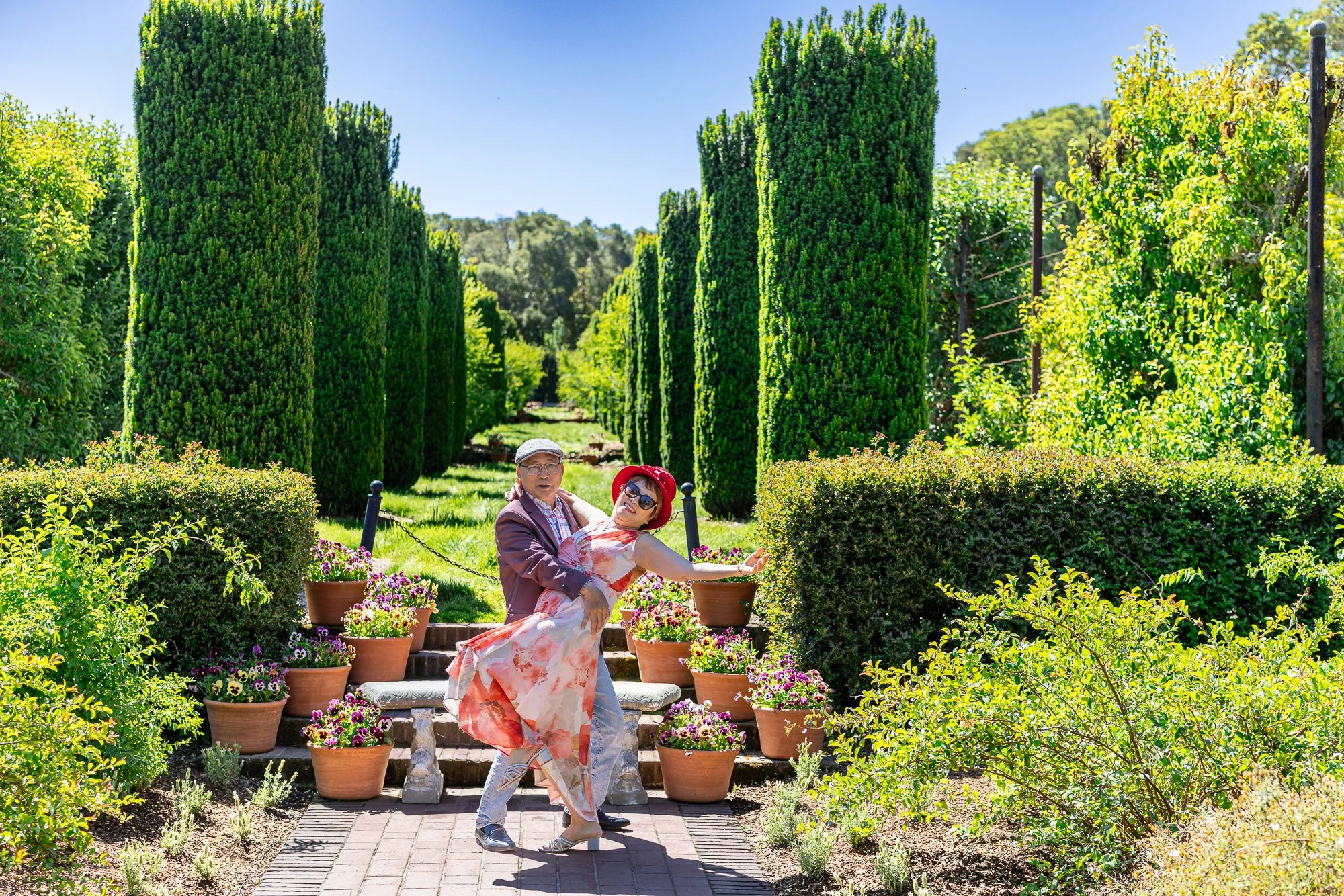
The pivot frame of the session. Movement brought the indoor register out into the gardens.
Everything that came after carried that warmth. We moved out of the sunken garden into the knot garden, with its lavender beds and copper beech hedges, and they walked through it arm in arm laughing about something I could not hear. We crossed into the fern-lined path that runs along the side of the formal garden, and she said something to him quietly, and he turned to look at her, and I made a frame I will remember.
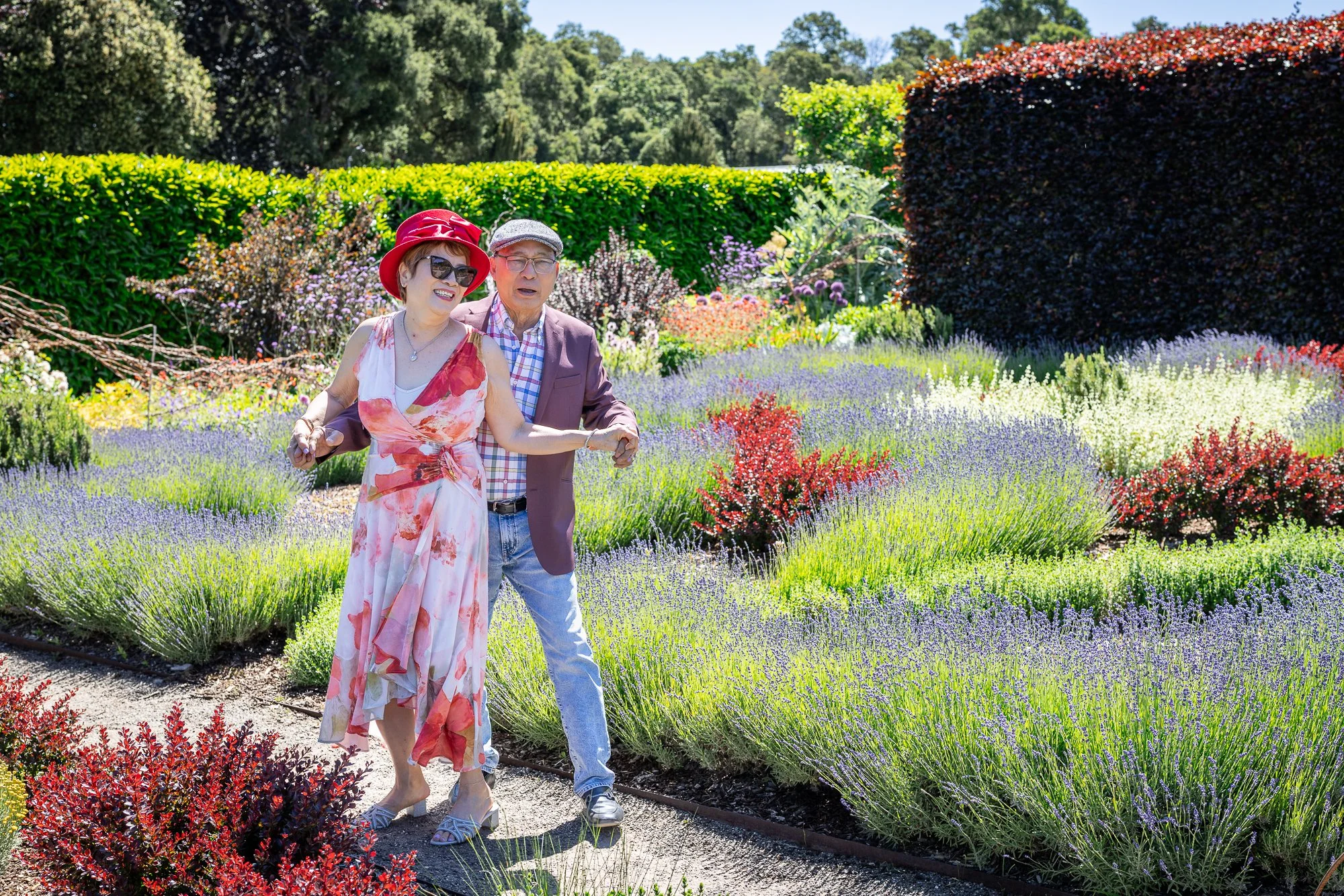
Walking through the knot garden after the dance. They were laughing about something I could not hear.
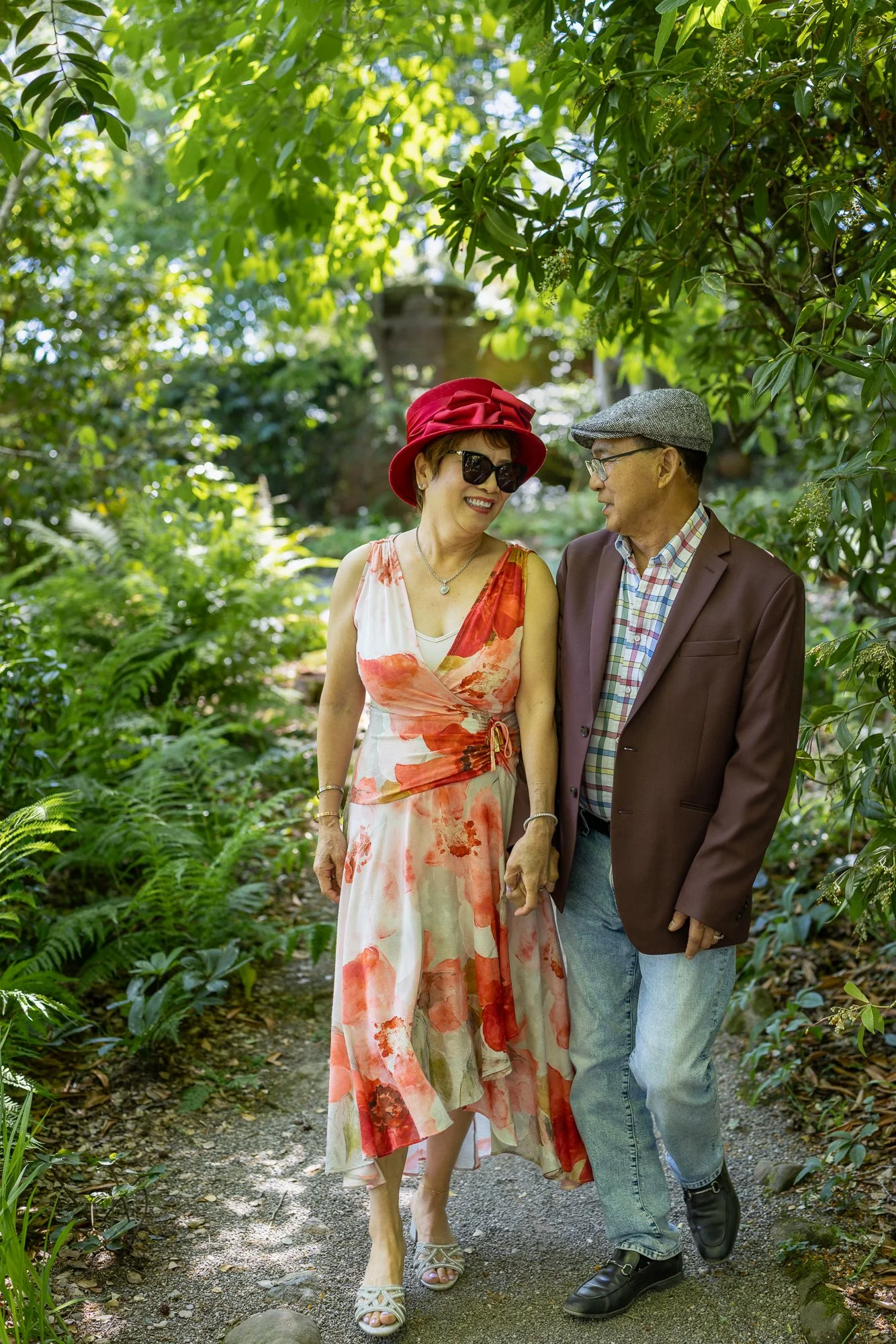
She said something quietly. He turned to look at her. The frame I will remember from this session.
They had not been transformed by the dance. They had always been a couple who liked each other. What the dance had done was bring the version of them I had seen inside the house out into the gardens. The work after that was less about prompting and more about following — letting them lead, asking small questions, suggesting a bench, suggesting another walk, leaving them alone for a few seconds when the moment was theirs.
We found a willow tree with a cherrywood bench beneath it. She leaned into him with the wide-brim red hat in her lap, and he relaxed beside her. They were not posing. They were sitting on a bench under a willow tree on a spring morning, and someone happened to be making photographs of them.
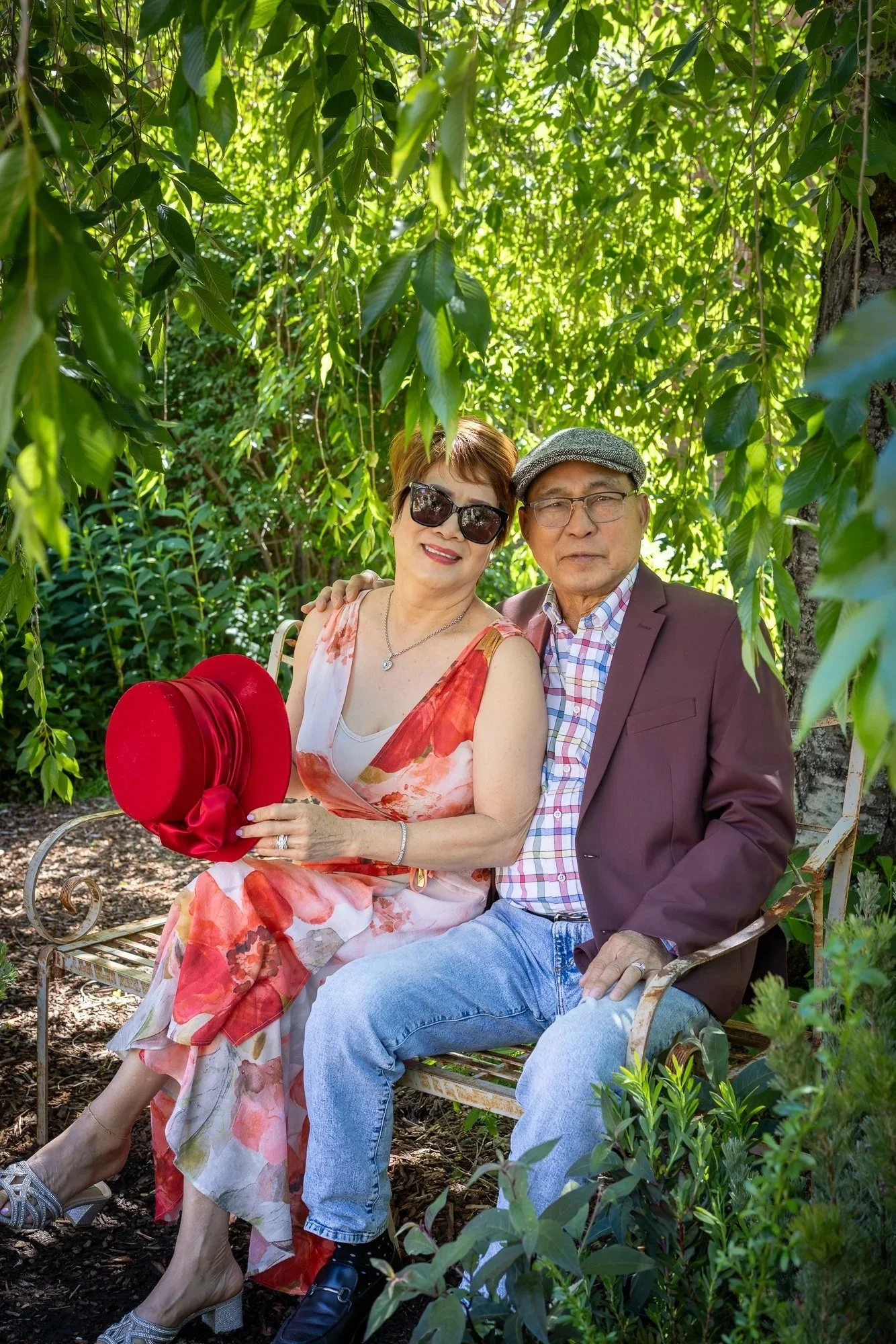
Sitting on a bench under a willow tree on a spring morning. Someone happened to be making photographs.
By the time we reached the reflecting pool at the back of the property, they were comfortable enough that I could ask them to dance again. They fell into it more easily this time — classical ballroom hold, both engaged with each other, the pool behind them. The second dance was easier than the first because by then they had remembered they could.
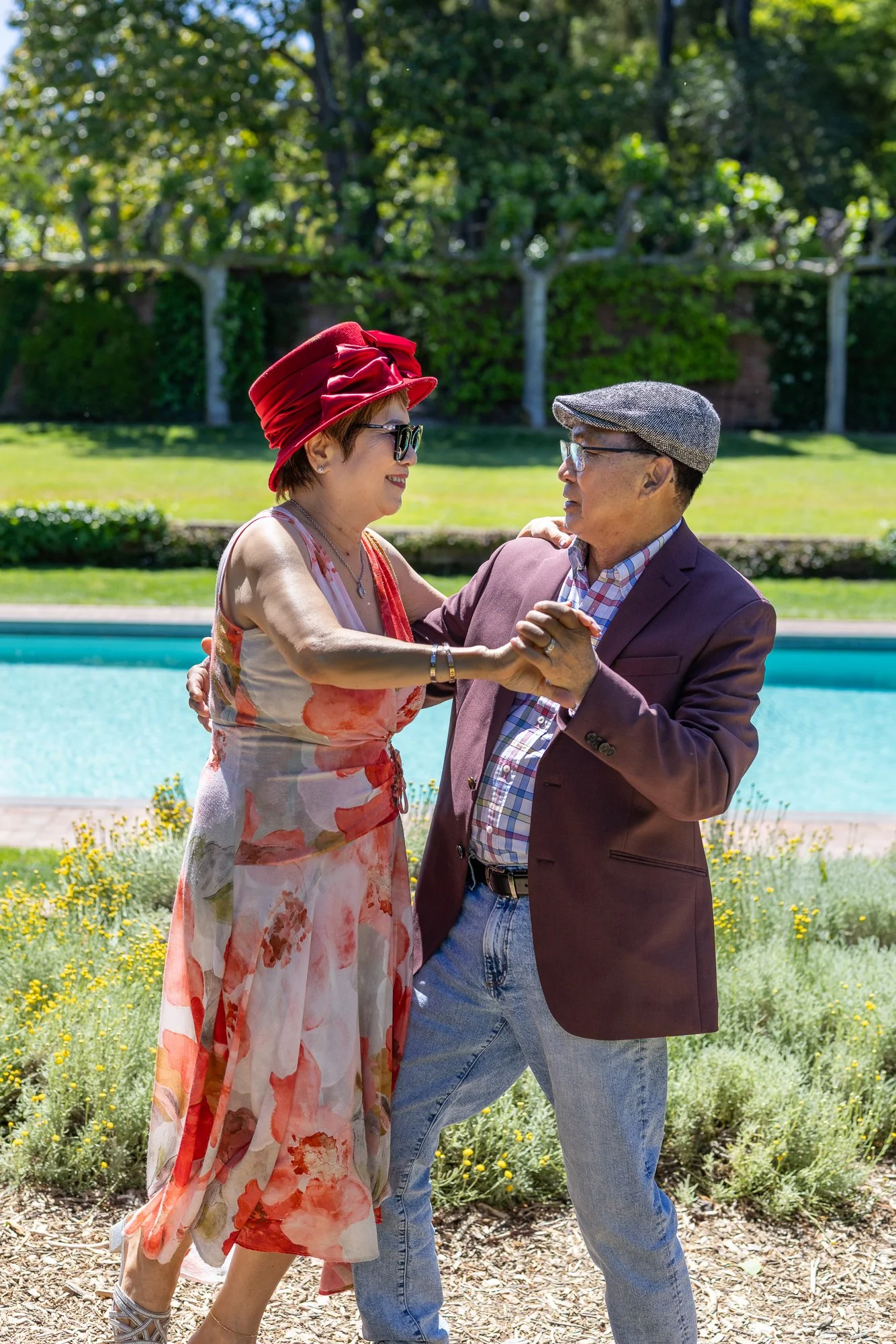
The second dance. Easier than the first because by then they had remembered they could.
We finished near the mansion at a quiet bench against a brick wall, where they sat together one last time before we walked back. She leaned her head against his shoulder. He looked at the camera. The frame is small and quiet and one of the ones they kept.
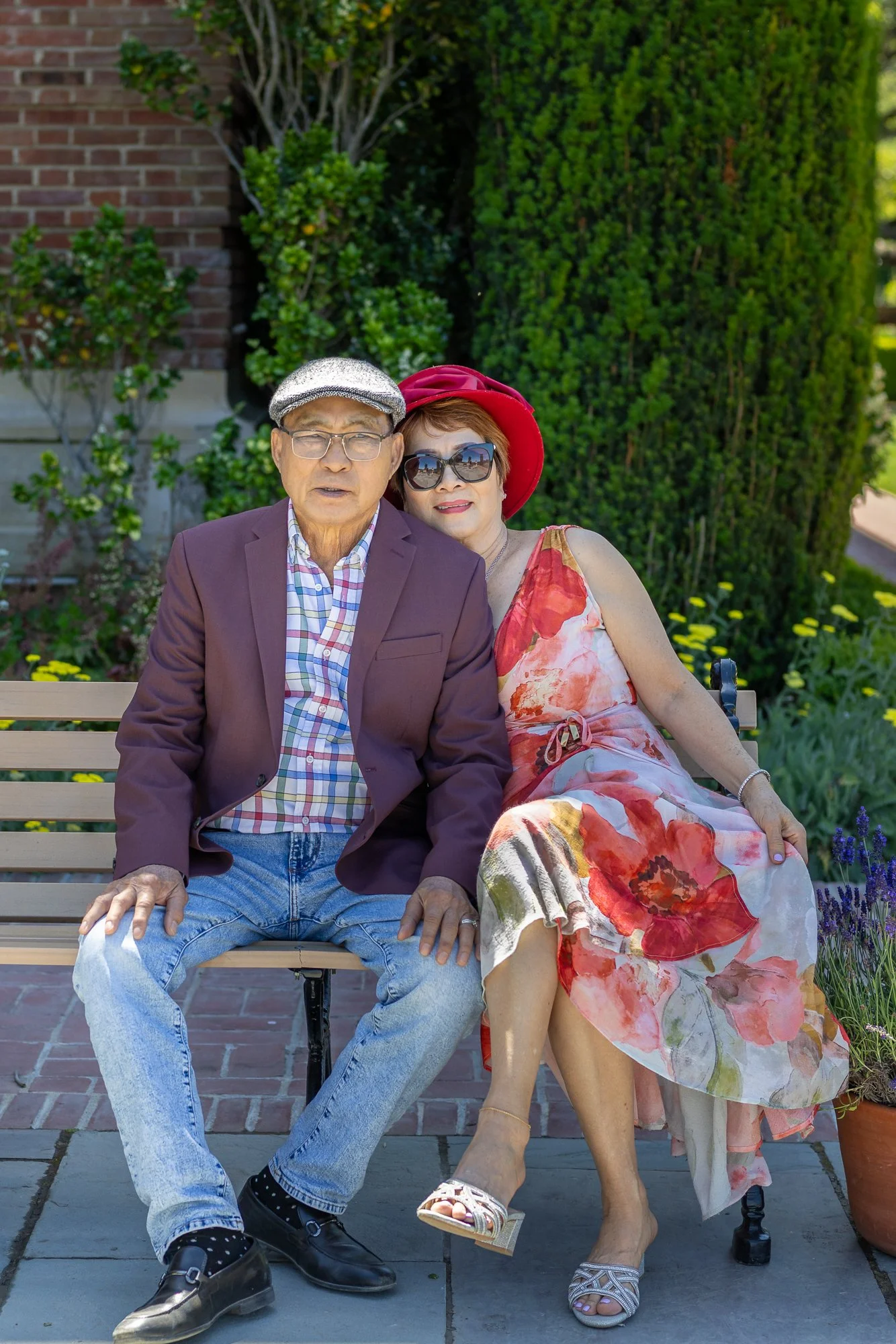
A small quiet frame near the end of the morning. One of the ones they kept.
We ended the morning at the Pulgas Water Temple, a short drive from the Filoli grounds. The temple is a small classical rotunda of Corinthian columns built over the terminus of the Hetch Hetchy aqueduct — incongruous, monumental, more or less empty most mornings. She wanted a frame on her own there, and I made one. The columns are eighteen feet high. She is small at the base of them. It is a different photograph from anything else in the session, and that is the point of it.
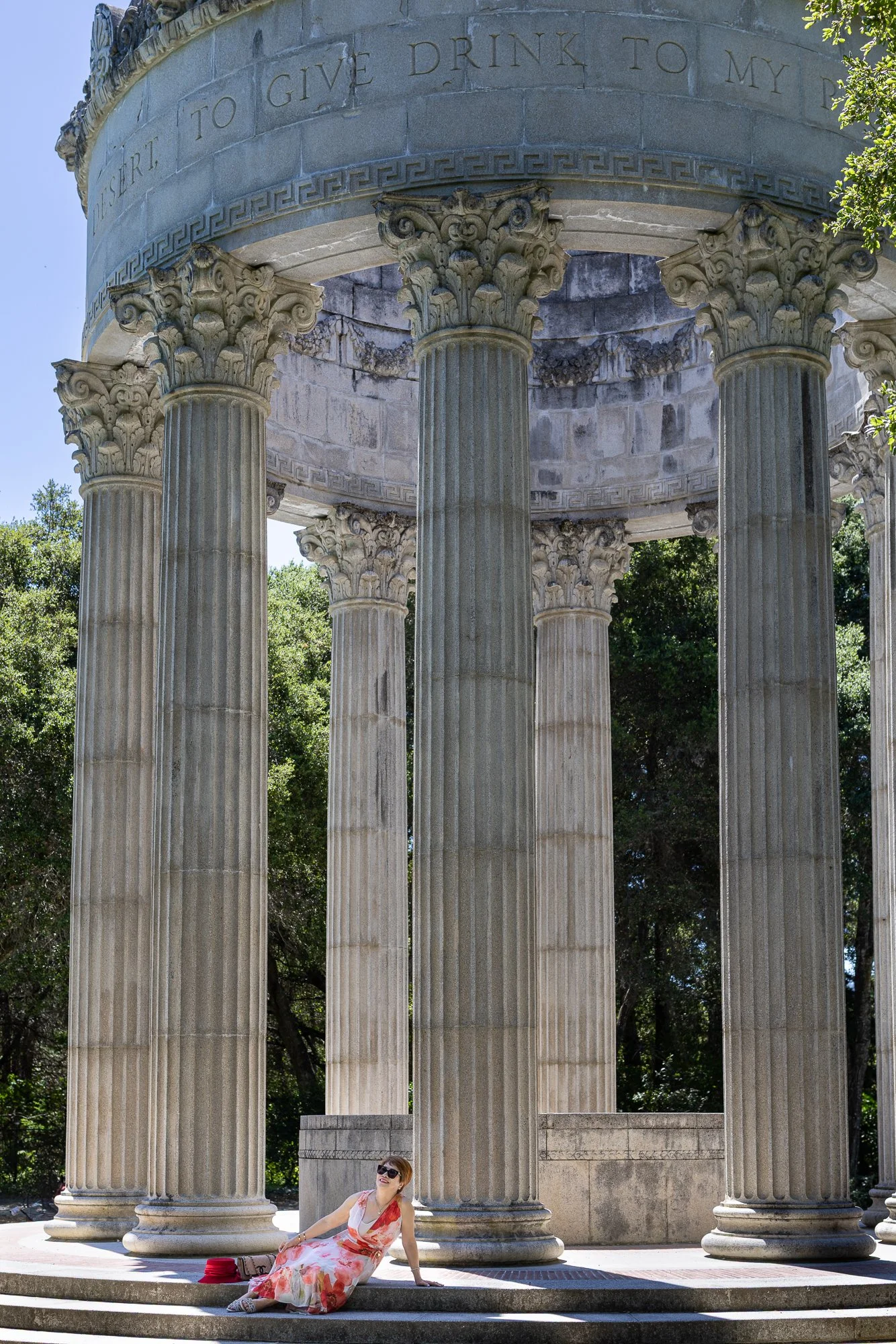
Pulgas Water Temple at the end of the morning. The columns are eighteen feet high. It is a different photograph from anything else in the session, and that is the point of it.
The family had given a careful gift. I want to spend a moment on this, because I think it is worth saying clearly.
A photography session for an older couple is unlike most gifts because the value of it grows over time rather than diminishing. A bottle of wine is opened and gone. A book is read and shelved. A photograph of two people in their later years, in a place they loved, on a morning when they walked through gardens and danced and looked at each other — that photograph keeps mattering. It will matter to the couple now. It will matter more to the family later. It is, quietly, an heirloom in the making.
If you are considering a photography session as a gift for parents, grandparents, or an older couple in your life, the case for it is straightforward. Time together in a beautiful place. A morning slowed down. Photographs that come from movement and presence rather than from staged poses. The intangible part is the largest part of the gift.
Older couples are, in my view, an undercelebrated subject in portrait photography. The wedding industry is enormous and beautifully resourced and almost entirely oriented to couples in their twenties and thirties. There is comparatively little visual culture devoted to love later in life — to couples in their sixties, seventies, eighties — and yet some of the most moving portraits I have ever made are of older people who have been quietly devoted to each other for decades, or who have found each other later in life and are quietly grateful for it. Those sessions deserve the same care, the same time, the same attention to light and place and craft as any other Bay Area portrait commission.
There are a few practical things I have learned about photographing older couples. Movement matters more than it does with younger subjects, because the studio-sitting template runs deeper. Locations should be chosen with gentle pacing in mind — long walks between setups exhaust everyone and lose the warmth. Indoor environments are surprisingly strong because they give the couple something to attend to other than the camera. And the back half of the session is almost always warmer than the front half. Allow enough time for the morning to find its rhythm.
Filoli is one of the strongest locations on the Peninsula for older-couple sessions. The gardens are accessible without long walks. The pace can be gentle. The setting is formal enough to feel meaningful but warm enough to feel personal. Spring at Filoli, when the roses begin and the wisteria is still on the loggia, is as good as garden photography gets in Northern California.
If you are planning a gift portrait session for someone you love, a few things help.
Give the recipients enough notice that they can choose what to wear and have something to look forward to. A complete surprise reveal on the day rarely lands the way the giver hopes — most people want a chance to think about their outfit, and the anticipation is part of the gift.
Allow for a longer session than you think. These are not five-minute portraits. The warmth tends to arrive in the second half of the morning, once everyone has settled and the early phase has loosened.
Trust the photographer to read the room. Some sessions need to start formal and loosen. Some need to start playful and settle. The pre-session conversation is where I work out which.
If you are interested in commissioning a gift session — for parents, for grandparents, for an older couple in your life — I would be happy to talk through what you have in mind. The conversation is the first part of the gift.