
How to Plan a Surprise Proposal with a Photographer
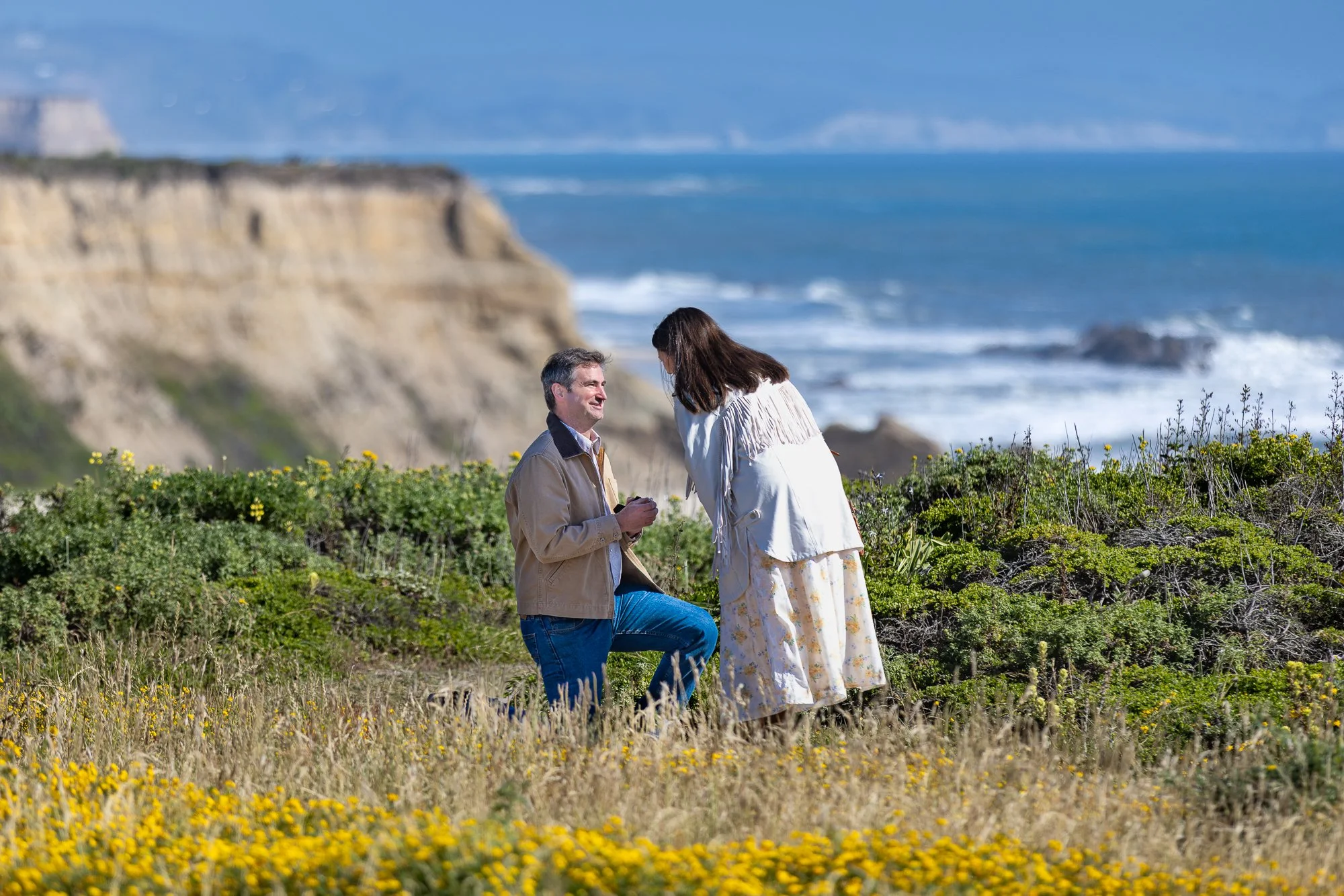
The first ten seconds, from a long way back.
In the past couple of months, I have photographed four surprise proposals: on the bluffs near the Ritz-Carlton in Half Moon Bay, on West Cliff Drive in Santa Cruz, inside the arch at Panther Beach, and on a ridge in the hills above San Jose. All four were booked by the man doing the asking. Most of our early conversations had nothing to do with cameras. They were about where she'd be standing, what she'd think they were doing that day, and how I was going to be there without her noticing.
That's what this guide covers. It's the planning side of a proposal, written by the person hiding in the background with a long lens.
Why hire a photographer for a proposal?
You get one take. A friend with a phone is usually too close, too obvious, or too emotional to frame it well, and you'll want them in the moment anyway. A photographer who has done this before handles the logistics you shouldn't be thinking about with a ring in your pocket: where the light is, where to stand, and what happens if someone else is already sitting on your bench.
Then there's the hour after the yes. That's often where the best photographs come from, and it's the part most people don't plan for. I treat a proposal as the opening of a couples and engagement session, not a single frame.
How do you choose the location?
Pick somewhere that means something to the two of you. Scenery helps, but history does more. The couple at Sierra Vista had their first date there and had been driving up to watch the sunset ever since. The West Cliff couple had a spot on the bluff they kept coming back to. Another man chose the coast near the Ritz-Carlton because it was already their place. That shows up in the photos in ways I can't stage.
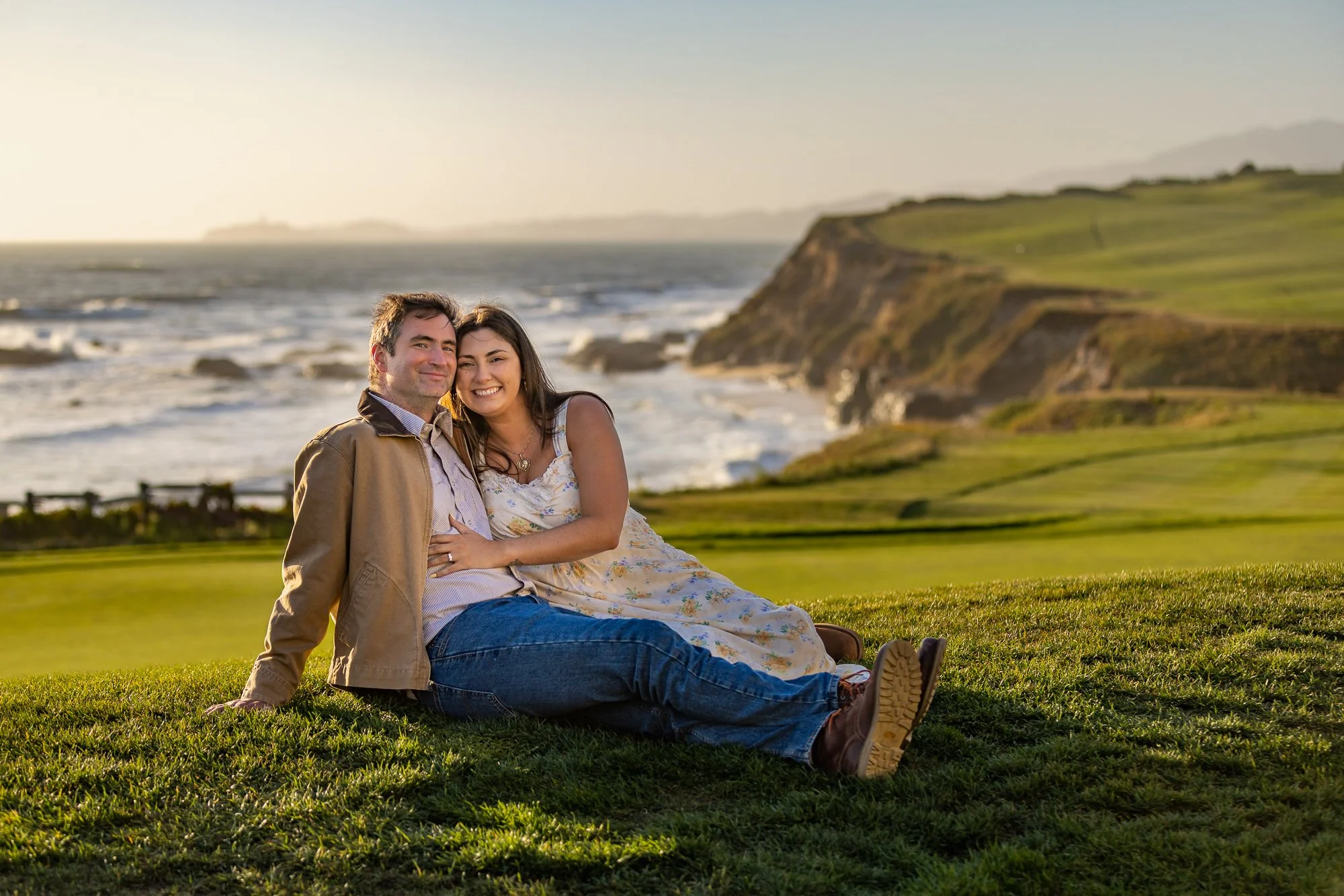
Their place long before it was my location.
Sometimes the location is chosen for practical reasons too. At Panther Beach, he scouted the spot himself. He wanted somewhere their two dogs could come, and the Hole-in-the-Wall arch gave him a backdrop and a patch of shade. The dogs turned out to be the perfect cover. Everyone was watching them chase a ball down the beach, and then he was on one knee.
Once you have a place in mind, check four things:
Can she walk there in whatever she'll be wearing?
Is there somewhere I can stand at a distance without looking out of place?
How busy is it on that day at that time?
Does it need a photography permit? Some parks and open space preserves require one.
If you're still deciding, my list of Bay Area outdoor photography locations covers the light, parking and crowds at most of the spots I'd recommend.
What's your cover story?
She needs a reason to be there, and ideally a reason to be dressed up. The easiest one is dinner. Book a table somewhere near the location and tell her you're going out. A walk beforehand to see the view raises no suspicion, and she'll arrive looking the way she'd want to look in photographs she keeps for the rest of her life.
Nobody wants their proposal photos to be from the day they wore running clothes.
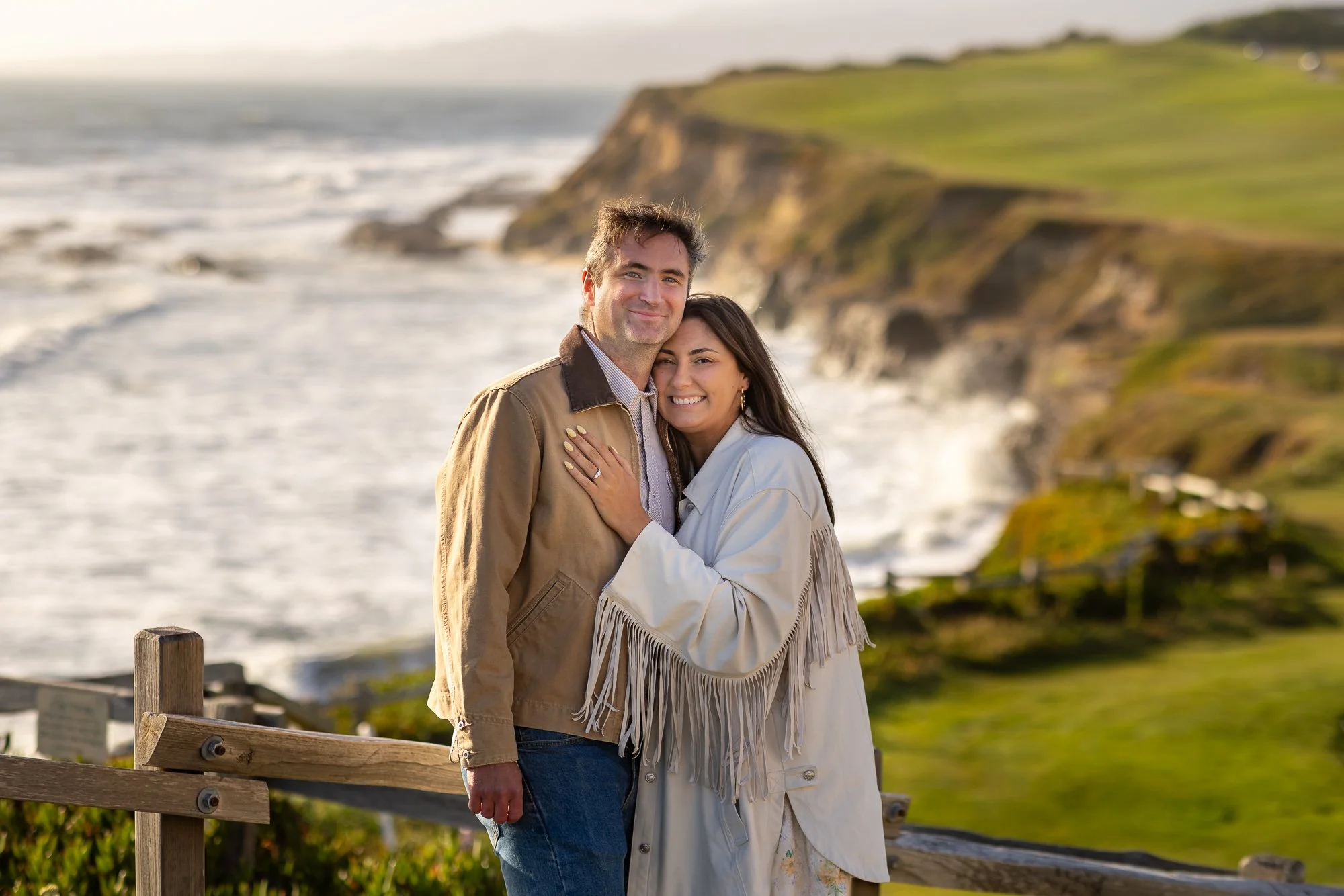
Drinks at the Ritz, then back out for round two.
One man did a version of this that worked better than I expected. After the proposal on the bluffs, they went into the Ritz-Carlton for drinks. When the light softened, we went back out for a second session along the coastal trail. Two shoots in one afternoon, and the golden-hour half produced most of the strongest frames from the day.
If you'd like family or friends waiting to celebrate afterward, tell me early. I'll plan where they wait and when they appear, so they're in the photos without giving anything away.
What should you both wear?
A few things make a real difference, and almost nobody thinks about them until they see the photos.
Her nails. Half the ring shots are close-ups of her hand. If she gets a manicure for the dinner, those photos look better. You may need a quiet word with a sister or a friend for this one.
Deep, solid colors. Burgundy, navy, forest green and black separate well from sand, ice plant and blue water. Beige sits too close to skin tone, and white or cream blows out in hard sun.
No big logos. A large brand name across a chest dates a photo and pulls the eye away from your faces.
Empty pockets. Keys and a wallet bulge in every frame. Leave them in the car or with a friend, or bring a bag and find an excuse to set it down out of the shot. Keep your phone until you reach the spot, then I'll hold phones and keys during the portraits.
Nothing on the wrist. Hair ties, fitness trackers and rubber bands show up in every hand-holding and ring photo. Even watches can be distracting.
Shoes that fit the plan. If the spot is down a trail, make sure the dinner story doesn't call for heels, or pick a spot closer to the car.
For more on colors and fabrics outdoors, I wrote a separate guide on what to wear for outdoor photos in the Bay Area.
What time of day works best?
Every man I've worked with so far chose daytime, usually the afternoon, so they could get to dinner, a party or a long drive home afterward. That's workable. It also means hard sun, squinting and dark shadows under the eyes.
Three things help. Put the sun behind her or to her side for the moment itself, so her face is in shade and turned toward the camera when she reacts, not squinting into the sun. Plan the portraits afterward for shade or softer light. And if your schedule allows, split the afternoon in two the way one couple did: propose, take a break, and come back out for golden hour.
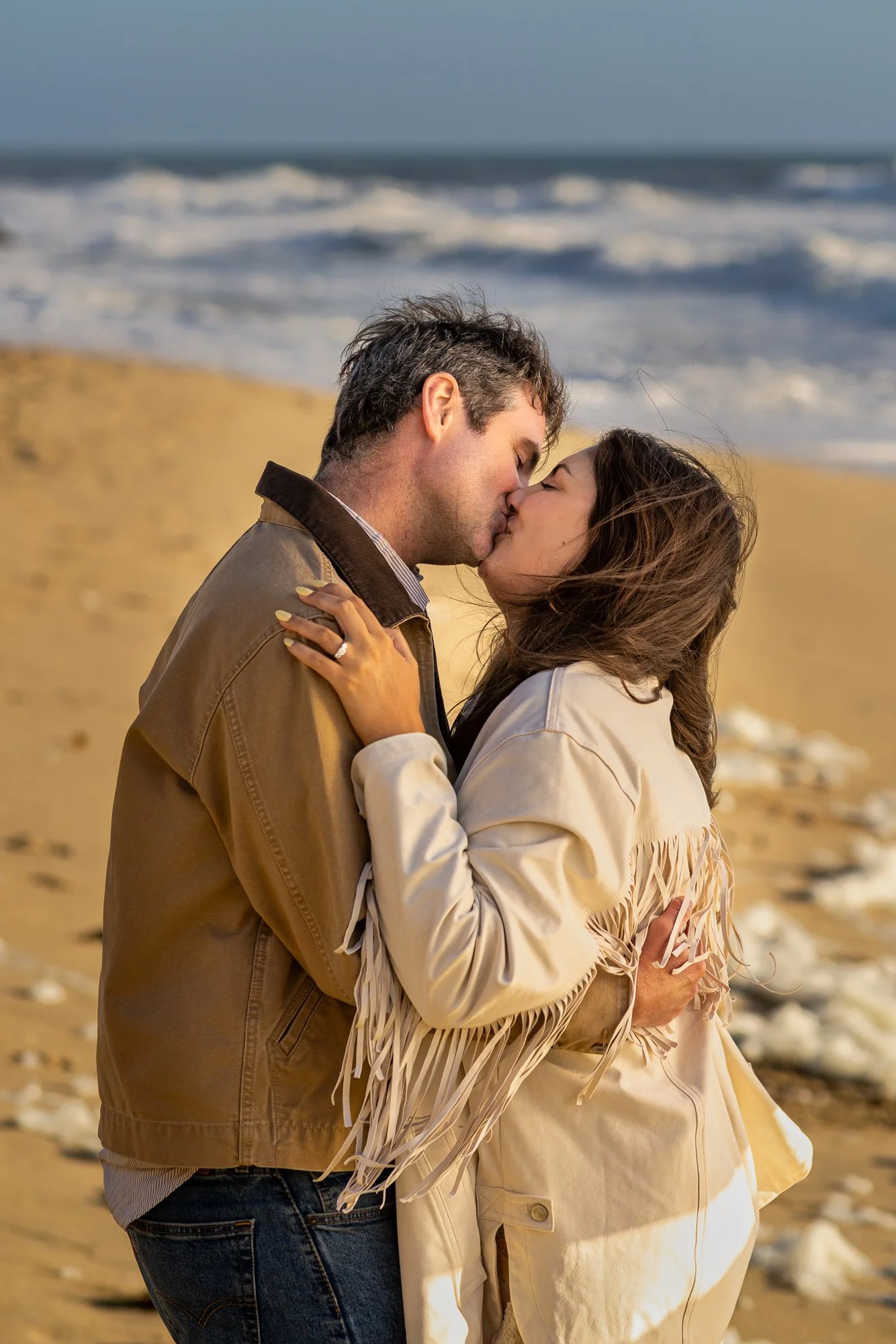
Worth waiting three hours for this light.
At West Cliff we did something similar on a tighter clock. Late in the session, as the sun dropped, they re-enacted the proposal on the same spot. Three of my six favorite photos from that day came from the re-enactment. The real moment is the one that matters to them. The golden-hour version is the one that looks like a film still.
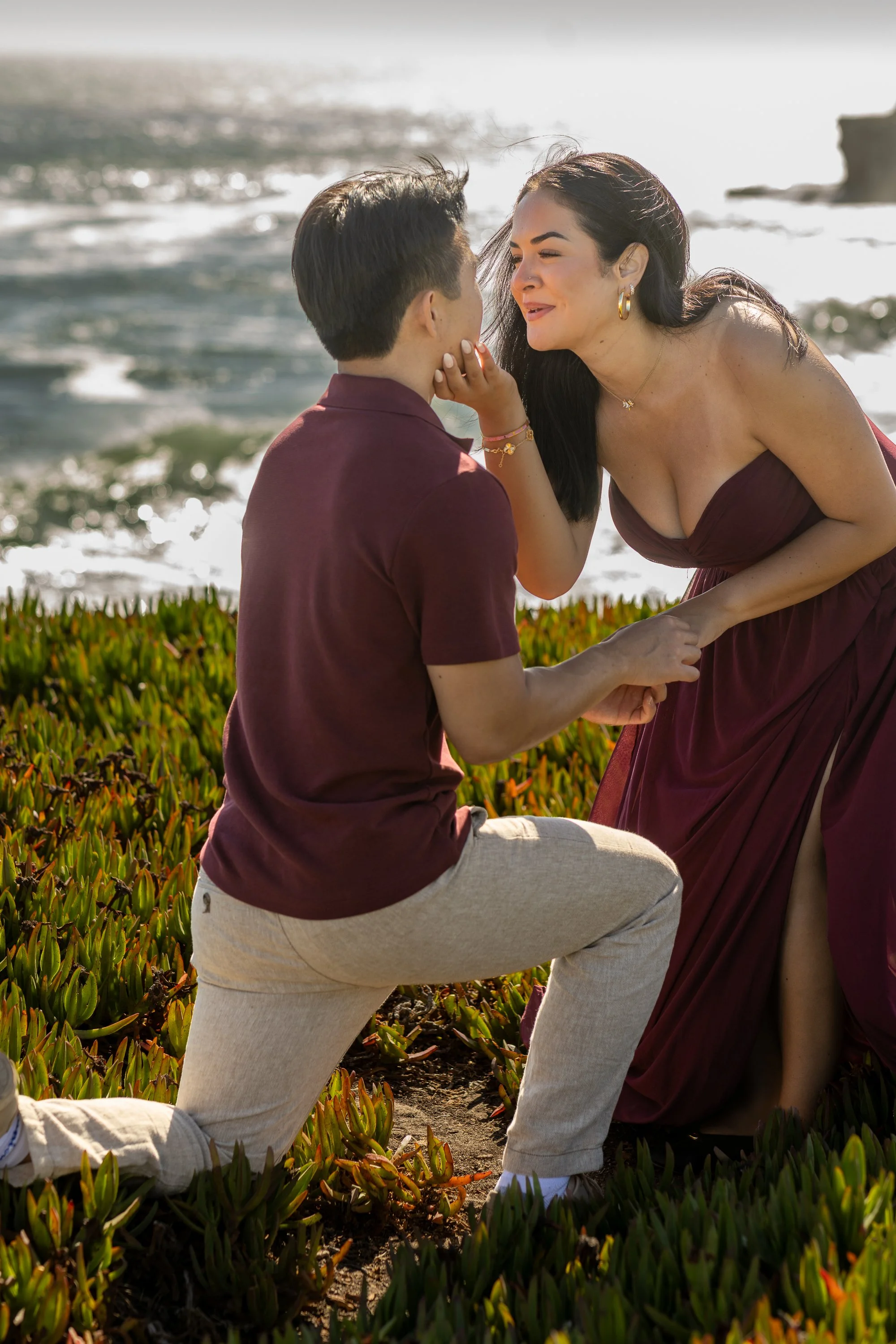
His spot on the bluff, picked weeks before.
For the portraits after the proposal, I often bring an assistant to hold a diffusion panel between the sun and your faces. It turns harsh midday light into soft light over a small patch, enough for close portraits and the ring. It can't be used for the proposal itself. Nothing announces a surprise like someone holding a large white disc at the edge of a cliff. At West Cliff the groom-to-be ended up holding the panel himself, and having a job to do relaxed him more than any direction I could have given.
How does the photographer stay hidden?
Scouting matters most. Where I can, I visit the spot in advance at the same time of day to see where the light falls and where I can stand. For West Cliff I met him on the bluff about three weeks before and we walked out to the exact place he planned to kneel.
On the day, I arrive early and stand in your spot. That keeps it free. If another couple or a tour group is about to settle on your bench, I'm already there with a camera bag. When you're a few minutes out, I walk away to my hiding position and the spot is clear when you arrive. If there's no good place to hide, I may be sitting nearby "adjusting" my camera or photographing birds flying overhead.
We share live locations on our phones, so I know exactly when you're close. We also agree on a signal before the day. It can be as simple as touching your collar or stopping at a particular rock. The signal tells me you're about to kneel, so I'm already shooting when it happens instead of reacting to it.
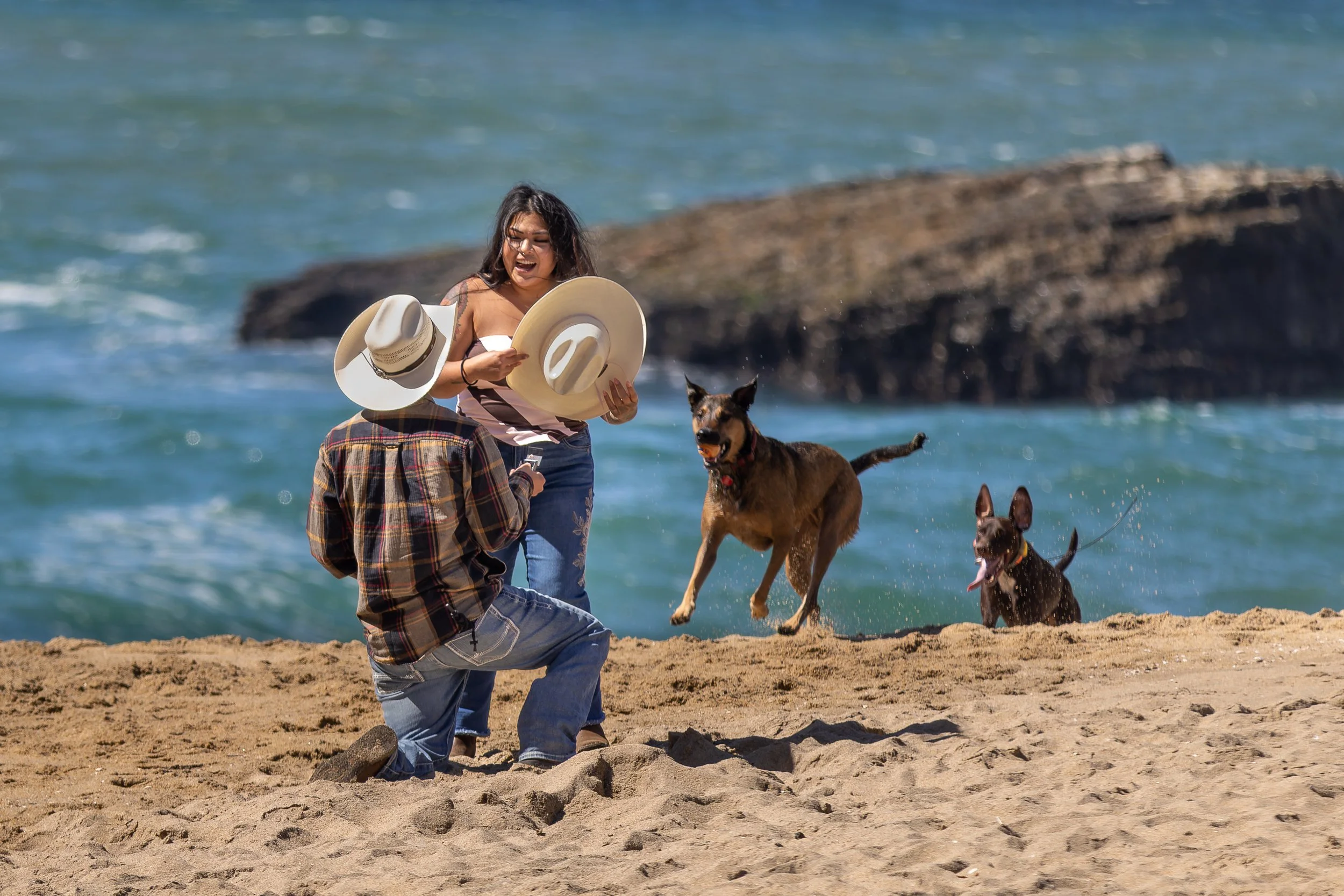
The dogs did their job.
The proposal itself I shoot from a distance on a long lens. That gives you privacy for the words, and keeps me out of her eyeline until it's over. Once she's said yes, I come closer and keep shooting while you and your new fiancée embrace. This is usually when she's asking a hundred questions, admiring the ring and full of emotion. After a few minutes, I walk over and introduce myself, usually to a very surprised person.
What if you're nervous?
You will be. Almost everyone is, including the people who seem completely calm on the planning call. A few things help.
Practice the kneel at home with the box. Taking it out and opening it should be automatic. Check which way the lid opens so the ring faces her, not you.
Skip the speech. A few sentences you've thought about beforehand are enough. Some people write them on their phone and read them in the car.
Slow down at the spot. Stop, face her, take a breath. Rushing is the most common reason the moment is over before anyone sees it coming.
Stay down for a few seconds after the yes. Before you stand up or pull her into a hug, that pause gives me her face, the ring and both of you in one frame.
If something goes sideways, keep going. I've photographed proposals that survived two excited dogs and a parking lot. Nobody remembers the wobble.
Where should you stand?
Face each other side-on to me, so I can see both faces rather than the back of one head. Kneel on the knee closest to me so your body opens toward the camera, and hold the open box up near her eye level rather than low against your chest. I'll show you the exact spot and where I'll be, either on the scouting visit or on a video call with a map pin.
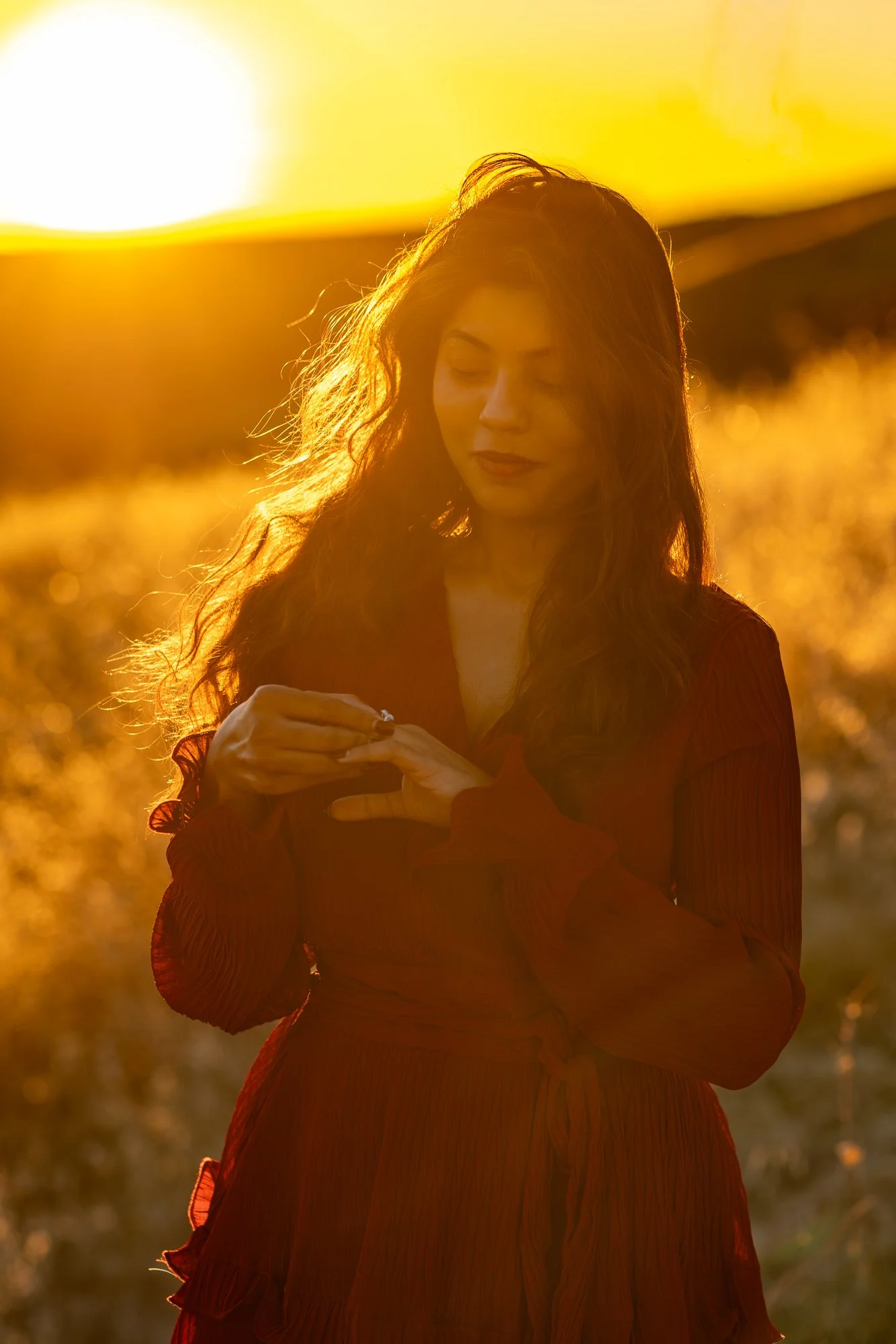
Plan B worked out.
The ring and your phone on the day
Pick one pocket for the ring before you leave, and check it once. Patting your pocket every few minutes is the most common giveaway. A slim ring box helps in summer clothes with shallow pockets.
Silence your phone. My "I'm in position" text shouldn't light up the screen while she's sitting next to you. And send me a recent photo of the two of you plus a description of what you'll both be wearing, so I can pick you out of a crowd.
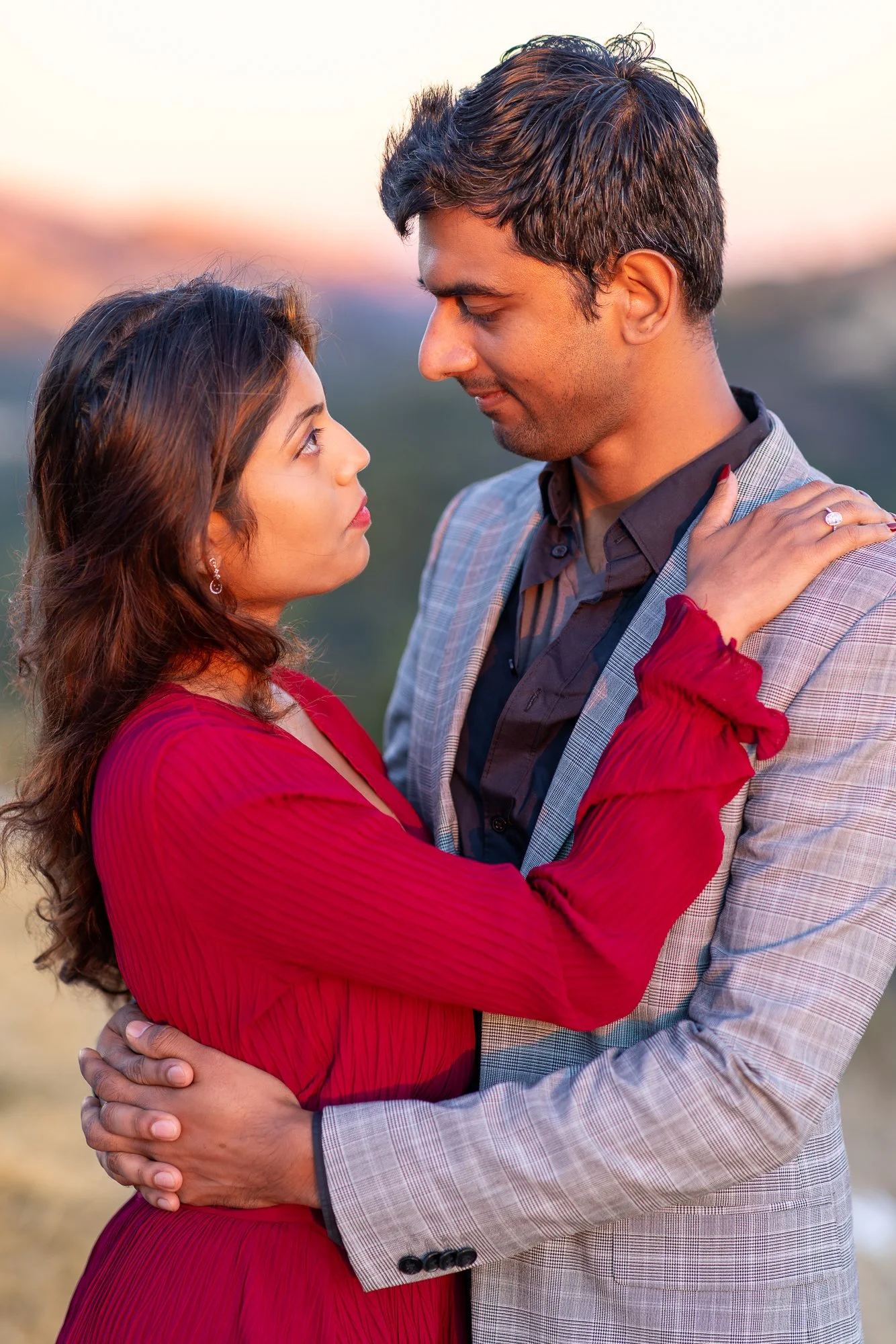
Back up on the ridge as the sun went down.
The four parts of a proposal shoot
Every proposal I've photographed has followed the same arc.
1. The ask. From a distance, on the long lens. It usually takes less than a minute, and her reaction often starts before you've finished the question.
2. The reaction. The yes, the hands over her mouth, the hug. This is the most emotional minute of the session and I don't change lenses until it's passed. The first ring shot happens here, on whatever lens is already on the camera.
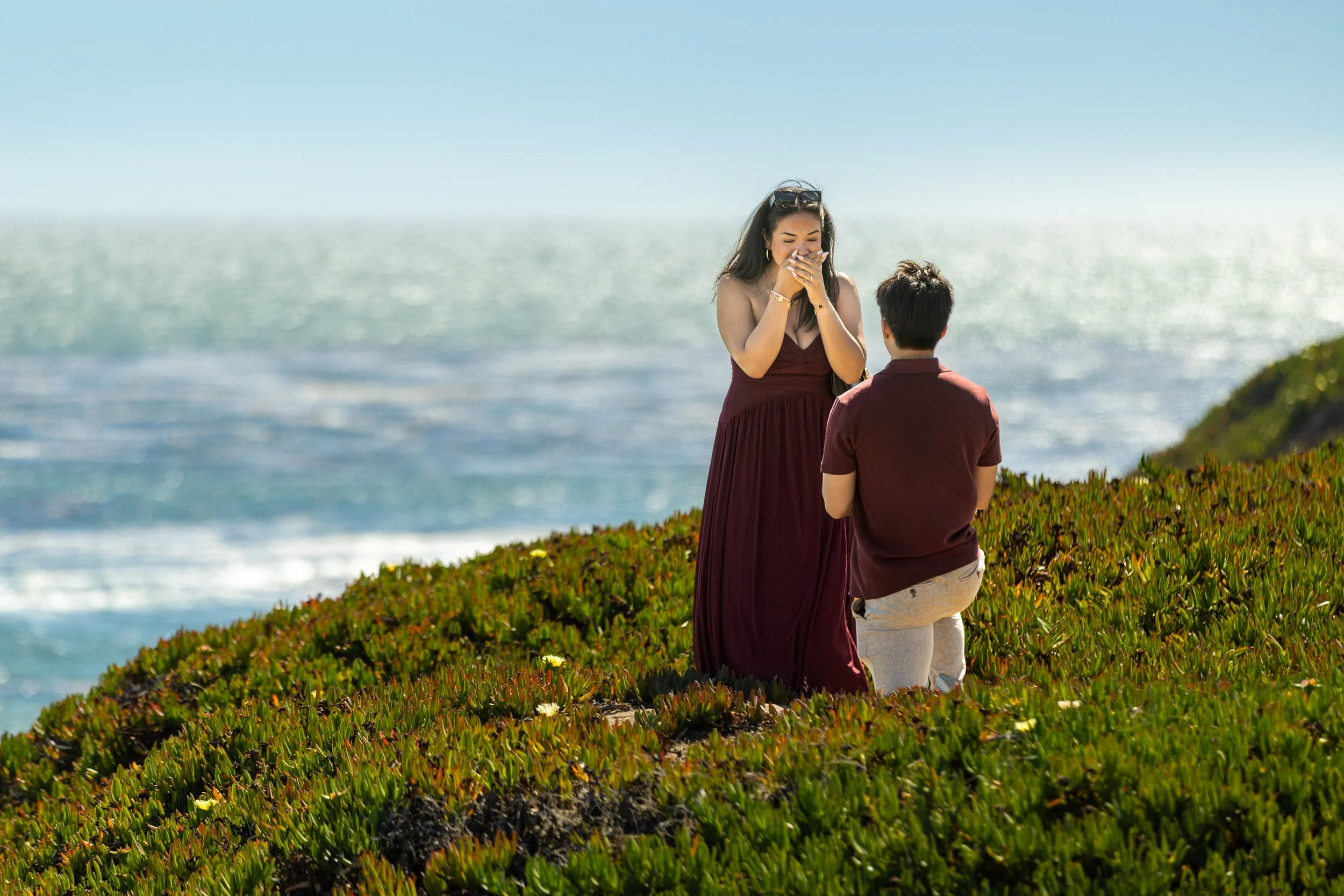
She didn't see me until this was over.
3. The settle. After a minute or two she's caught her breath but there's still a lot of energy, and that's the best time for movement. Walking together, laughing, spinning, calling family. Nothing is posed and things move fast. Some of my favorite frames from every session come from this window.
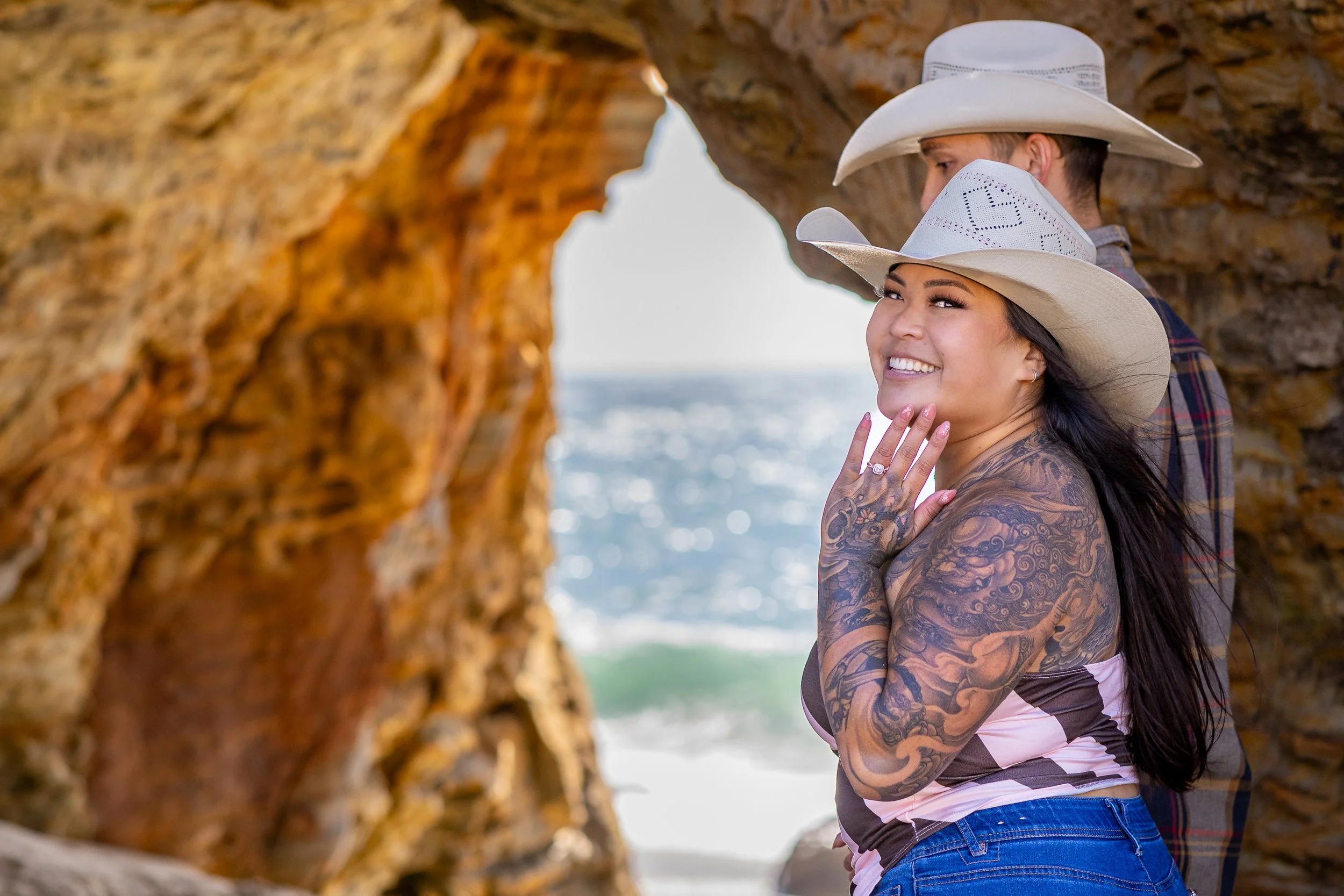
Timed for a falling tide.
4. The portraits. As everyone calms down, we move into quieter, closer photographs, the kind that end up framed. This is when I take the detailed ring shot on a macro lens, ten minutes or so after the yes, once hands have stopped shaking. I also make a point of getting a few photos of you on your own. Proposal sessions tend to center on her, and it's easy to forget you're half of the story.
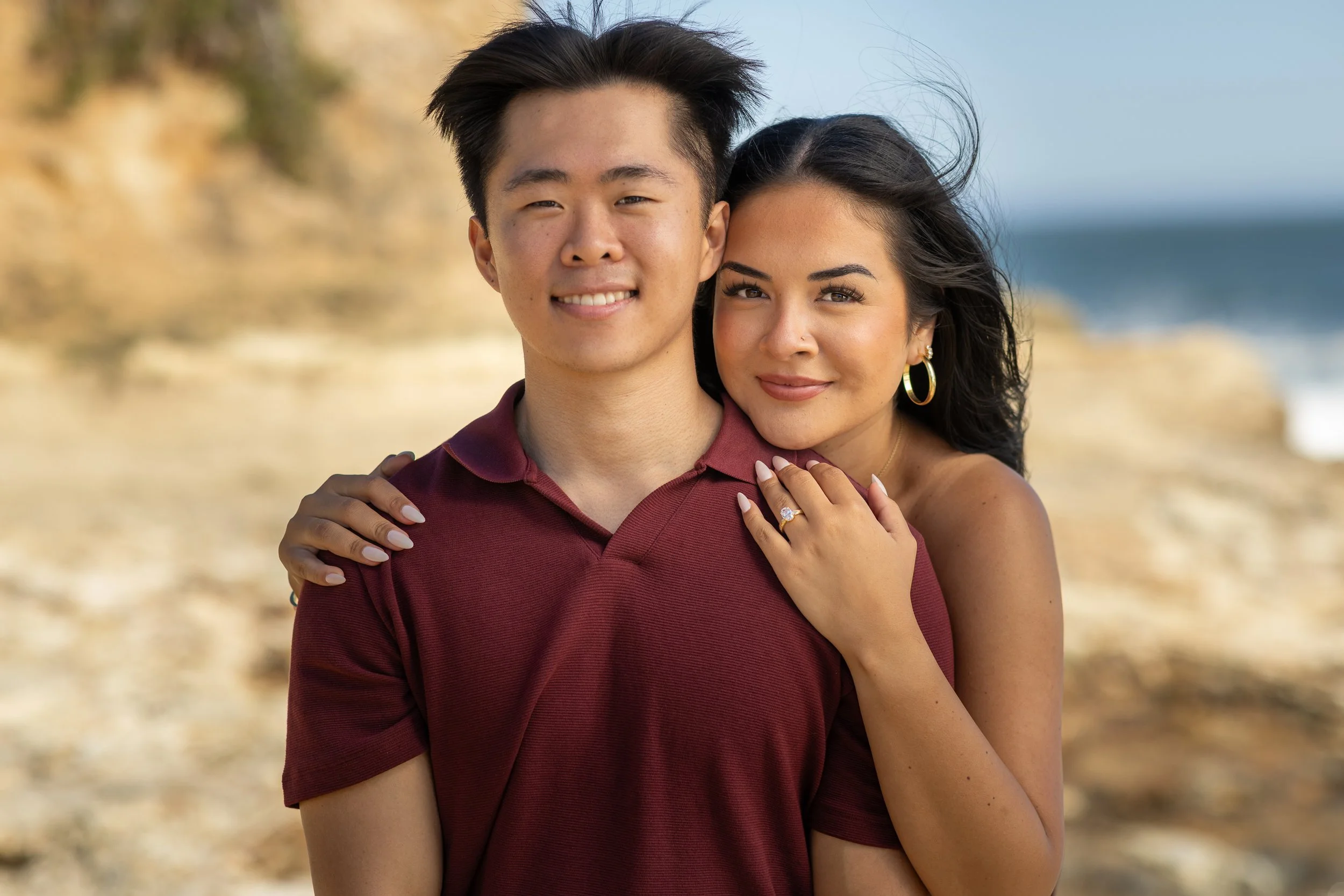
A few minutes in, still grinning.
What does a proposal photographer bring?
You don't need to know any of this, but it explains how one photographer can cover a moment that happens 50 yards away and then six inches from her hand. Each piece of gear has a specific job.
70-200mm lens: the proposal itself. It lets me stay far back and out of her eyeline while still filling the frame with your faces.
24-70mm lens: the reaction, the settle and the walking shots. It's also my plan B lens when a spot changes at the last minute, as it did at Sierra Vista.
85mm lens: the quiet portraits afterward, with soft backgrounds that separate you from a busy beach or trail.
100mm macro lens: the ring, close enough to show the setting and her hand once the shaking has stopped.
A second camera body: so the long lens and the short lens are both ready during the one minute that can't be repeated, and so nothing is lost if a camera fails.
A diffusion panel and an assistant: soft light in hard afternoon sun, for the portraits only.
A flash: a little extra light on your faces for the golden-hour shots.
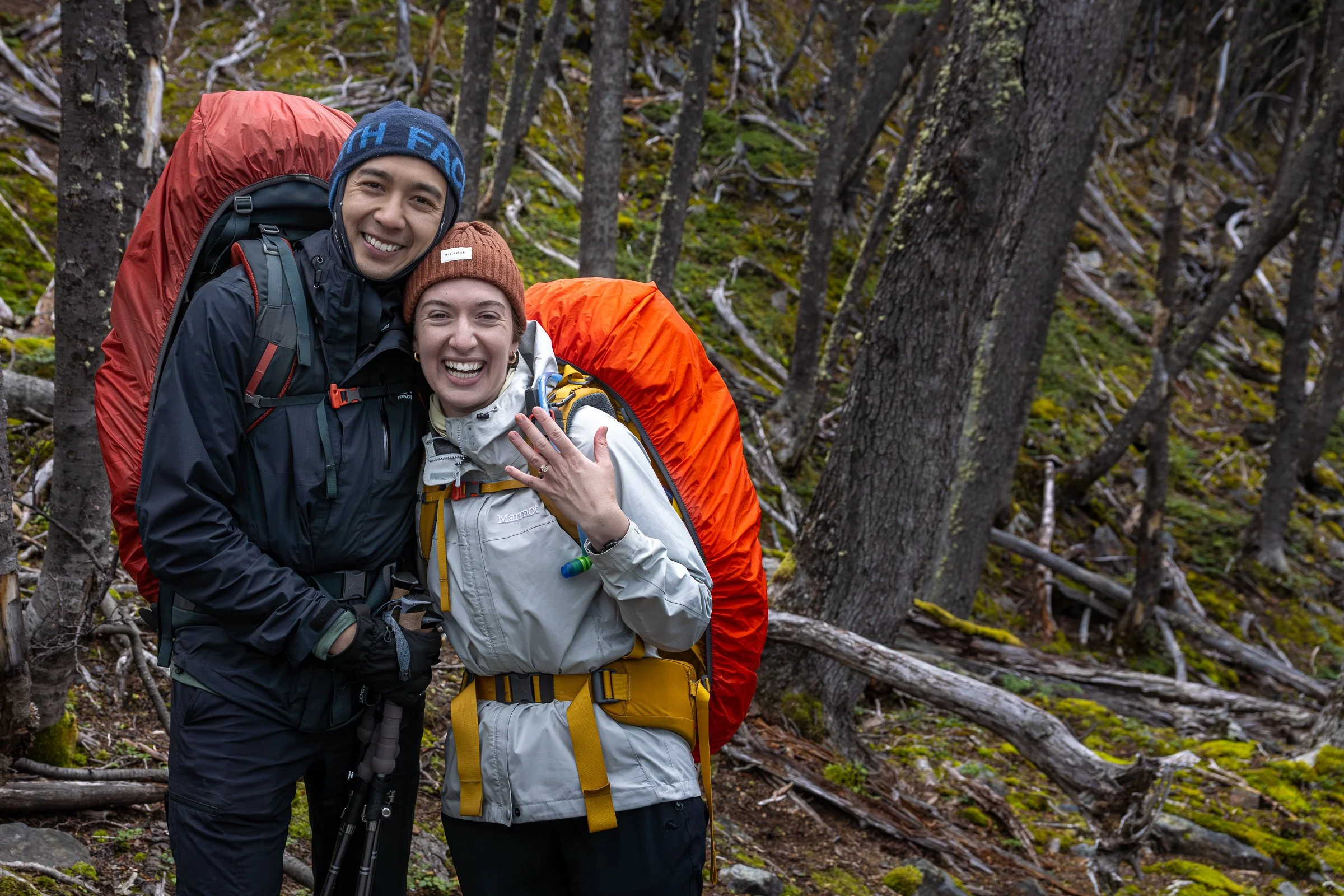
Not every proposal needs a dinner reservation. On a trek in Patagonia I came around a bend just after a man had asked, and got this a few minutes later.
Coastal proposals: tide, wind and fog
Three of my four proposals were on the coast, and the tide shaped two of them. At Panther Beach the Hole-in-the-Wall arch can be wet or awash near high tide, so we timed the session for a falling tide and picked the kneel spot on the side of the arch most likely to be dry. At West Cliff, waves cut off one of the beach spots below the bluff, so we stayed up top.
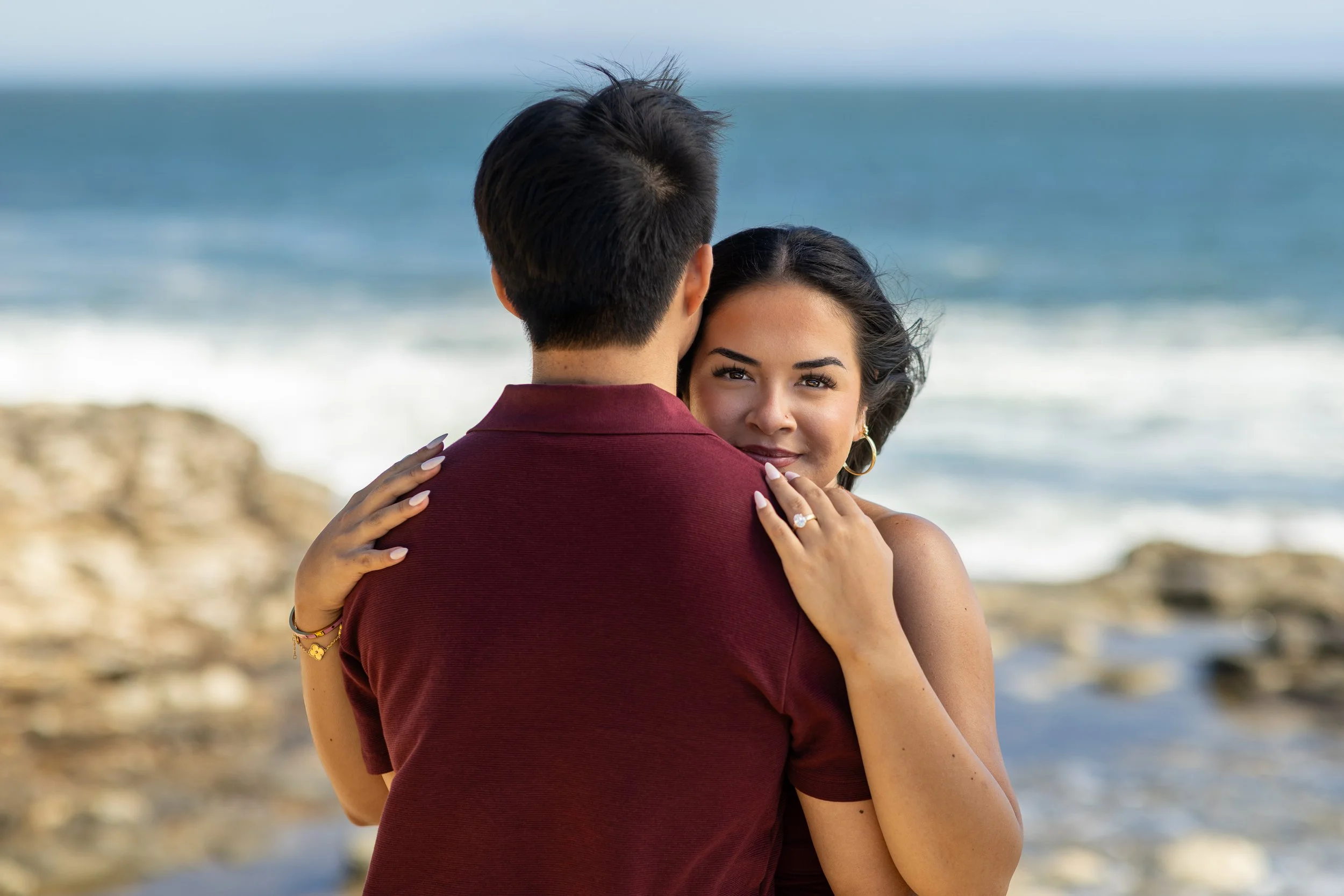
Ring hand on his shoulder, coastline behind.
Look up the tide table for your date as soon as you choose a coastal spot, and have a second spot in mind in case the first one floods.
Wind can make amazing shots of a flowing dress, but it takes care to keep hair from blowing across her face. Fog is the other coastal wild card. Light fog acts like a huge lightbox and softens everything, so some locations are actually better on a foggy day. Thick fog can hide the view you chose the spot for. We'll agree on a weather call a day or two before: what forecast moves the date, and which nearby spot works if it's marginal.
What if the plan falls apart?
Sometimes it does. At Sierra Vista I'd scouted a position on a trail near the overlook, with the whole valley falling away behind it and plenty of room to hide on the long lens. When the couple arrived, the walk out to it wasn't going to work that evening. We moved the proposal to the area beside the parking lot. I switched to a shorter lens, found an angle that kept the cars out of frame, and once she'd said yes we moved to a field of tall dry grass in low sun. After sunset we went back up to the overlook as the city lights came on below.
None of the delivered photos show a parking lot. The lesson I took from it is to match the location to the outfit your cover story calls for. If you've told her it's a nice dinner, choose a spot she can reach in nice-dinner shoes.
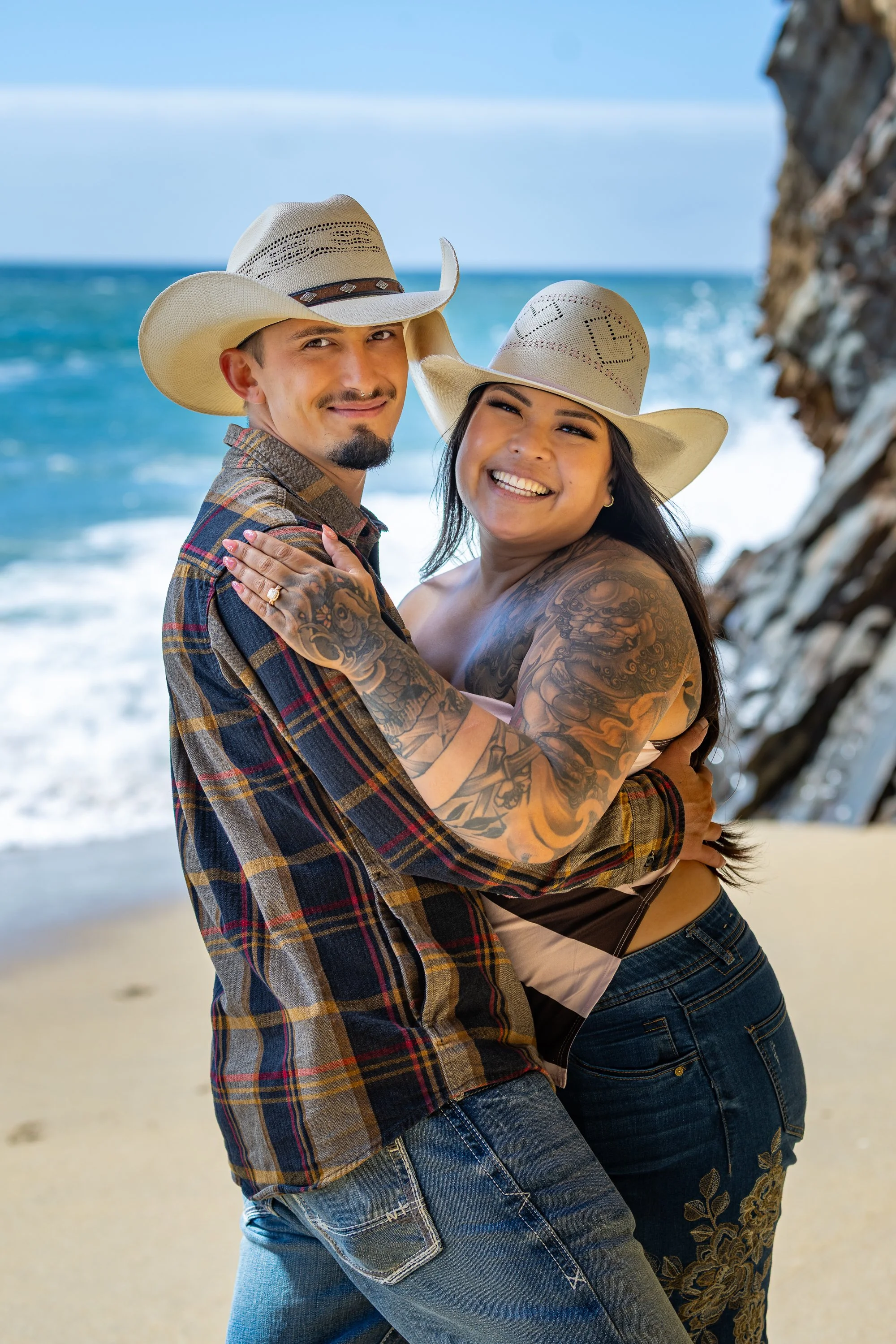
Still running on adrenaline.
How far ahead should you book?
A few weeks gives us time for a planning call and a scouting visit, which is when most of the problems in this guide get solved. The Sierra Vista proposal, though, was booked the same day it happened, and it worked. If you're reading this the week of, it isn't too late.
Bring three things to the first call: the location, the date with a rough time, and your cover story. We'll work out the rest together.
If you're planning one somewhere in the Bay Area, tell me where you're thinking of asking.
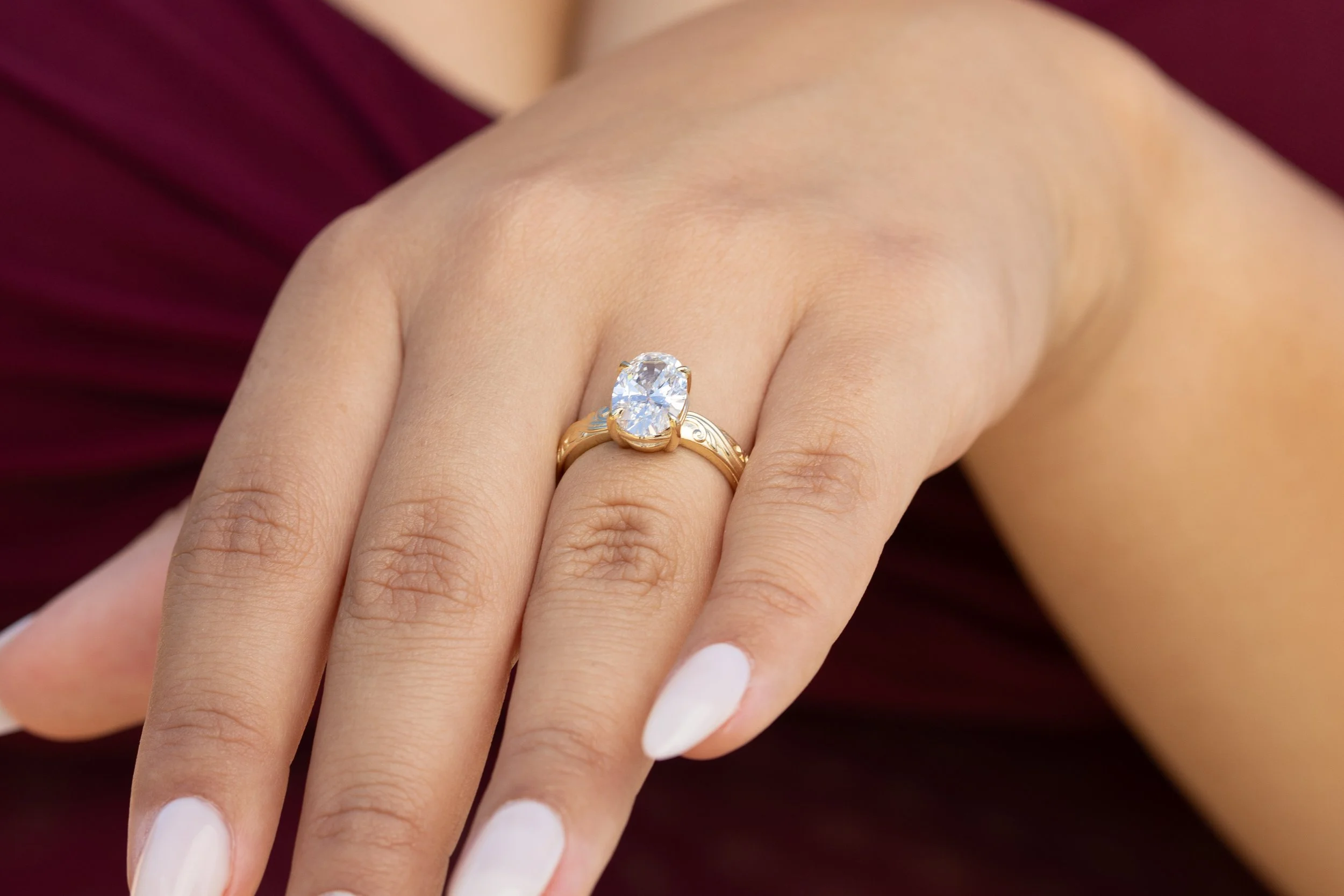
Ten minutes after the yes, once the shaking stopped.