
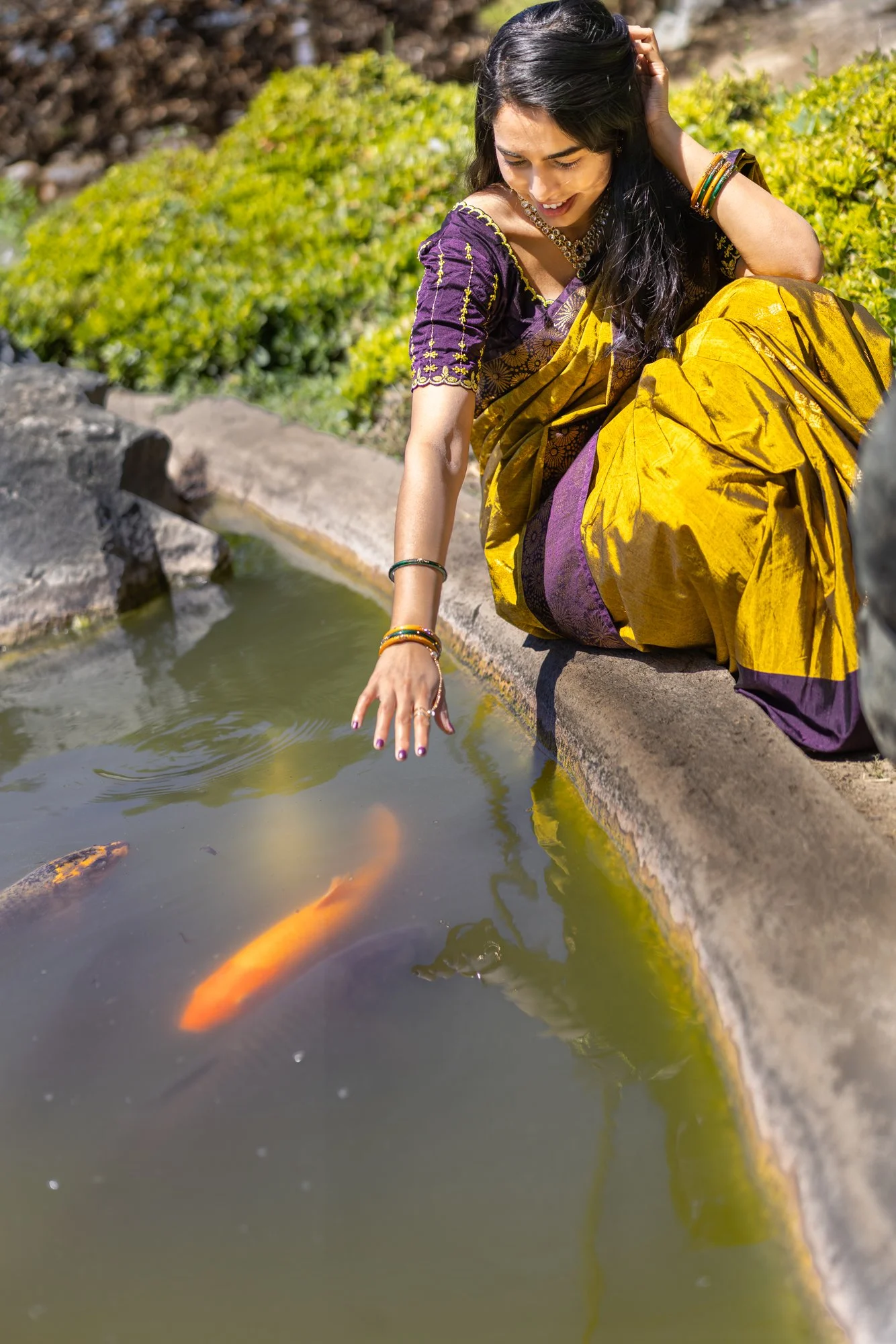
The lower koi pond, mid-morning.
Everyone leaves the Japanese Friendship Garden with the same photo. The red drum bridge, shot head-on, subject in the middle. It is a beautiful bridge. It is also the least interesting thing you can do with six acres of koi ponds, Japanese maples, bamboo and moving water.
I spent a morning here working a single portrait session, and I came away convinced the garden is one of the most underused portrait locations in the South Bay. Not because of the bridge. Because of everything most people walk past on the way to it.
What the garden actually is
The Japanese Friendship Garden sits inside Kelley Park on the east side of San Jose. It was dedicated in 1965 and modeled on Korakuen, the famous garden in Okayama, one of San Jose's sister cities. Three ponds sit at different elevations, connected by streams and a small waterfall, so you are never far from water and the light it throws back.
Six acres sounds large. In practice the photogenic core is compact and walkable in under an hour, which is part of what makes it efficient to shoot. You are not hiking between setups. You are turning around and finding a new background behind you.
The real challenge is the light, not the backgrounds
Backgrounds are the easy part here. The problem is the light.
I shot this session at 10am under thin, shifting cloud, which is close to ideal. The maples and the larger canopy break hard sun into open shade in dozens of small pockets, and the trick is reading which pockets are clean and which are dappled. Dappled light is the enemy in a garden like this. It puts hot spots across a face and a fabric and there is no fixing it well after the fact.
So the working method is simple. Find open, even shade. Put the bright water behind the subject so it lifts the background without lighting the face directly. Move every few minutes as the cloud moves. On a clear day you would push earlier, closer to opening, before the sun clears the canopy.
This is the same thing I look for in any personal lifestyle session: even light first, background second. The garden gives you both if you slow down enough to see it.
The spots worth knowing
The red bridge. Yes, shoot it. Just don't shoot it the way everyone else does. Pull your subject off-center, let the vermilion go soft behind them, and wait for a real expression. The bridge is a color, not a monument. Treated as a color it is one of the strongest backgrounds in the garden.
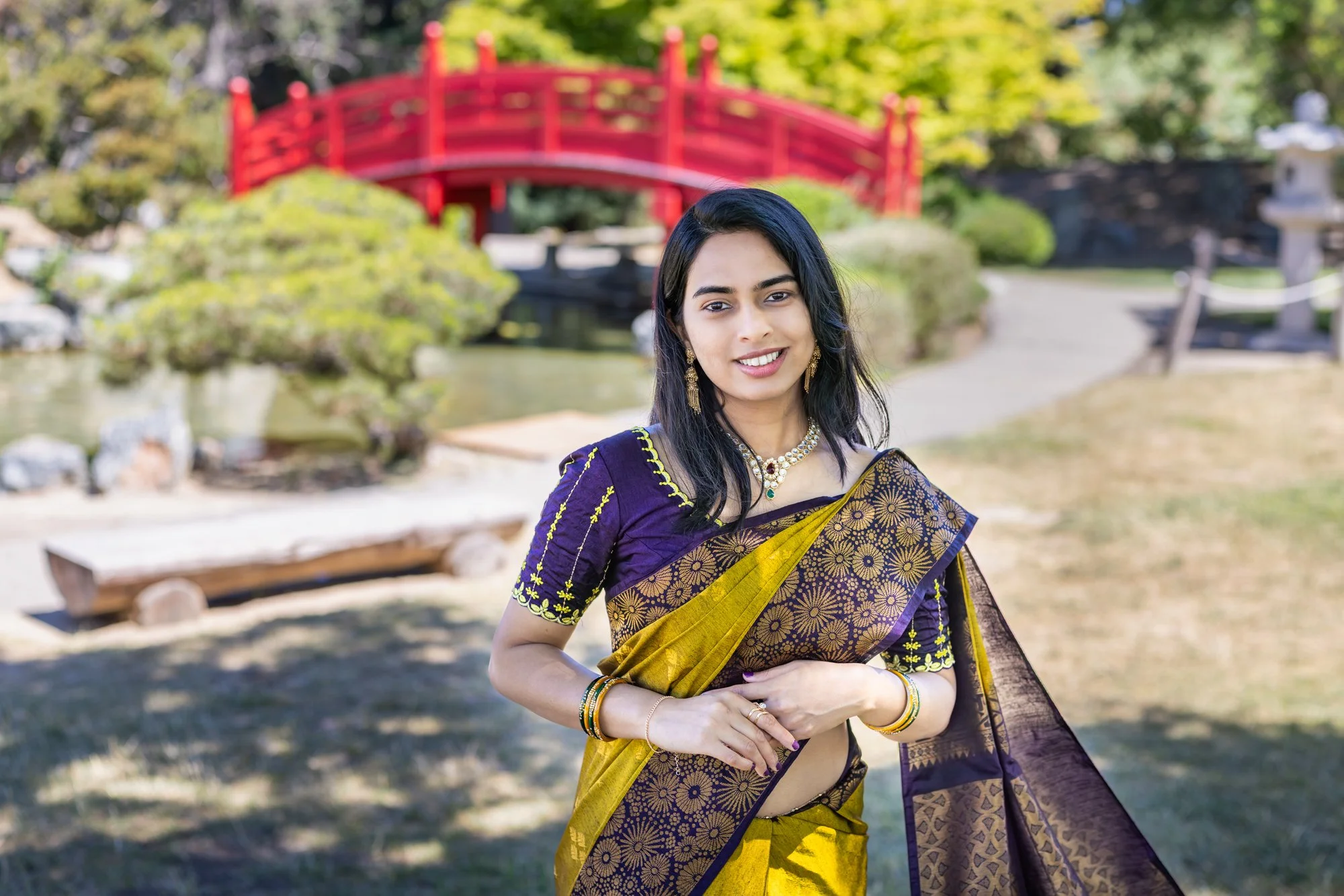
The bridge as a color, not a centerpiece.
The koi ponds. The single best storytelling spot on the property. A hand held still over the water, a koi that drifts up to meet it, an unguarded smile looking down. This is where the session stopped being a portrait and started being a moment. Watch your own reflection and shadow on the surface and keep them out of frame.
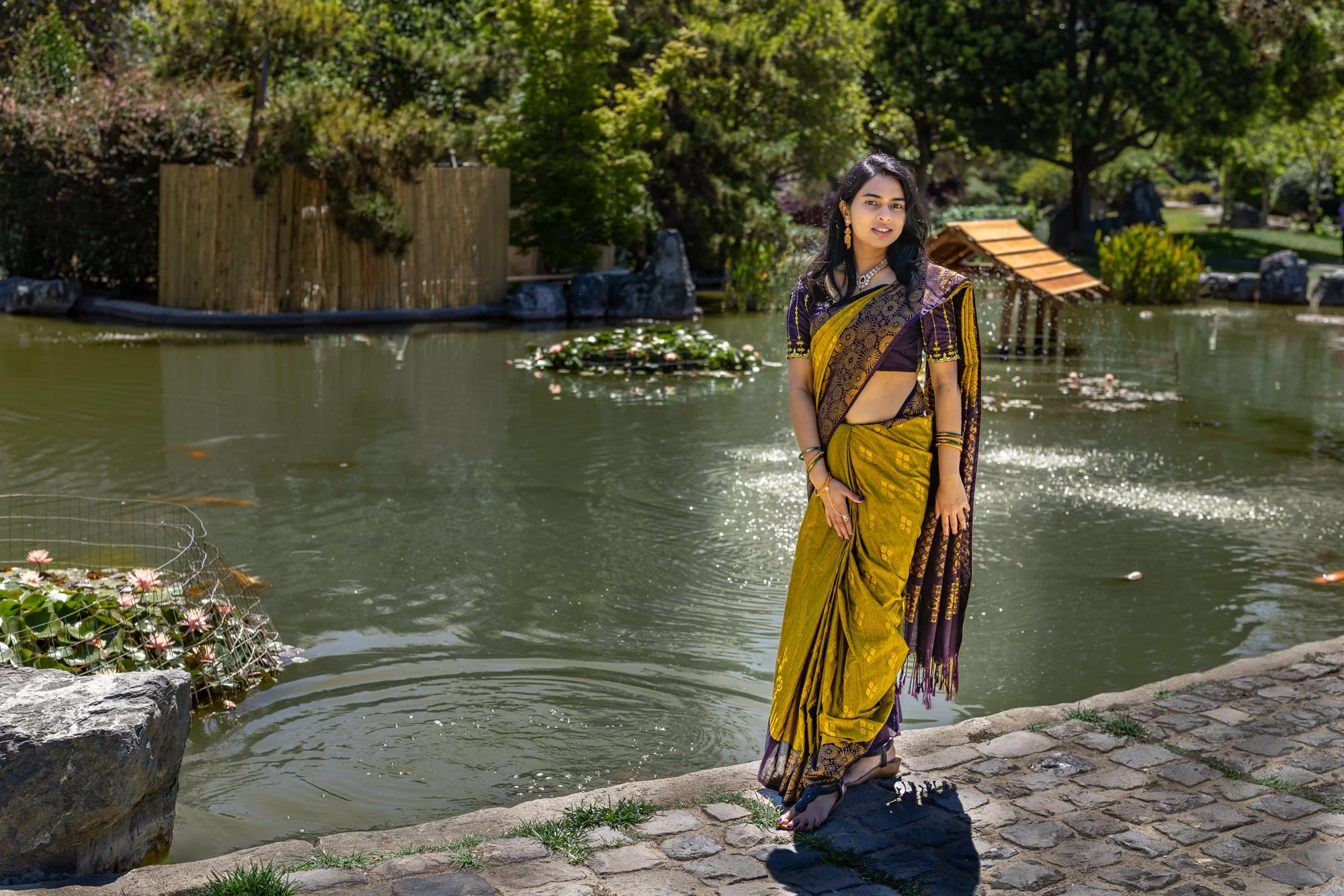
The upper pond, for scale.
The Japanese maples. Two registers in one garden. The green maples give you cool, even harmony. The red maples give you a saturated complementary background that makes warm clothing sing.
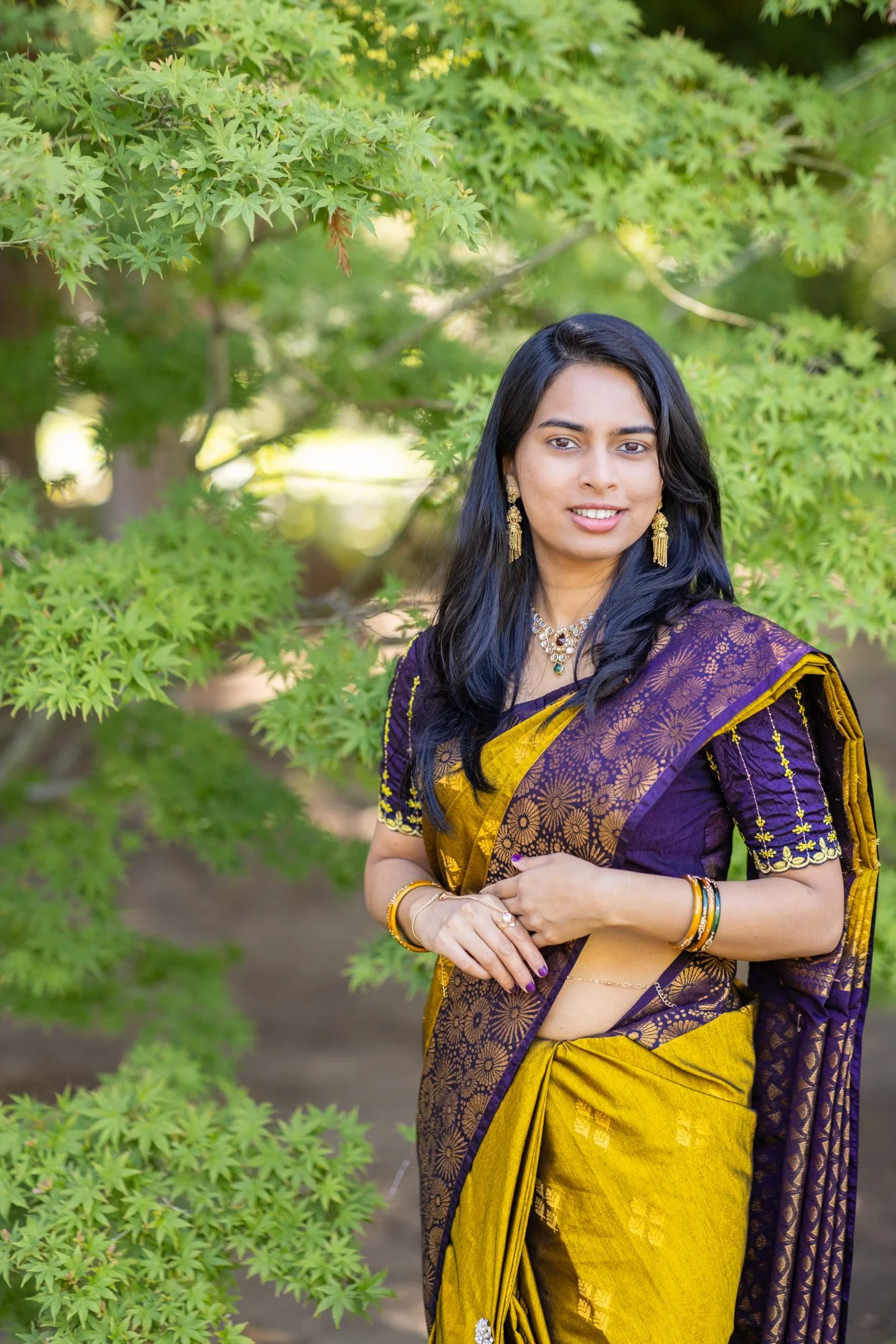
Open shade under the green maples.
The bamboo. A dense, vertical, textured wall that reads completely differently from the rest of the garden. Good for a more editorial frame when you want the eye to stay on the subject.
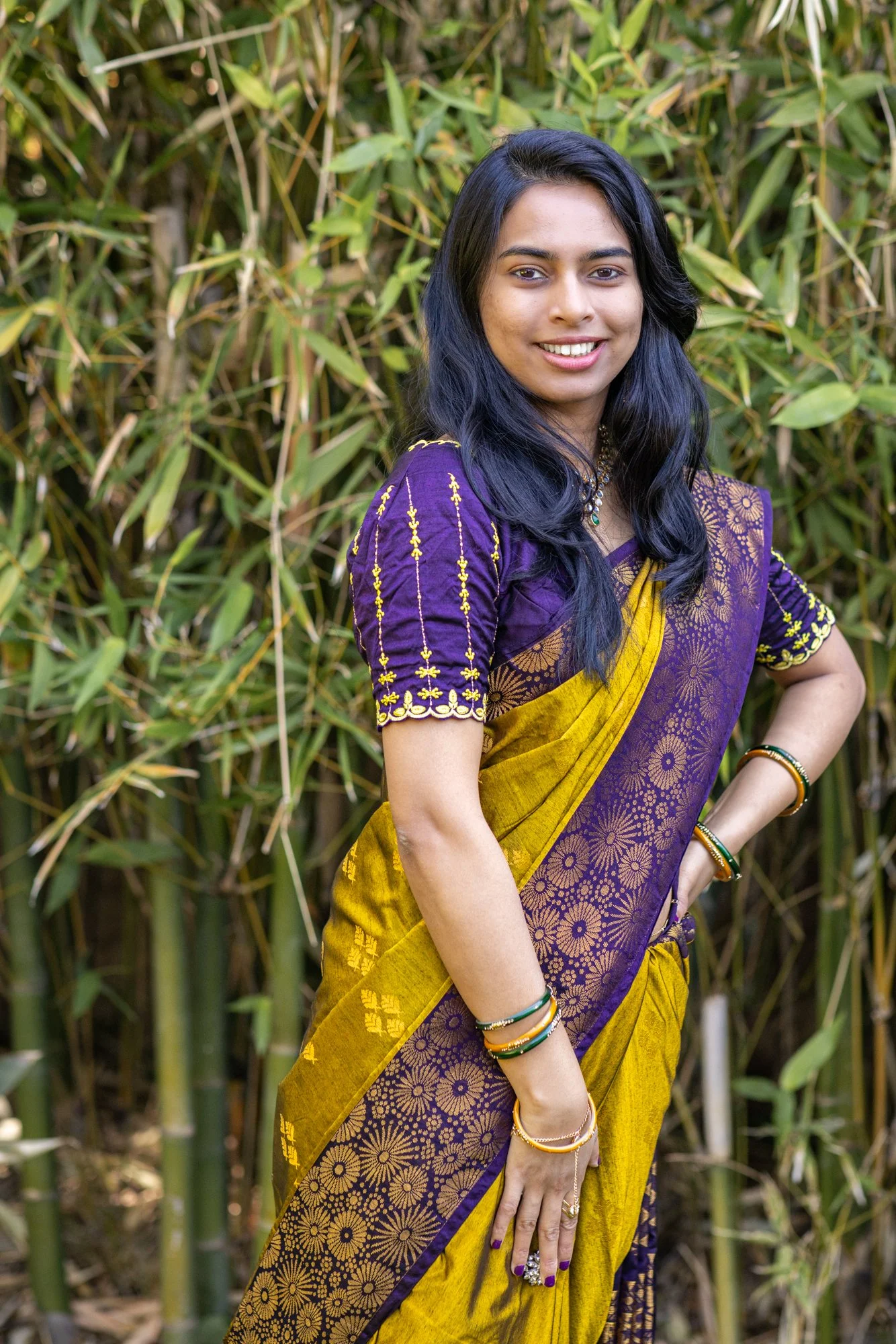
The bamboo wall keeps the eye in.
The waterfall and stone. The upper pond's small waterfall is a distinctive backdrop almost nobody uses well, because it sits in tricky light. Expose for your subject and let the white water blur. The stone lanterns are easy to walk past and worth building a quiet frame around.
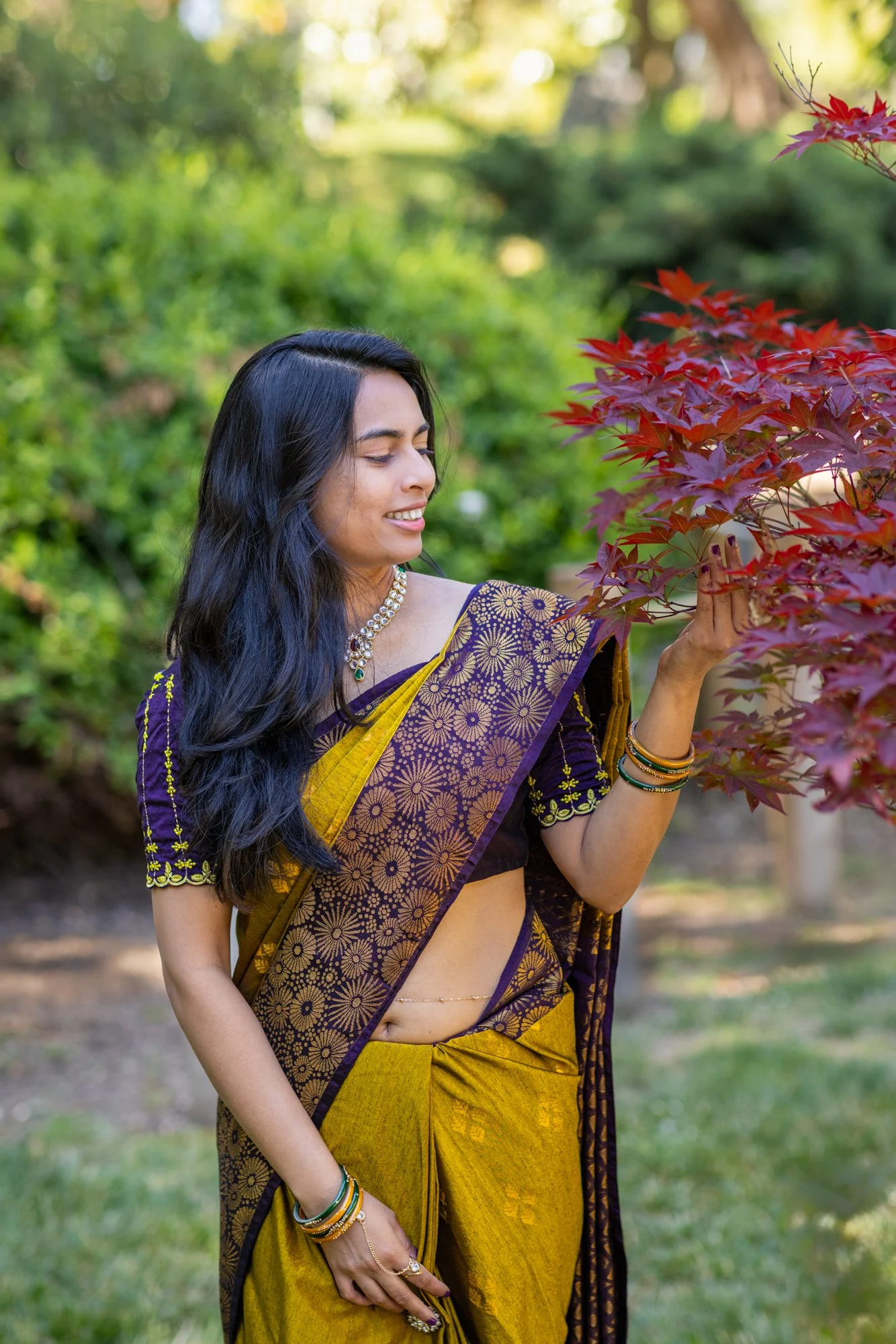
The red maples, up close.
The big koi pond. Wider, with lily pads and garden structure visible. Less a portrait background than a scene-setter, useful for one establishing frame that says exactly where you are.
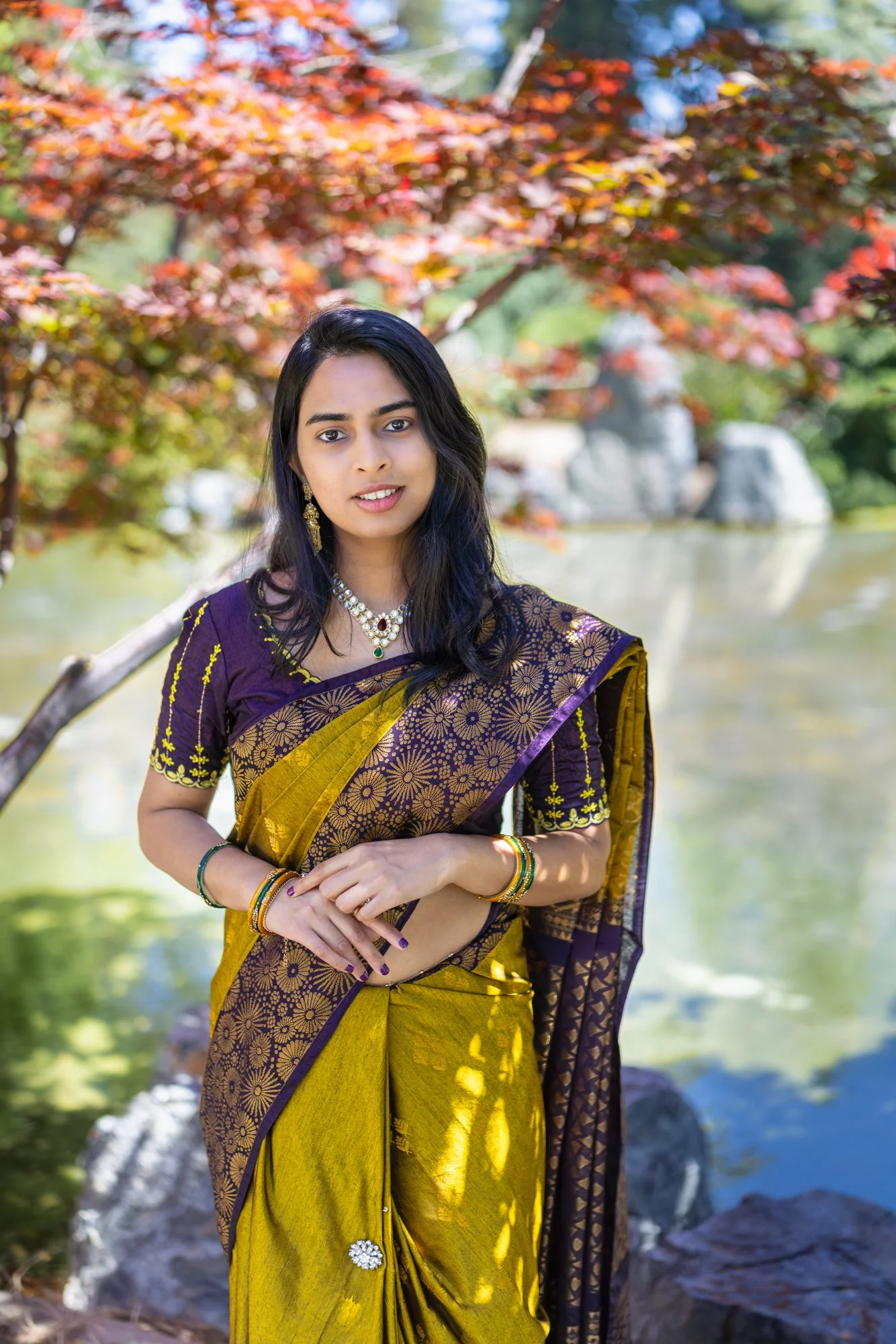
Gold against red.
What to wear, and why color matters here
Wardrobe matters more at this garden than at most locations, because it hands you two dominant colors to work with or against: the vermilion of the bridge and the deep greens of the maples and bamboo.
The session that taught me the garden was built around a gold saree with a purple border. Against the red bridge it read as complement. Against the green maples it read as harmony. Against the dark koi water it simply glowed. Bold, saturated colors photograph beautifully here for exactly this reason. If you are planning a saree shoot, or any portrait that leans into strong color, this garden rewards the choice. Muted neutrals, by contrast, can disappear into all that green.
Logistics, permits and the thing to check before you go
The garden is open daily from 10am. There is no admission fee for visitors; you pay for parking at Kelley Park.
Professional photography is a different matter. The City of San Jose requires a photo permit for sessions at the Japanese Friendship Garden, issued at City Hall. At the time of writing that is a two-hour permit with a $60 application fee and a $40 permit fee. If you are hiring a photographer, ask whether they have arranged it.
For a relaxed session during public hours, a weekday morning is your friend. Weekends fill with families and other photographers, and the narrow paths get crowded fast.
One genuine caveat, and the reason firsthand knowledge matters: the koi ponds have been drained for construction and repair on and off for years. A drained pond changes the whole session. Call ahead and confirm the water is in before you build a shoot around it.
Standard garden etiquette applies. Stay on the paths, keep out of the water, and leave the plants alone.
Questions people ask about the Japanese Friendship Garden
Do you need a permit to take photos at the Japanese Friendship Garden in San Jose?
For a professional session, yes. San Jose issues two-hour photo permits for the garden through City Hall. Casual visitor photos do not need one.
Is the Japanese Friendship Garden free?
Entry is free. Parking at Kelley Park is paid.
What is the best time for photos at the Japanese Friendship Garden?
Opening time on a weekday, ideally under light cloud. The canopy breaks direct sun into patchy light by late morning.
What are the best photo spots in the garden?
The koi pond edge, the red drum bridge (shot off-center), the green and red Japanese maples, the bamboo wall and the small waterfall at the upper pond.
Is the Japanese Friendship Garden a good place for a saree photoshoot?
One of the best in the South Bay. Saturated silks in gold, red, magenta or emerald stand out against the green maples and play off the vermilion bridge. The same goes for a lehenga, an anarkali or other festive wear. Bring a safety pin or two for the pallu, because the paths are narrow and there is often a breeze off the ponds.
Are the koi ponds always full?
No. They are drained from time to time for repairs, so check before you book a session around them.
The takeaway
The Japanese Friendship Garden is not a one-background location pretending to be more. It is a compact, layered garden that rewards a photographer who reads light and works the corners. It earns its place among my favorite Bay Area photography locations, and it is the first spot I would now suggest to anyone wanting an outdoor portrait session in San Jose with real range.
The bridge will still be there when you are done. Walk past it first.